
There is something quietly satisfying about a well-shaped nail. Still, the tool you reach for matters more than most people realize. In the debate of glass nail file vs regular file, the difference isn’t just about texture or price — it’s about how gently your nails are treated with every pass. If your nails have felt rougher, weaker, or more prone to snagging lately, your file may be part of the story.
How Each File Type Works
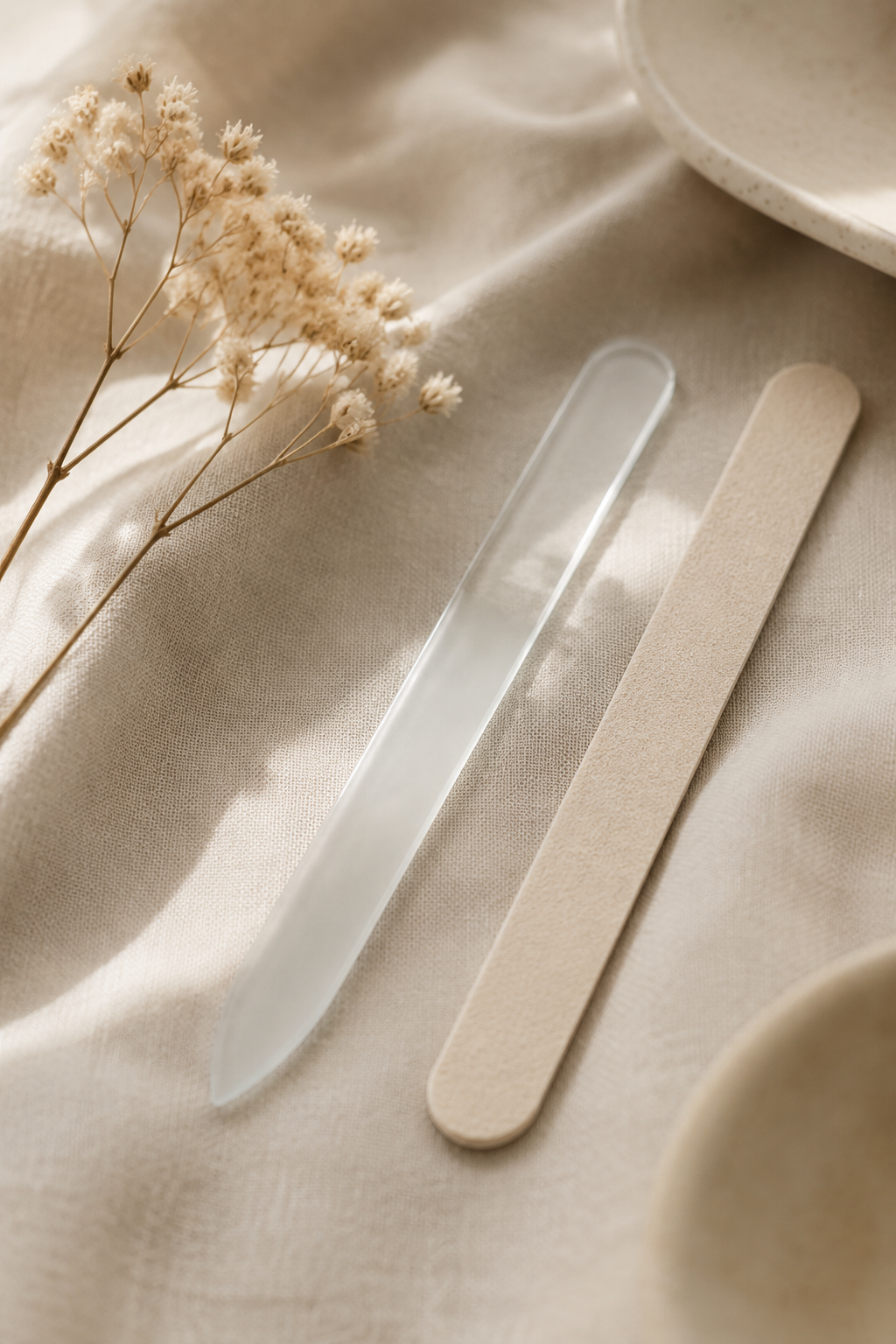
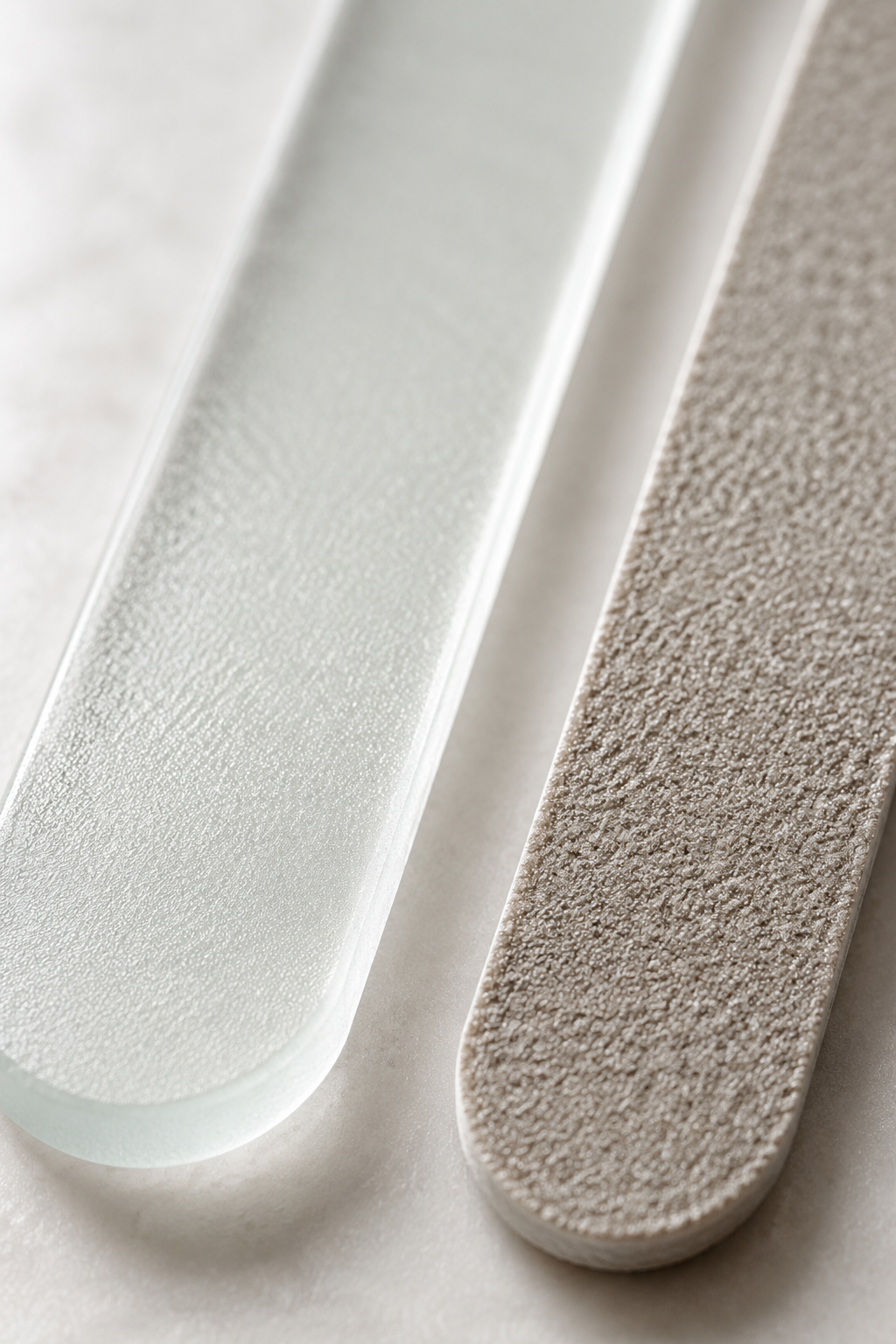
A regular file, often called an emery board, is made of paper or foam coated in crushed sand or grit. As you glide it across the nail edge, it lifts and tears microscopic layers of keratin to shape the nail. It works quickly, but the surface it leaves behind is slightly rough under close inspection.
A glass file, by contrast, is made from tempered or Czech glass with a fine, permanently etched surface. Instead of tearing the nail edge, it gently sands it smooth, sealing the layers as it goes. That small difference in technique is really what separates a glass nail file vs regular file in daily use.
Soft Élan Note: Think of it the way you would think of skincare — exfoliating gently versus scrubbing harshly. Both remove the same layer, but only one leaves the surface calm and even.
Why Glass Files Cause Less Damage
Nails are made of layers of keratin, much like tiny shingles stacked on a roof. A coarse emery board can lift those shingles unevenly, creating tiny fractures that eventually turn into peeling or splitting. This is especially noticeable if you already deal with peeling nails.
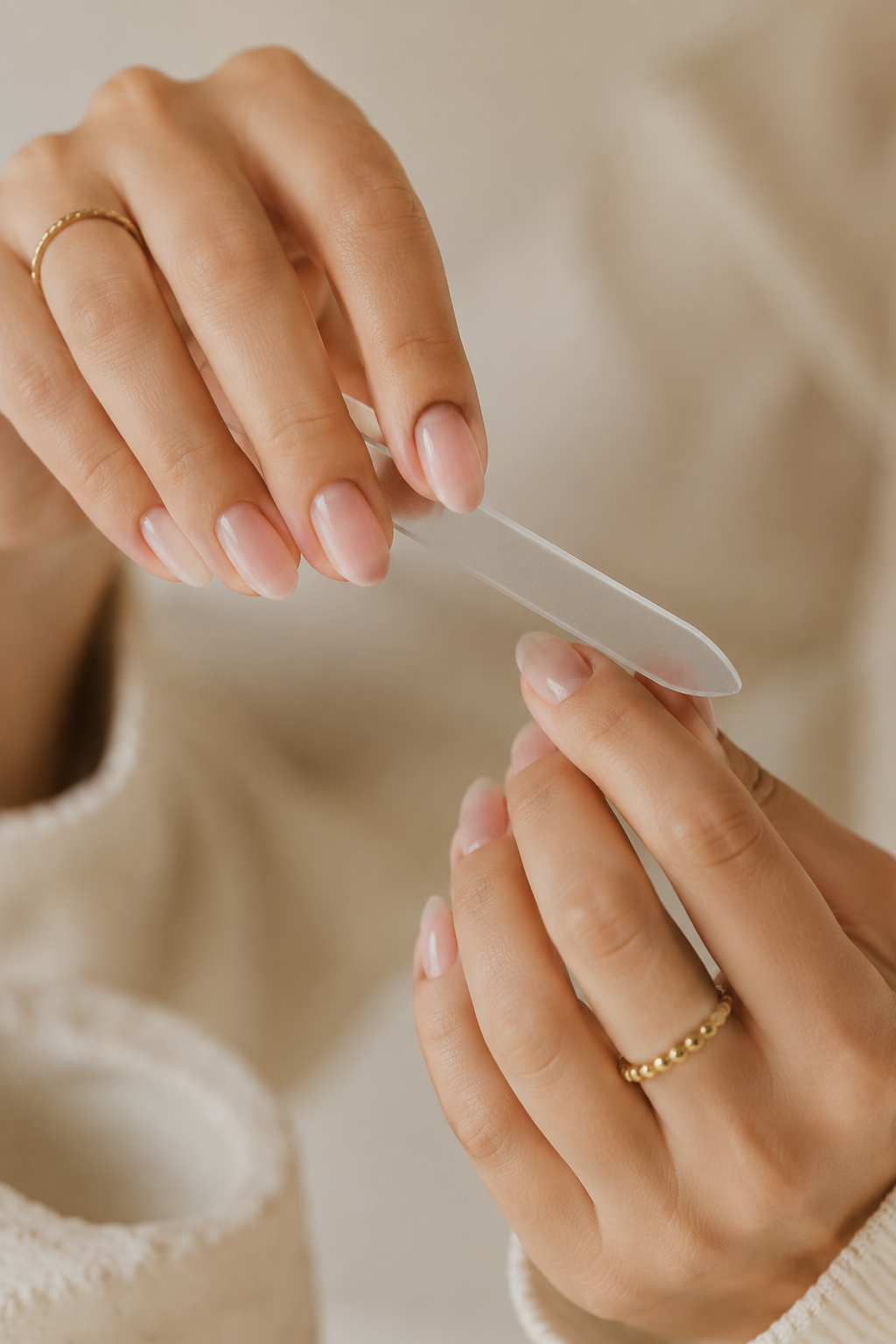
A glass file smooths those same layers instead of separating them. Dermatologists consistently note that filing in one direction, without a sawing motion, helps protect the nail’s edge, and the fine, consistent grit of glass makes that gentle motion easier to maintain naturally, according to the American Academy of Dermatology.
There’s also a practical, quiet-luxury upside: glass files don’t dull with use the way emery boards do, so the results stay consistent for years rather than weeks.
For Weak or Peeling Nails Specifically
If your nails are already fragile, a glass file is often the better choice. Its smooth, sealed edge is far gentler than the more abrasive texture of a regular file, and it tends to leave less friction-related stress on nails that are already struggling to stay strong. Pairing a glass file with a nourishing routine, like the one outlined in our daily nail care ritual, can make a visible difference within a few weeks.
Hydration also plays a role here. According to Mayo Clinic, repeated water exposure can weaken the nail plate over time, so filing gently is only one part of a larger, more thoughtful approach to nail strength.
When a Regular File Is Still Fine
None of this means emery boards deserve to be retired entirely. If you’re shaping acrylics, gels, or thicker artificial nails, a regular file’s coarser grit can actually be more efficient, since it’s designed to remove more product at once. For natural nails that are already healthy and resilient, an occasional regular file won’t cause noticeable harm either.
The real distinction in the glass nail file vs regular file comparison comes down to frequency and nail condition. Natural, weekly maintenance calls for the gentler option. Heavier reshaping work can still lean on a traditional file.
Buying Guide: Best Glass Files
A few thoughtful picks make this switch effortless.
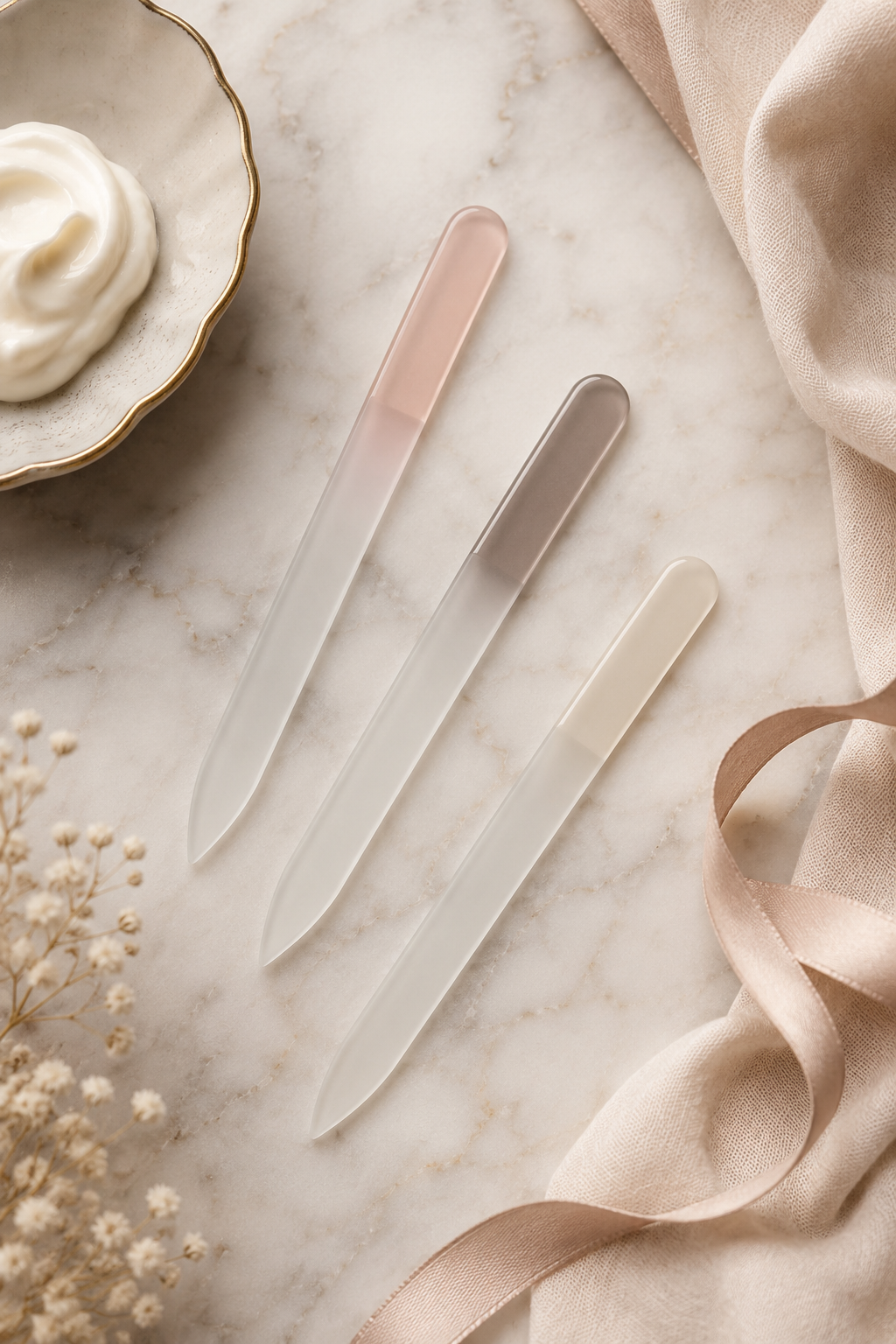
A rich, well-crafted glass file can outlast a dozen emery boards, which makes it feel less like a purchase and more like a small investment in your everyday ritual. This Czech-glass option is especially loved for its fine grit and elegant, travel-friendly case, and it’s often considered the best glass nail file for anyone easing away from paper files.
For a softer edge, a crystal file with a gently curved shape can be easier to control around rounded or almond nail tips, offering the same crystal nail file benefits — smoother edges, less splitting, longer-lasting results — with a bit more precision for detailed shaping.
If you prefer a two-in-one option, a glass file with a built-in buffer side is a lovely way to shape and smooth in a single, unhurried step.
Once your nails feel more resilient, it’s worth pairing your new filing habit with the right formulas underneath your polish. Our guide to the best base coat and top coat for a salon-quality manicure at home is a natural next read, as is our piece on fixing a hangnail without making it worse, since gentle filing habits tend to reduce those, too.
A Small Change, Beautifully Worth It
Healthy nails rarely come from one dramatic decision. They come from small, consistent choices — the kind that are easy to overlook but quietly add up.
Switching from a regular file to a glass one is exactly that kind of choice. It costs a few extra minutes of intention, not money or effort, and the results tend to show themselves in fewer snags, softer edges, and nails that simply look calmer over time.
If your nails still feel fragile after making the switch, our nail strengthener buying guide is a gentle next step toward giving them the support they need.
Frequently Asked Questions
Do glass nail files really last forever? Not quite forever, but close. A well-made glass file can last for years with proper care, since its etched surface doesn’t wear down the way sand-coated paper does.
Can glass files damage nails if used wrong? Yes, if used with heavy pressure or a sawing motion. Even the gentlest tool can cause stress if it’s dragged back and forth too forcefully, so a light, one-directional stroke still matters most.
How do I clean a glass nail file? A quick rinse under warm water, followed by air drying, is usually enough. For a deeper clean, a gentle wipe with rubbing alcohol keeps the surface hygienic between manicures.