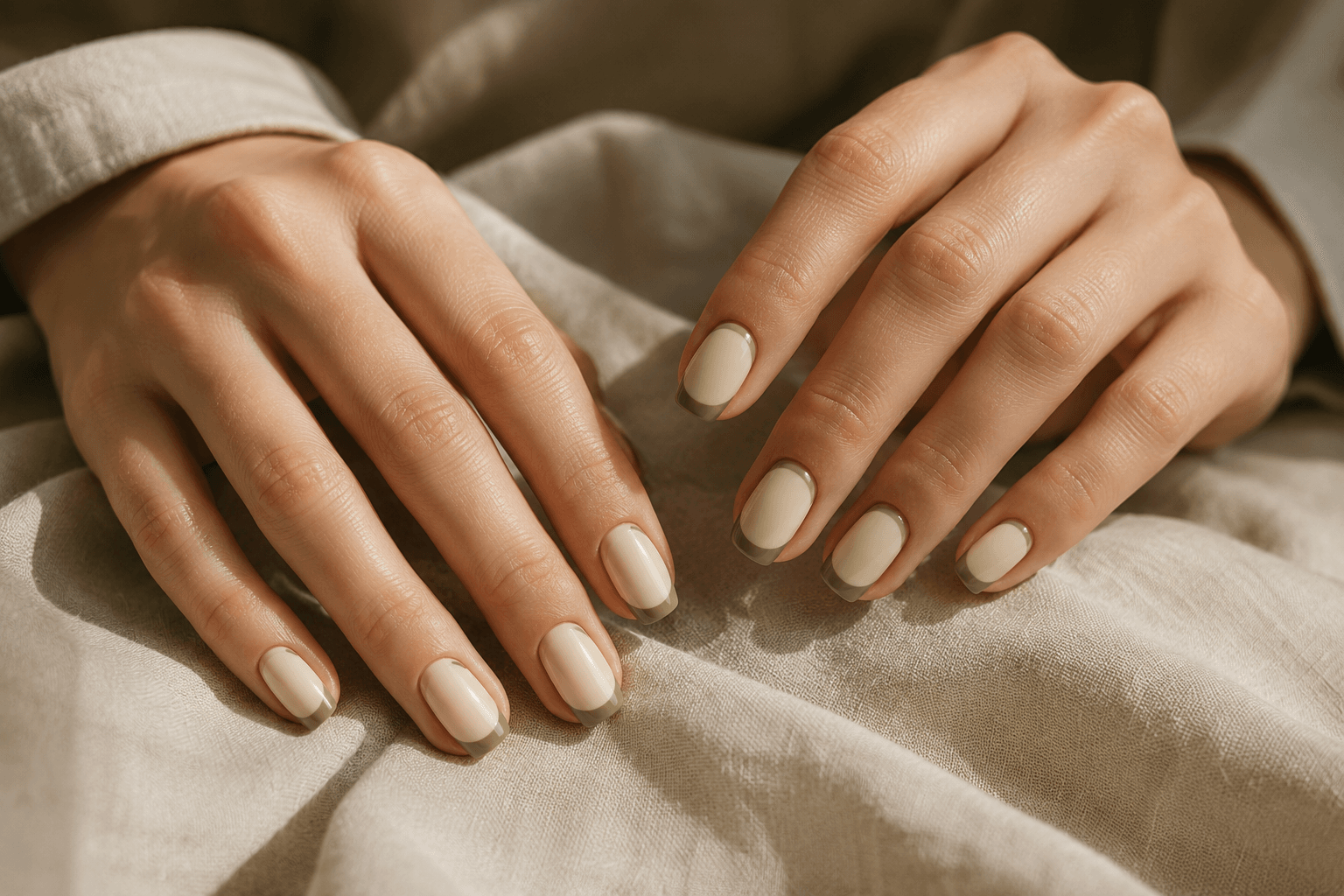
There’s a version of color that never feels loud. Color block nails for fall are proof of that — two shades, one clean line, and nothing else asking for attention. If you’ve grown a little tired of the single-shade manicure but aren’t quite ready for full nail art, this is the middle ground worth trying this season.
Think of it less as a trend and more as an editing exercise. You’re not adding more to your nails. You’re choosing two colors that already belong together, then giving them a clear boundary.
This guide walks through how to wear color-blocked fall nails the quiet luxury way — restrained, intentional, and easy to recreate at home.
Why Two Colors (Never More)
Color-blocking has a way of turning maximalist fast. Add a third shade, a bit of glitter, or a few rhinestones, and the whole look shifts from editorial to busy.
Soft Élan’s approach keeps it simple: never more than two tones, and no embellishment at all. The color break does the work on its own.
This restraint is what makes the look feel current rather than costume-like. A two-tone manicure reads as considered. A five-tone one reads as an experiment that got away from you.
If you take one rule from this guide, let it be this one. Two colors, always. A third only crowds the story.
Best Color Pairings for Fall
The right pairing makes a tonal manicure fall feel effortless instead of graphic. A few combinations to consider this season:
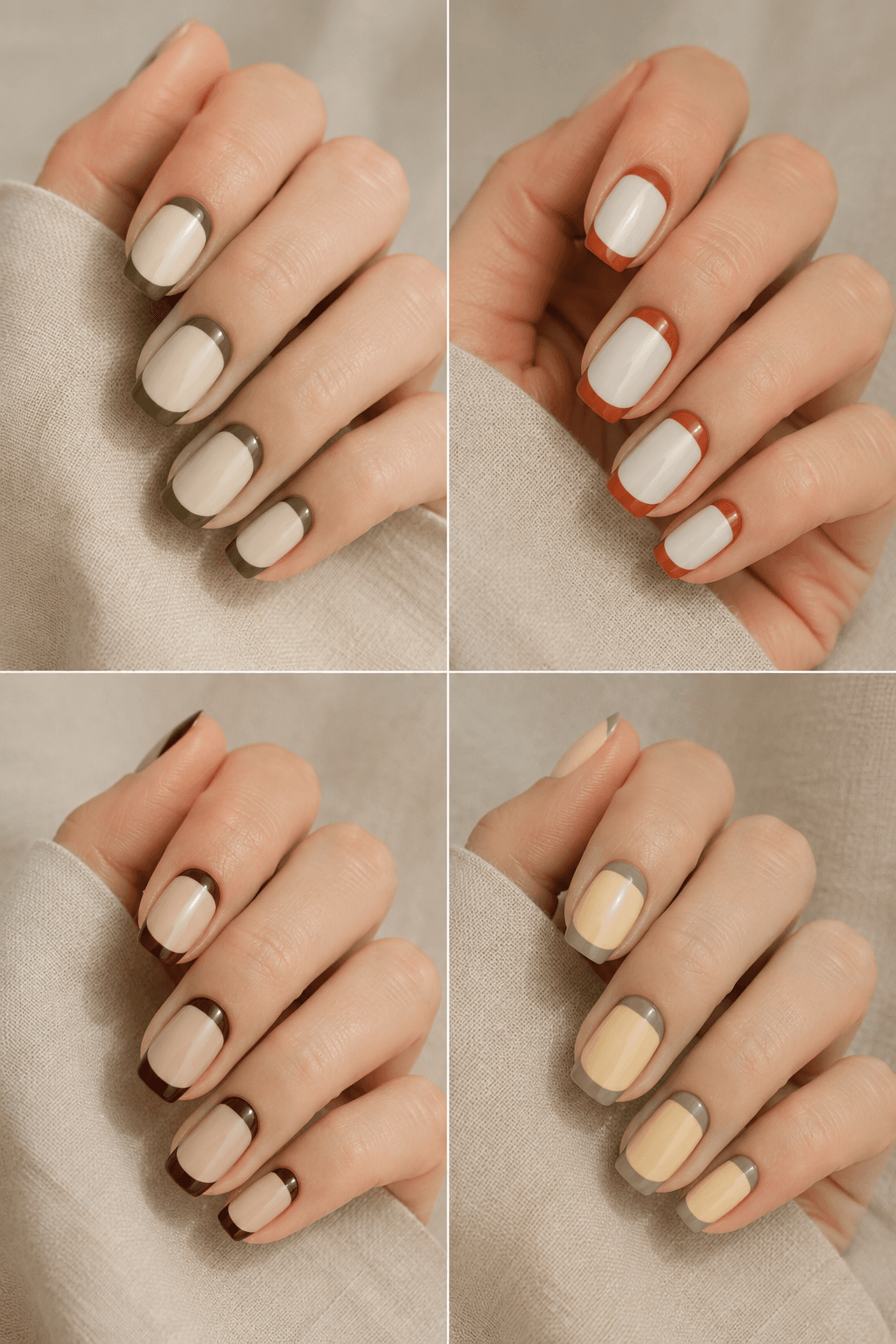
- Olive and cream — earthy and soft, with just enough contrast to read as intentional. Pairs beautifully with the tones featured in our earthy nail colors for fall guide.
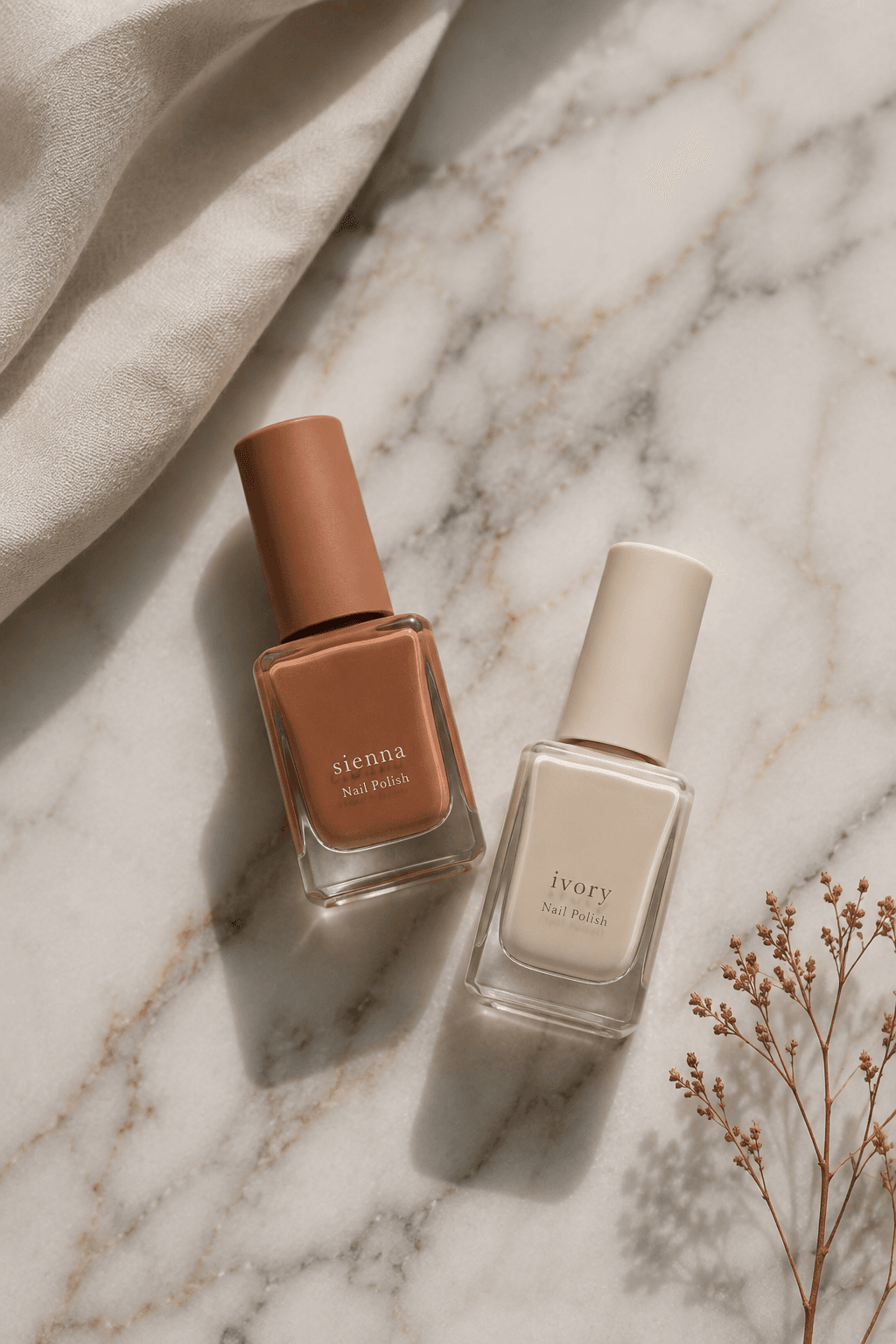
- Terracotta and ivory — warm against neutral, one of the season’s most flattering combinations. For more on this shade alone, see our terracotta nails feature.
- Garnet and espresso — a deeper, moodier pairing for evenings and holiday gatherings. Both shades sit within the palette explored in our jewel tone nails guide.
- Sage and butter cream — the softest option on this list, and an easy entry point if two-tone nails still feel new to you.
Tonal pairings, where both shades sit close together on the color wheel, tend to feel the most quiet luxury. Complementary pairings offer more visual interest but ask for a slightly steadier hand.
For a full sense of where fall’s palette is heading this year, our fall 2026 color guide is worth a read before you choose your pairing.
How to Get a Clean Line at Home
The entire look depends on one thing: a crisp, confident line between colors. A soft or wobbly break undoes the polish of the whole manicure.
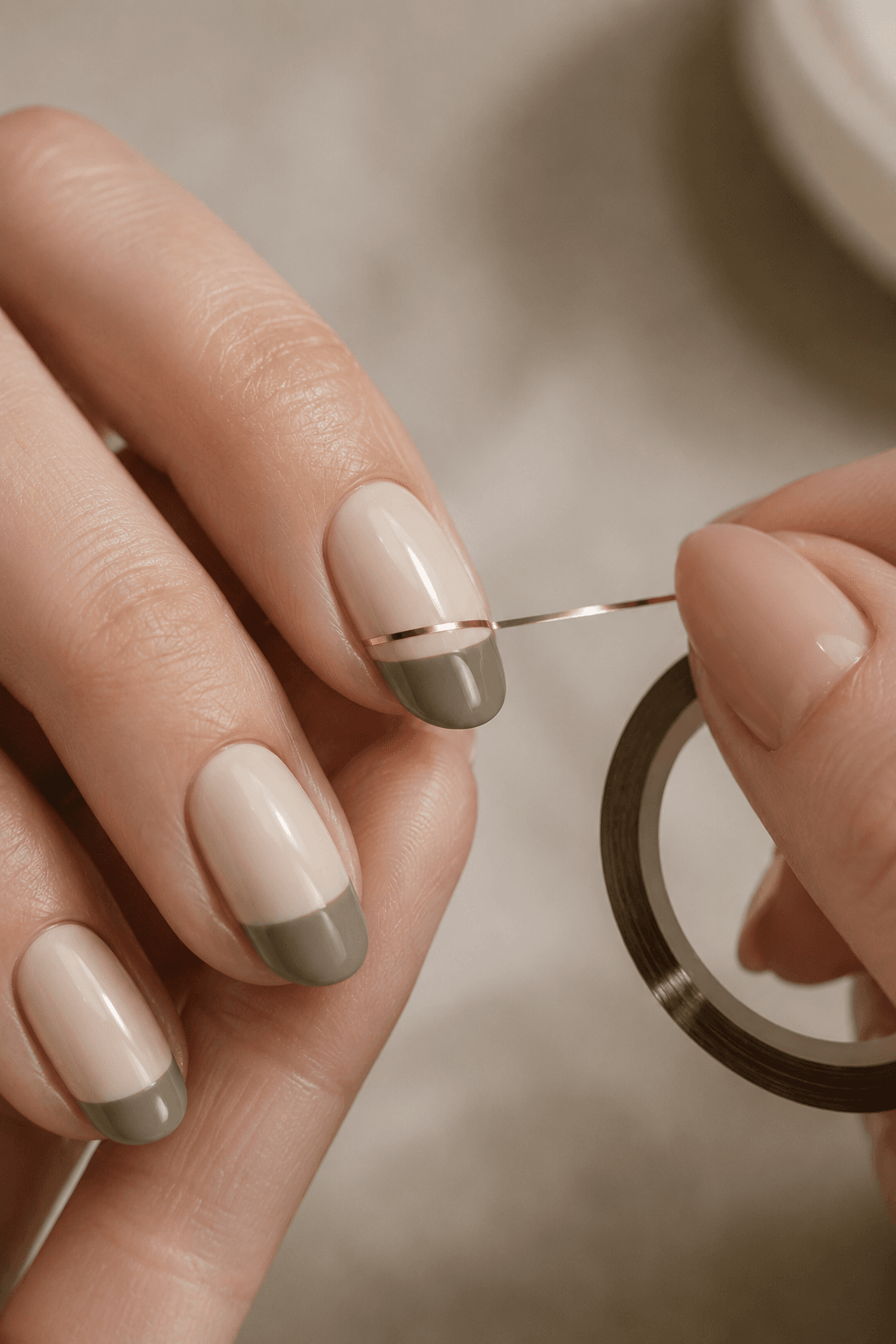
Start with your base color first, and let it cure completely. A rushed base coat is the most common reason a color-blocked manicure looks smudged rather than sharp.
Once your first shade is dry, use tape to mark exactly where the second color should begin. Apply the second polish over the tape, then peel it away while the polish is still slightly wet for the cleanest edge.
Finish with a glossy top coat over the entire nail. This step blends the two textures together and gives the whole look a cohesive, polished finish.
Tools for a Clean Line
A few small tools make this technique far easier to manage at home. Thin striping tape is especially useful for marking a straight or angled break before you apply your second color, and a fine detail brush gives you more control if you prefer to paint the line freehand instead.
Soft Élan Note: A steady hand matters less than you’d think. What matters more is patience — waiting for each layer to dry fully before moving to the next.
Where to Place the Break (Half-and-Half vs. Tip)
There are two easy ways to place your color break, and each gives a different impression.
A half-and-half split, where the color changes at the midpoint of the nail, feels the most graphic and modern. It works particularly well on longer, almond-shaped nails.
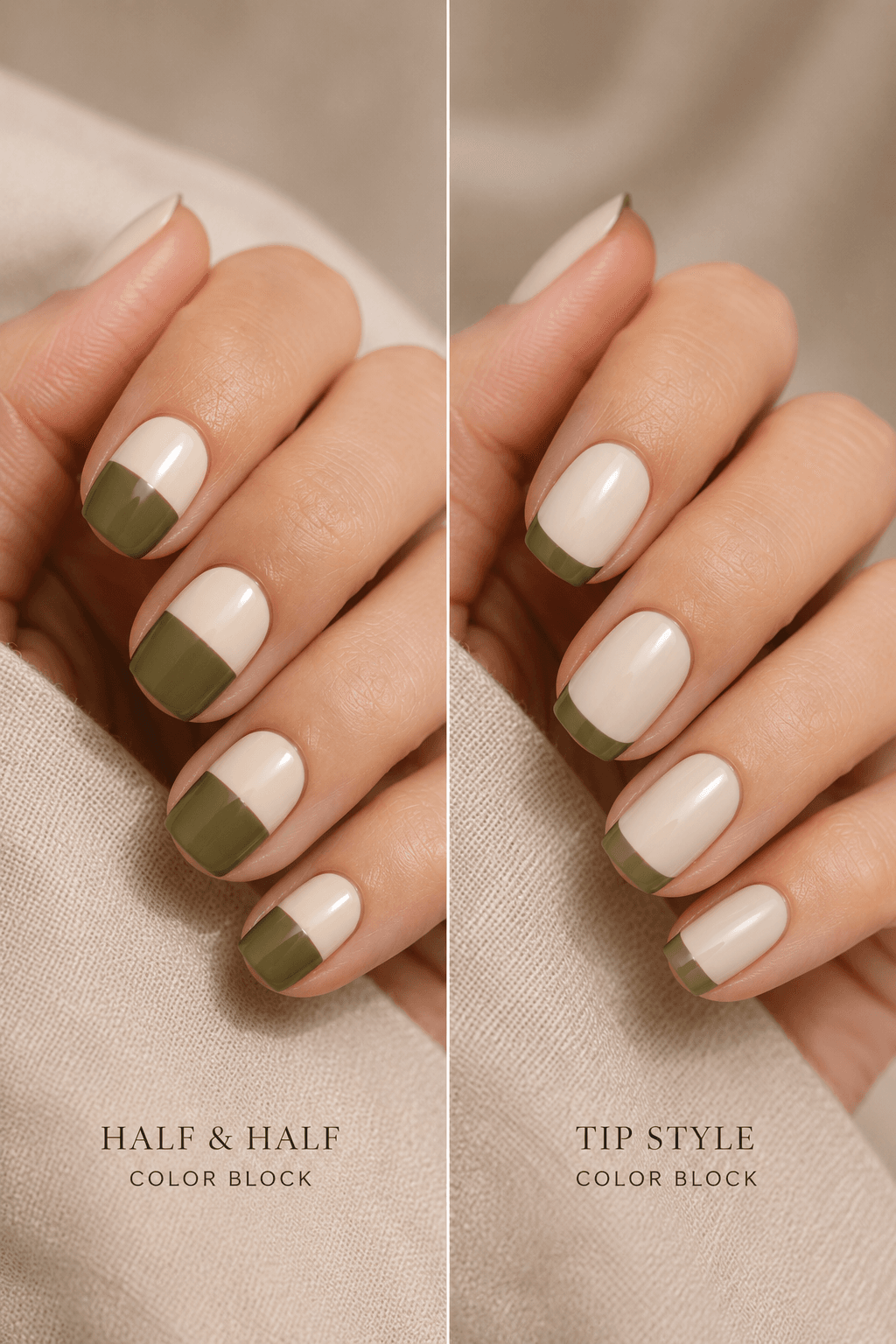
A color-blocked tip, where only the top third of the nail changes color, feels closer to a reimagined French manicure. It’s a gentler entry point for anyone new to minimalist color block manicure styles.
Complementary vs. Tonal Pairings
If you’re placing a half-and-half break, a tonal pairing (two shades from the same family) tends to look the most refined. For a tip-style break, a slightly higher contrast pairing can feel intentional rather than jarring, since the smaller color block reads as an accent rather than a statement.
A Few Gentle Questions
Is color-blocking hard to do at home? Not particularly, though it does ask for a little patience. The technique itself is simple — the results improve mostly with practice and with letting each layer dry fully before moving on.
What pairings look most “quiet luxury”? Tonal pairings within the same color family, such as olive and cream or terracotta and ivory, tend to feel the most restrained and polished. Save higher-contrast combinations for smaller color blocks, like a tip.
A Gentle Closing Thought
Color-blocked fall nails aren’t about doing more. They’re about choosing well, then stopping there.
Two shades, one clean line, and a manicure that still feels like you — just with a little more color in the story.
If this restrained approach to color feels like your kind of manicure, our upcoming September Nails roundup will carry the same quiet, considered palette into the next season.