
There is a particular kind of disappointment that comes from looking down at your hands and seeing nails that peel, bend, or refuse to grow past a certain length. It can feel like your hands have stopped cooperating with the rest of your beauty routine.
If you have been comparing a nail strengthener vs. gel overlay and wondering which one will actually solve the problem, you are not alone. Both promise stronger, more polished nails. Only one of them treats the nail itself.
This guide is written like a calm consultation rather than a sales pitch. We will walk through what is actually happening beneath the surface of a weak nail, what each option does, and how to choose with confidence rather than guesswork.
Why Nails Become Weak and Brittle in the First Place
Nails are made of layers of tightly packed keratin, the same protein found in hair. When those layers separate or thin out, nails begin to peel, split, or bend instead of holding their shape.
A few everyday habits tend to be the quiet culprits. Frequent hand washing and sanitizing pulls moisture from the nail plate faster than it can be replaced, leaving nails dry and prone to brittleness, according to dermatologists at Cleveland Clinic. Long-term gel or acrylic wear, harsh removal methods, and even the natural slowdown of nail growth as we age can all play a role.
The good news is that most of this is reversible with the right ritual. Understanding the cause is what makes it possible to choose the right fix, rather than simply masking the problem for a few weeks.
Soft Élan Note: Before reaching for a treatment, consider a short polish holiday. Giving your nails even a week or two of rest lets natural moisture and flexibility return before you begin any strengthening routine.
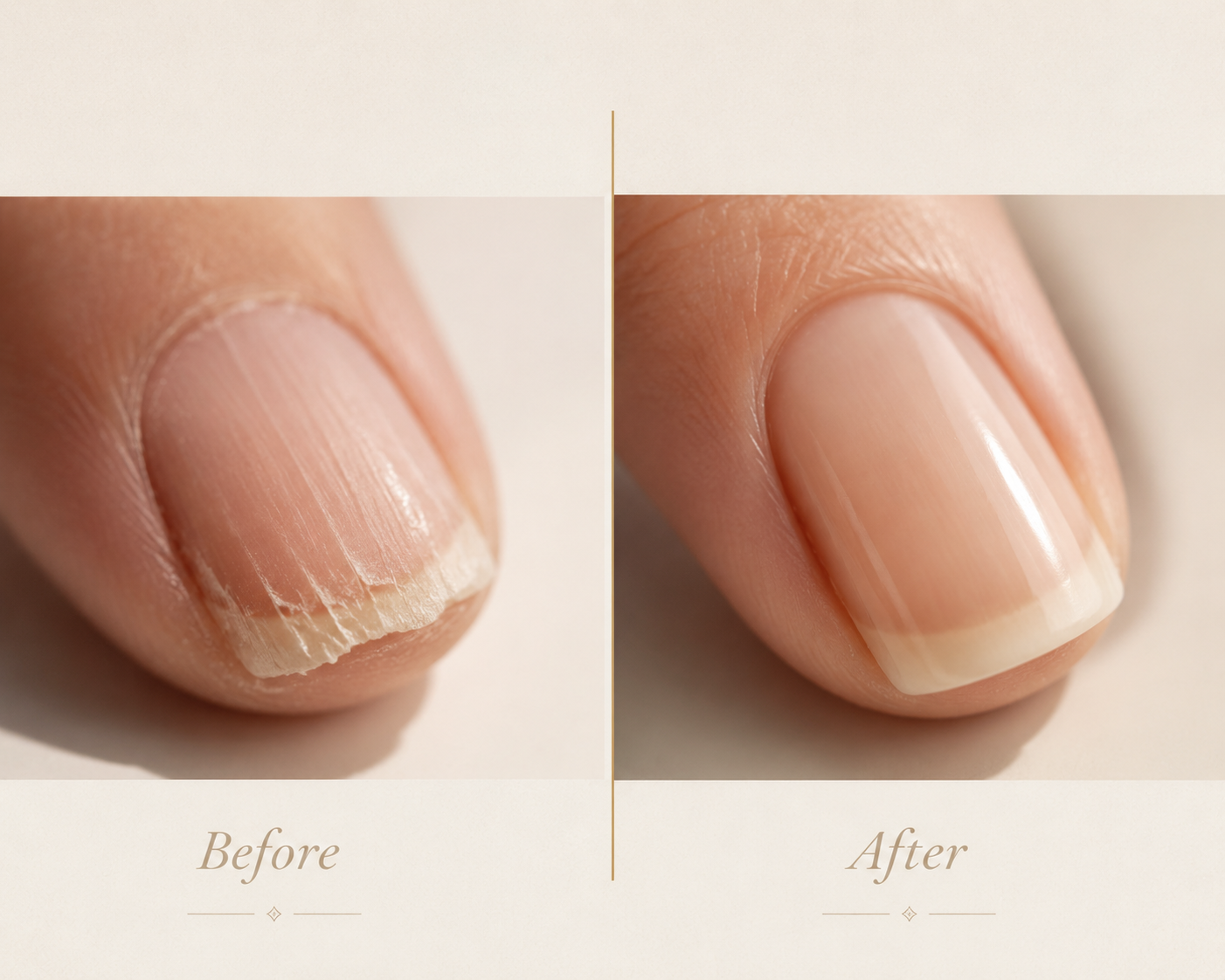
What a Nail Strengthener Actually Does
A nail strengthener is designed to work with the nail plate, not over it. Most formulas are absorbed into the layers of keratin, helping to reinforce the nail from within rather than simply coating the surface.
Protein and Keratin-Based Formulas
The most effective strengtheners rely on proteins, keratin amino acids, or calcium-based compounds that bind to the nail’s natural structure. Some also include hydrating oils to prevent the stiffness that can make an over-hardened nail more likely to snap.
This is an important distinction in the nail strengthener vs gel overlay conversation. A strengthener is a treatment. A gel overlay, as we will cover shortly, is closer to a shield.
A Realistic Timeline for Results
Patience matters here. Because nails grow slowly, most people need six to twelve weeks of consistent use before noticing meaningfully stronger, smoother growth. This mirrors what dermatologists generally advise, since visible nail improvement follows the nail’s own growth cycle rather than any single product.
If you are hoping for an overnight transformation, a strengthener will feel underwhelming at first. If you are building a longer-term ritual, it is often the more honest choice.
What a Gel Overlay Actually Does
A gel overlay adds a thin, flexible layer of gel over the natural nail, typically without extensions. It is prized for its glass-like shine and its ability to protect nails from everyday wear, from typing to dish washing to the simple friction of daily life.
Protection vs. Repair — An Important Distinction
This is the heart of the matter. A gel overlay does not strengthen the nail underneath it. It shields the nail from further damage while it is worn, which can be genuinely helpful for someone who bites their nails or catches them on everything. However, once the overlay is removed, the nail underneath is exactly as strong, or as weak, as it was before.
The American Academy of Dermatology has noted that gel manicures, while beautiful, can be tough on nails, and repeated use may contribute to brittleness, peeling, and cracking over time. This does not mean gel overlay is the villain of this story. It simply means it plays a different role than a strengthener, and it works best when it is not asked to do a strengthener’s job.
Which One Should You Choose?
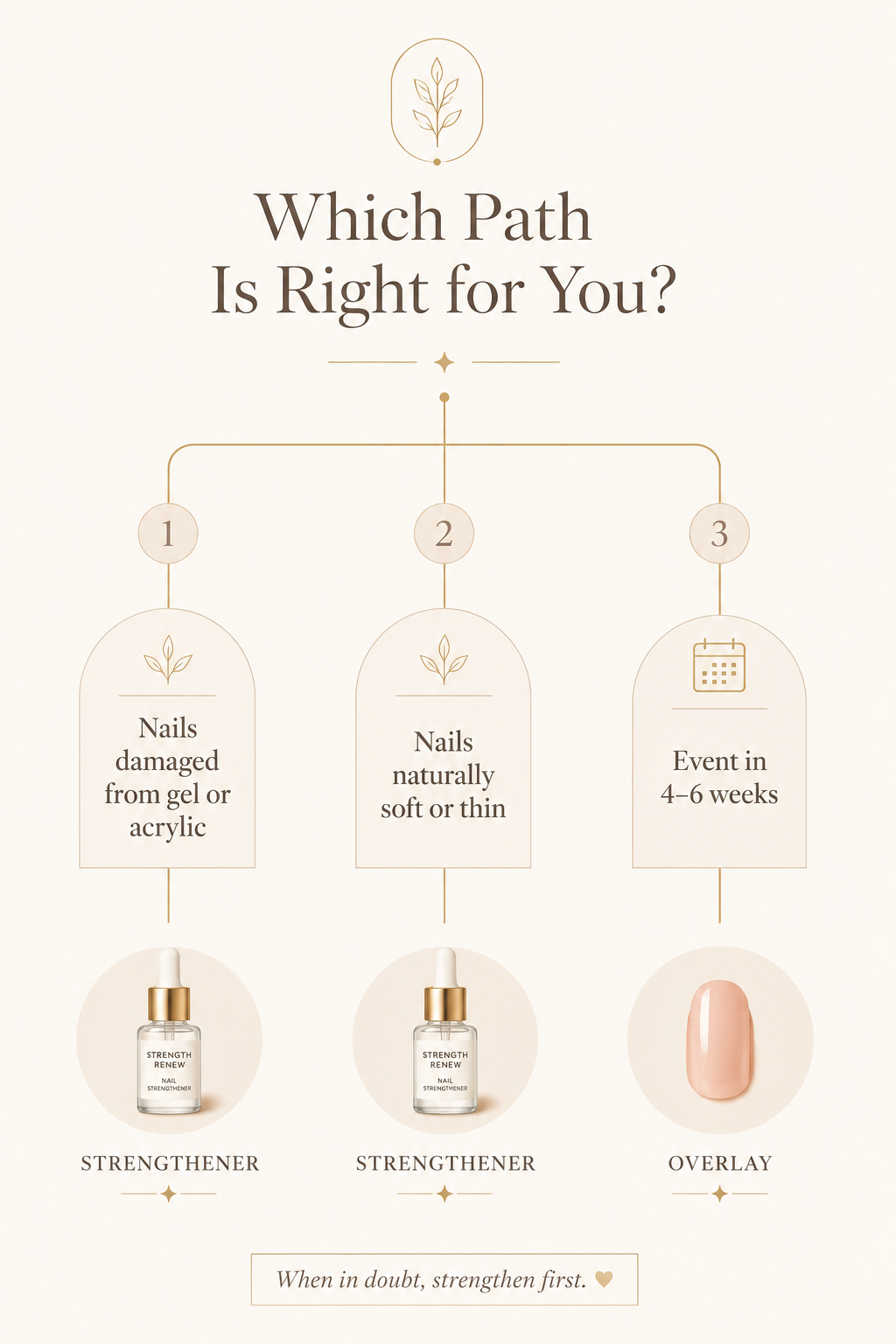
When it comes to nail strengthener vs gel overlay, the honest answer depends less on which product performs better and more on what your nails actually need right now.
If Your Nails Are Damaged From Gel or Acrylic — Reach for a Strengthener
Choose a strengthening treatment first. Nails recovering from long-term gel or acrylic wear typically need rehydration and reinforcement, not another layer sealed on top. A polish holiday paired with a keratin-based strengthener gives the nail room to repair itself.
If Your Nails Are Naturally Soft or Thin
A gel overlay may be worth considering here, but pair it with a strengthening base coat underneath rather than using it alone. This allows you to enjoy the protective, polished finish of gel while still supporting the nail itself.
If You Have an Event in 4–6 Weeks — This Is Gel Overlay Territory
This is where a gel overlay tends to make the most sense. Six weeks is rarely enough time for a strengthener to deliver a dramatic transformation, so a protective overlay can offer the polished, event-ready look you want without overpromising on repair.
How to Use Both, Safely
The truth is, nail strengthener vs gel overlay isn’t really an either-or decision. These two approaches are not actually rivals. Many women find the most elegant results come from using them in sequence rather than choosing one forever.
A simple seasonal rhythm might look like this: wear a gel overlay for special occasions or particularly busy stretches, then take a deliberate break afterward to apply a strengthening treatment for several weeks before your next set. This rotation allows the nail to recover its natural resilience instead of living under constant coverage.
If you do choose to layer a strengthener underneath gel, look for a thin, breathable formula rather than a thick ridge-filling base, since overly thick layers can affect how evenly the gel adheres and wears.
Soft Élan Note: A quiet manicure ritual is often more effective than an elaborate one. A strengthening base coat, a nourishing cuticle oil, and consistency will outperform a cabinet full of products every time.
Frequently Asked Questions
Can you use a strengthener under gel? Yes, in most cases. A thin, breathable strengthening base coat can be worn beneath gel polish or a gel overlay. Avoid thick, heavily ridge-filling formulas, which can interfere with adhesion.
How often should you reapply a nail strengthener? Most strengtheners are designed to be reapplied every two to three days, similar to a regular base coat, with full results building over six to twelve weeks of consistent use.
Will my nails go back to normal after gel damage? In most cases, yes. Nails are able to fully regenerate as they grow, and a nail bed typically renews itself every four to six months. Supporting that process with a polish break and a strengthening ritual tends to speed the recovery along.
A Soft Final Thought
Weak nails are rarely a flaw. They are simply a sign that your nails have been asking for a little more care than they have been given. In the end, the nail strengthener vs gel overlay debate isn’t about finding a winner — it’s about matching the right ritual to where your nails are right now. The real transformation comes from consistency rather than any single product.
For a closer look at specific formulas worth trying, our Best Nail Strengthener: A Soft Élan Buying Guide for Weak, Brittle Nails walks through our favorite options in more detail. And if you are transitioning away from gel altogether, our guide on how to remove gel nails at home without damaging your nails is a gentle place to start.
Beautiful nails rarely come from perfection. They come from small rituals, repeated with a little patience, until your hands simply begin to reflect the care you have given them.
Related reading: Best Base Coat and Top Coat for a Salon-Quality Manicure at Home · The Best Cuticle Oils for Healthy, Elegant Nails: A Curated Guide
Sources: American Academy of Dermatology, “Gel manicures: Tips for healthy nails”; Cleveland Clinic, “Brittle Nails: Causes and Treatment Tips.”