Nail Vitamins and Supplements: Do They Actually Work?
There is something quietly hopeful about a bottle of nail vitamins sitting on your bathroom shelf. It feels like a small promise — that patience, taken daily, might finally give you the strong, glossy nails you have been chasing.
But if you have ever wondered whether you are wasting your money, you are not alone. Searching for the best nail vitamins for growth usually leads to a wall of bold marketing claims, and very little honesty about what the research actually shows. This guide takes a calmer, more skeptical look — separating what the science supports from what is simply clever packaging.
If your nails already feel fragile, it helps to start with the basics in our guide on how to strengthen weak nails naturally before adding a supplement into the mix.
What’s Actually in Most Nail Growth Supplements
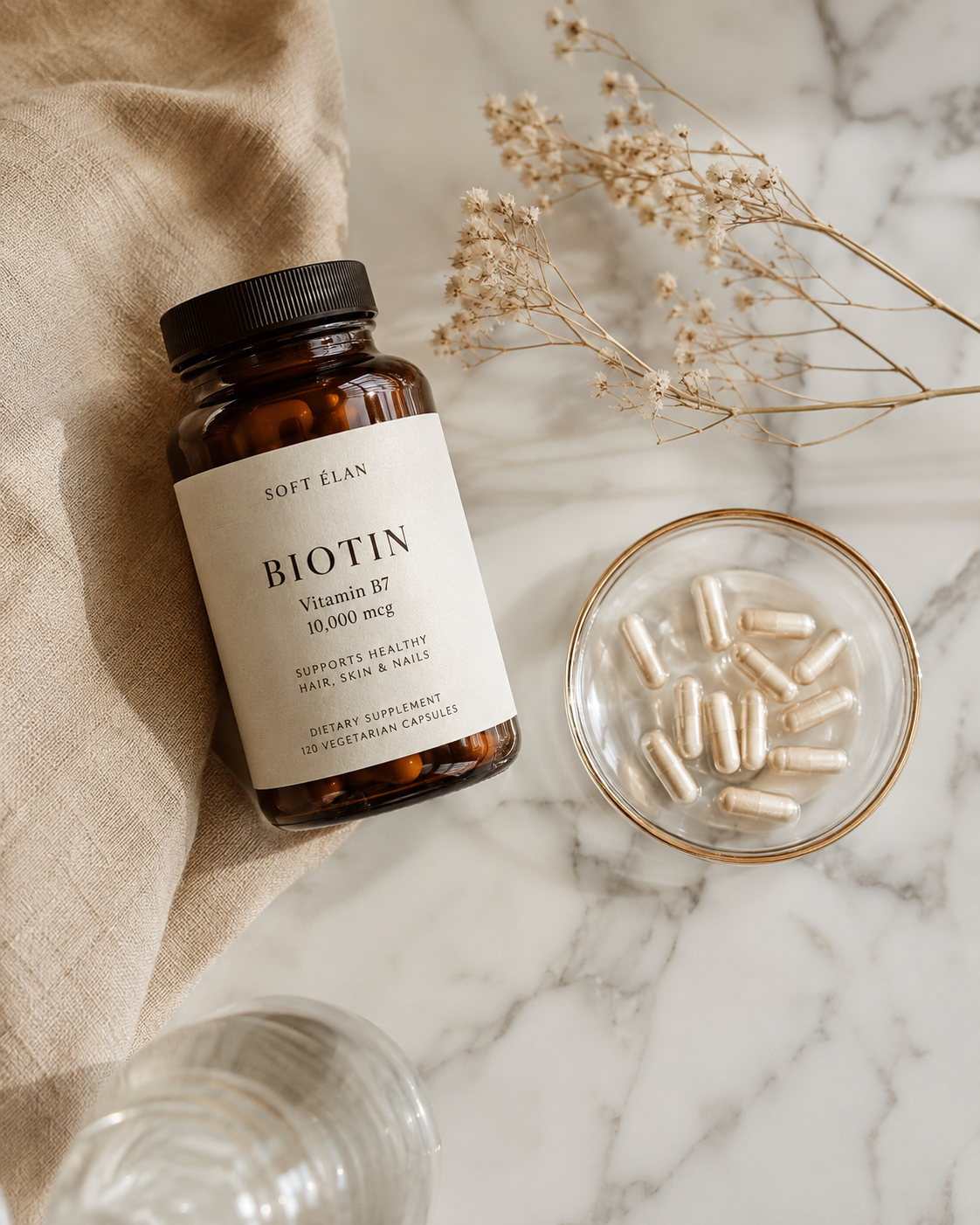
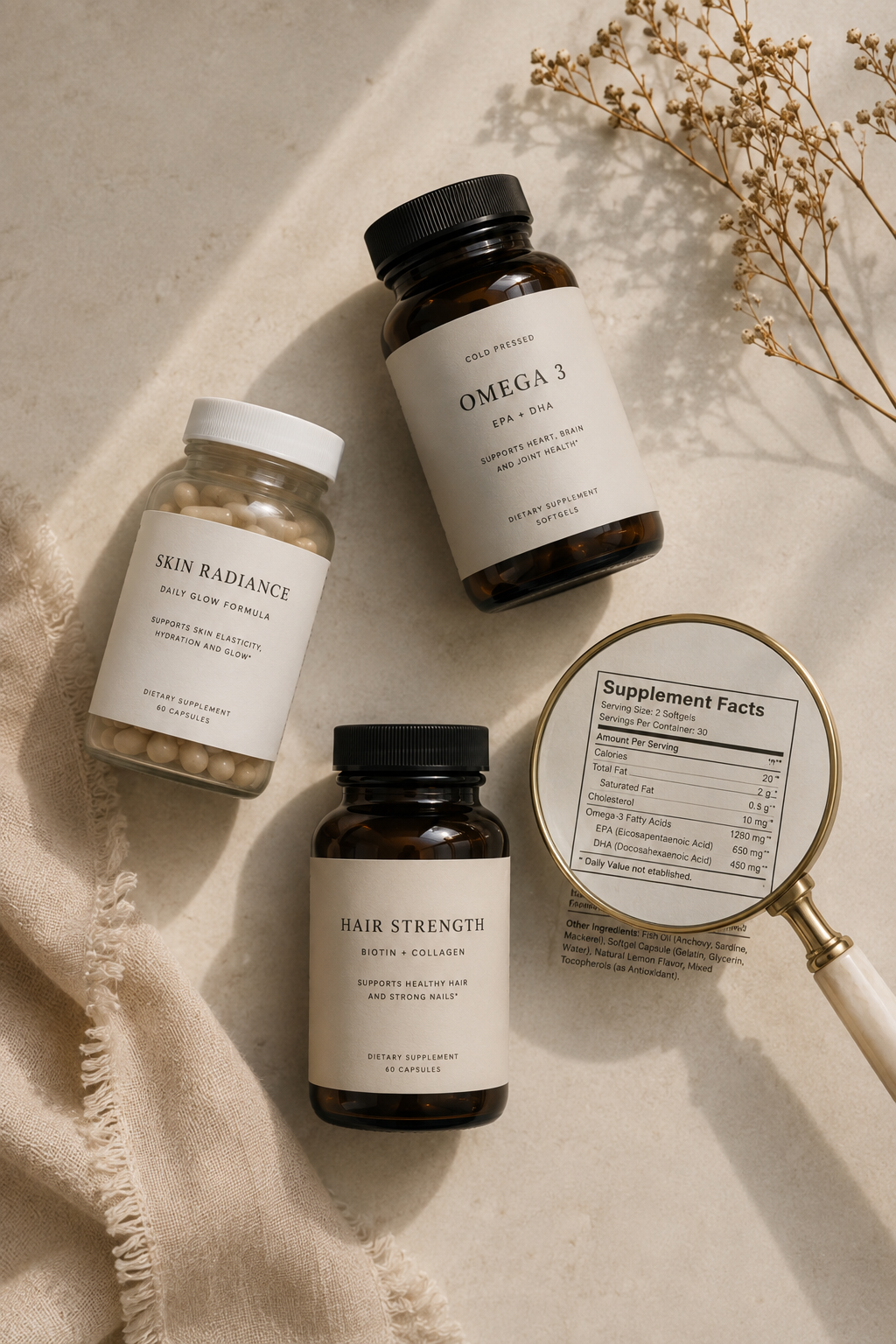
Open almost any nail supplement label and you will likely see the same familiar cast: biotin, collagen, zinc, vitamin E, and sometimes silica or keratin. Most formulas combine several of these in modest doses, hoping the blend performs better than any single nutrient alone.
The truth is more nuanced. Supplements are not required to prove effectiveness before they reach shelves, since the FDA does not evaluate dietary supplements the way it evaluates medications. That does not make every product useless — it simply means the burden of research falls on you, the reader, rather than the label.
Zinc and vitamin E tend to play a supporting role rather than a starring one. Both are genuinely important for healthy skin and nail tissue, but a true deficiency in either is uncommon among women eating a varied diet. Silica and keratin, meanwhile, are newer additions to many formulas, and the research behind them is still early. They are not without promise, but they have not yet been studied nearly as thoroughly as biotin or collagen.
Soft Élan Note: A beautifully designed label is not the same thing as clinical evidence. Read past the packaging before you read the ingredient panel.
What the Research Says About Biotin and Nail Growth
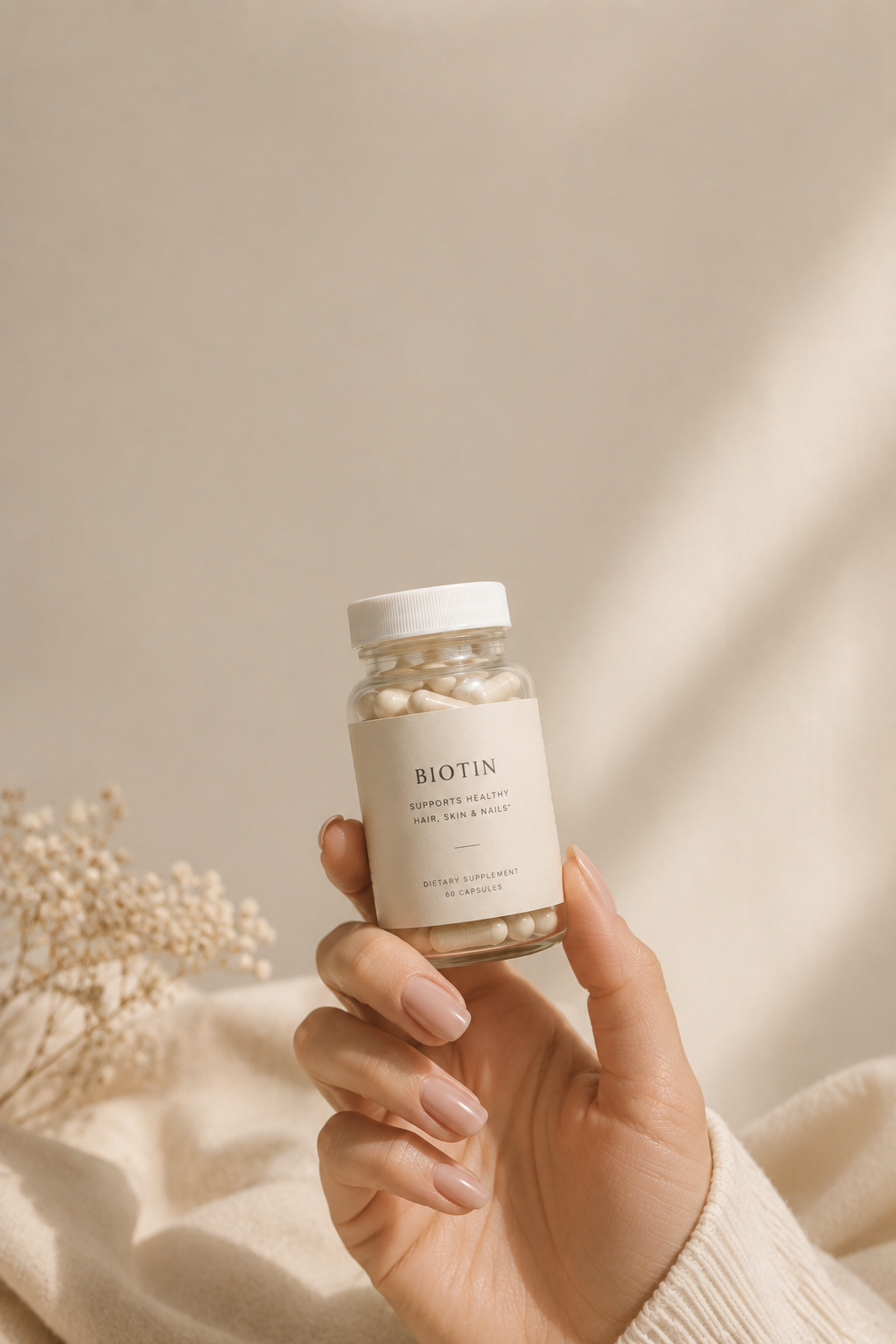
Biotin is, understandably, the star of most nail supplements. It has the longest history and the most frequently cited research behind it.
A handful of small clinical studies have found that biotin can improve brittle, splitting nails. In one foundational trial, women with soft or splitting nails who took 2.5 milligrams of biotin daily for several months saw meaningful improvement in nail thickness, and a majority reported firmer, less fragile nails after roughly five to six months of consistent use. Later reviews of biotin’s use in nail disorders reached a similar, cautiously encouraging conclusion: oral biotin appears to help with certain brittle nail conditions specifically, even if the studies remain small.
There is an important distinction here, though. Most of this research focused on people with genuinely brittle nails, not on healthy nails simply looking to grow faster. Dermatology reviews are candid about this limitation, noting that supplementing biotin in someone who is not deficient has far less proven benefit than the marketing suggests.
There is also a practical caution worth mentioning. High-dose biotin can interfere with certain lab tests, including thyroid panels, which is why many physicians recommend pausing biotin supplements several days before bloodwork. If you take biotin regularly, it is worth mentioning to your doctor before any blood draw.
Collagen for Nails — Worth It?
Collagen has become the more fashionable alternative to biotin, and the early research is genuinely interesting, if still limited. One well-known 24-week study found that daily collagen peptide supplementation was associated with a meaningful increase in nail growth rate and a notable drop in broken nails among participants. A more recent trial in an East Asian population reported similar improvements in nail thickness and reduced brittleness.
Reviewers are careful to note that nail-specific collagen research remains far smaller than the research on skin, which is reason enough to treat the results as promising rather than proven. Still, for readers who already enjoy collagen for skin or joint support, the possible nail benefit feels like a graceful bonus rather than a reason to buy on its own.
When Supplements Help — and When Diet Is Enough
If your diet already includes enough protein, biotin-rich foods like eggs and leafy greens, and a reasonable intake of zinc and iron, a supplement may add very little. True nutrient deficiencies are relatively uncommon in otherwise healthy adults, and most everyday nail weakness traces back to something else entirely: frequent gel manicures, harsh acetone removers, dry winter air, or simply too much time spent with wet hands.
For a fuller picture of what is actually shaping your nail health, our piece on how fast nails really grow walks through the science behind growth rate and what genuinely moves the needle.
Supplements tend to make the most sense when nails are visibly brittle, splitting, or unusually slow to grow, and when a doctor has ruled out an underlying condition. In that specific case, biotin or collagen may offer real, measurable support. Outside of it, the most reliable investment is often still topical: a nourishing oil, gentle handling, and a little consistency.
It also helps to think about what your nails have actually been through lately. Frequent gel manicures and the soaking or filing required to remove them can leave nails visibly thinner, regardless of what you take internally. In those cases, easing up on harsh removal methods will likely do more for your nails than any capsule. Our guide to removing gel nails at home without damage is a gentle place to start if that sounds familiar.
How to Choose a Quality Nail Supplement
Not all bottles are created with the same care, so a little discernment goes a long way.
Look for a clearly stated dose that matches what was actually used in research — around 2,500 micrograms of biotin, for instance, rather than an inflated multiple simply because biotin is inexpensive to include. Favor brands that publish third-party testing, since supplements are not independently verified before sale. And be wary of any label promising dramatic results within days; nails grow slowly, and real change takes months, not weeks.
If you would rather support your nails from the outside in first, our Soft Élan buying guide to nail strengtheners is a gentler place to start. For readers who have been leaning on gel overlays to hide damage, it is also worth comparing nail strengthener versus gel overlay to understand which approach actually addresses the root problem.
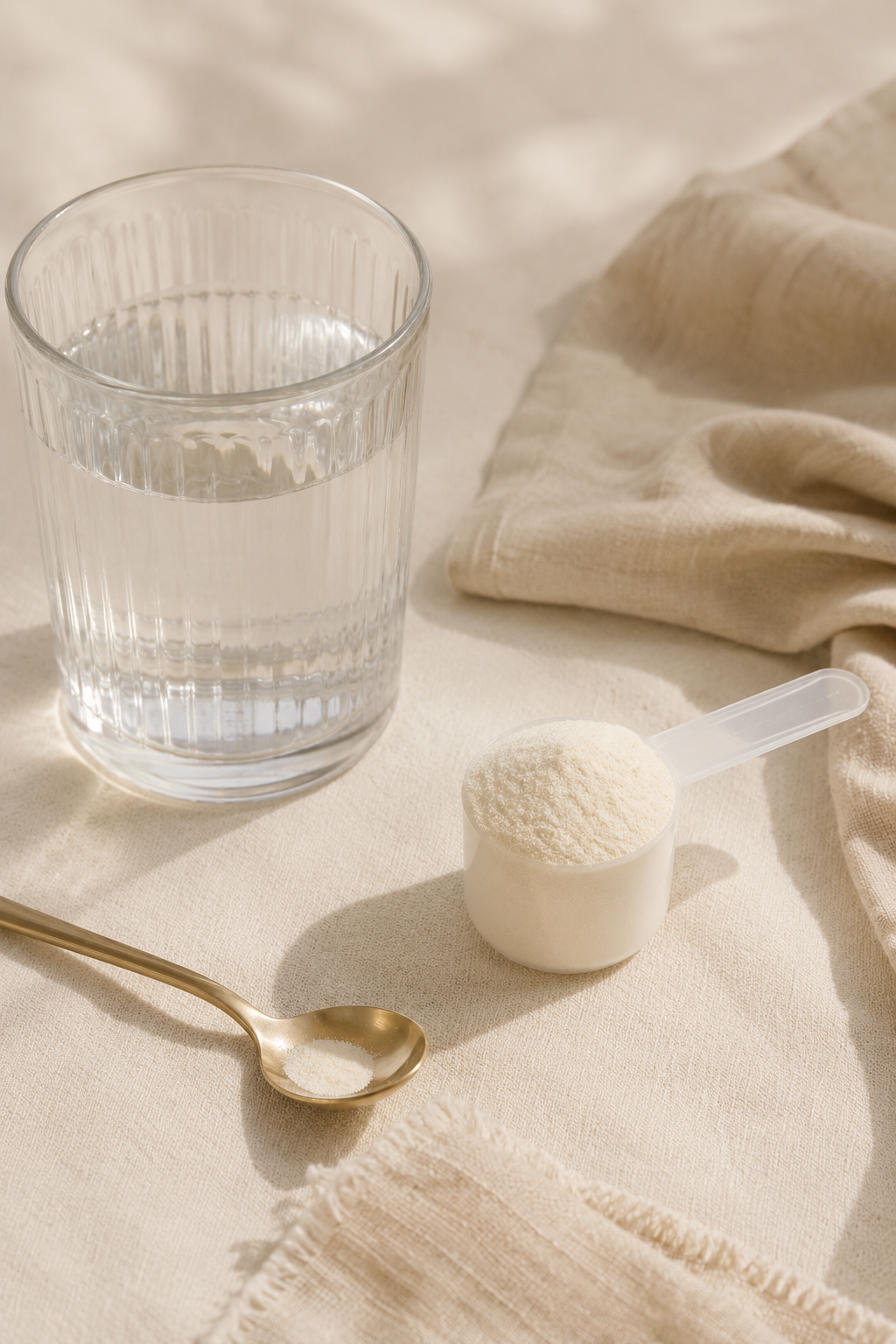
A high-quality marine collagen peptide powder, like the ones from Vital Proteins, is a reasonable place to begin if you are drawn to the collagen research and already enjoy incorporating it into your routine. It is not a guarantee, but it is a thoughtful, evidence-informed choice rather than a leap of faith.
Frequently Asked Questions
How long until nail supplements show results? Most research points to a timeline of four to six months before visible change appears, since nails grow slowly and need time to fully replace themselves. Patience matters more than the specific product you choose.
Are nail vitamins safe to take daily? For most healthy adults, biotin and collagen are considered low-risk at standard doses. Still, it is worth mentioning any supplement to your doctor, especially if you take other medications or have upcoming bloodwork, since biotin in particular can affect certain lab results.
A Quiet Takeaway
Nail supplements are not magic, and they were never meant to be. At their best, they are simply one small piece of a larger, gentler routine.
The research offers real, if modest, support for biotin and collagen — particularly for nails that are genuinely brittle rather than merely impatient to grow. The rest comes down to the everyday rituals: consistent hydration, careful handling, and a little grace while you wait.
Beautiful nails rarely come from a single bottle. They come from small, thoughtful habits, repeated quietly, month after month.