
There is a particular kind of quiet satisfaction that comes from a manicure that still looks polished five days later. Not because the color was expensive, but because of what happened before and after it. If you have ever wondered why a salon manicure seems to last so much longer than the one you did at home, the answer usually has little to do with the polish itself. The best base coat and top coat are what actually separate a fleeting manicure from one that holds its glow for a week or more.
Most of us reach for color first and treat these two products as an afterthought. It is an easy habit to fall into, especially when the bottles look so similar sitting side by side. But base coat and top coat serve entirely different purposes, and choosing them thoughtfully is one of the simplest ways to elevate an at-home manicure into something that feels salon-made.
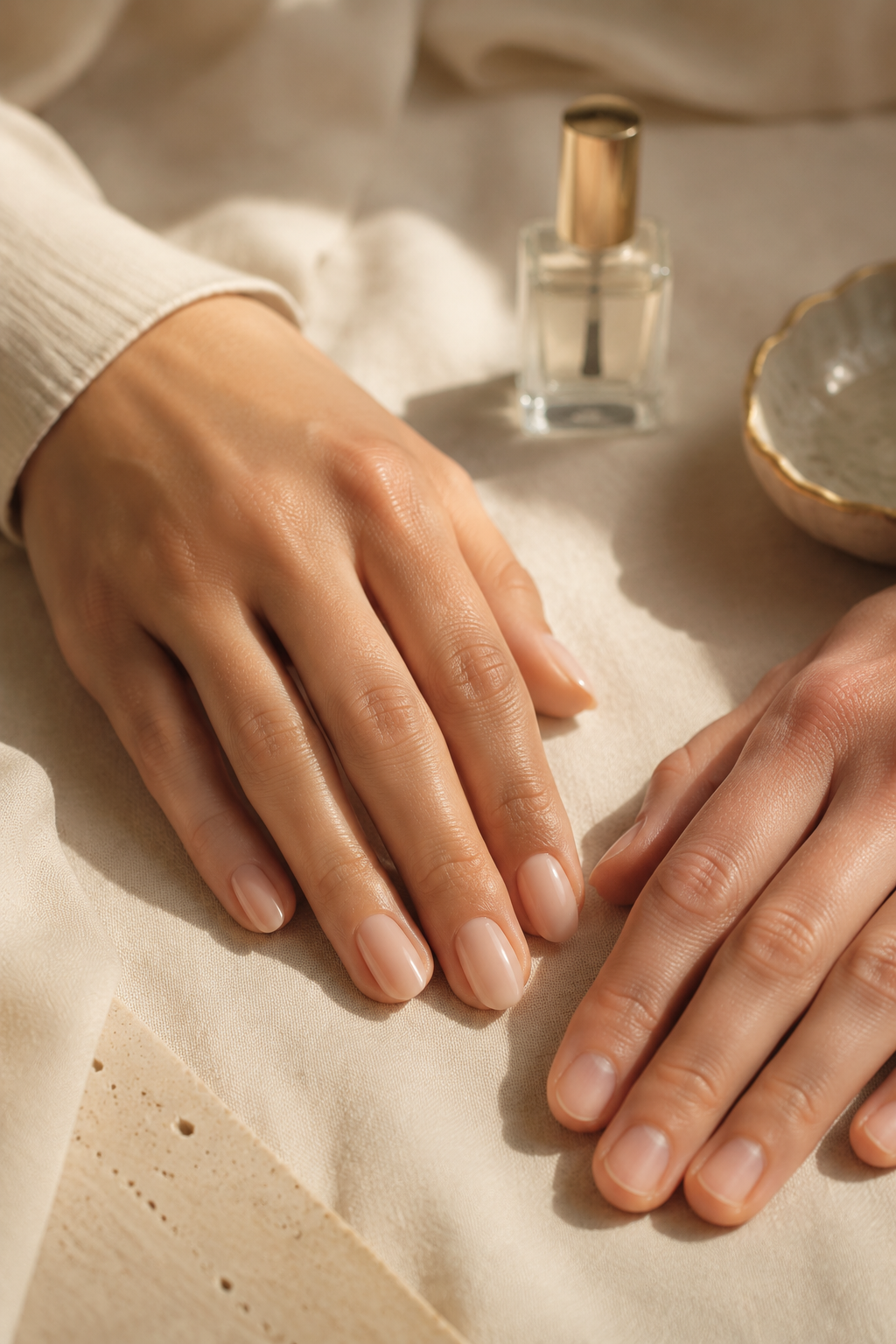
Why Base Coat and Top Coat Matter More Than Polish Color
It is tempting to believe that a beautiful shade is the hardest part of a good manicure. In truth, color is often the easiest decision. What determines whether that color lasts is the foundation underneath it and the shield placed over it.
A base coat does two quiet jobs at once. First, it smooths the natural ridges of the nail so polish glides on evenly. Second, it creates a barrier that protects the nail from staining, which matters more than most people realize with deeper reds and berries.
A top coat, meanwhile, is what gives a manicure its glass-like finish and its staying power. Without it, even the best polish tends to dull and chip within a few days. With the right one, that same polish can look freshly done well into the following week.
Together, a thoughtful base coat and top coat routine is often the difference between a manicure that feels like an afterthought and one that feels like a small daily luxury.
How to Choose the Best Base Coat for Your Nail Type
Not every nail needs the same kind of support. A base coat that works beautifully for one person may do very little for another, simply because nail types vary so much from hand to hand.
For Peeling or Weak Nails
If your nails tend to peel, split, or feel thin no matter how gently you file them, a strengthening base coat is worth the small investment. Look for formulas built around keratin, calcium, or nylon fibers, which help reinforce the nail plate rather than simply sitting on top of it. These formulas tend to feel slightly thicker going on, which is a good sign that they are doing real work beneath the polish.
For Oily Nail Beds That Won’t Hold Polish
Some nail beds naturally produce more oil, which makes polish slide right off within a day or two, however carefully it was applied. In this case, a gripping or adhesive base coat is the better choice. These formulas are designed to bond to naturally oily or slick nail surfaces, giving polish something to hold onto from the very first coat.
If you are unsure which category you fall into, our guide to the art of nail maintenance walks through how to read your own nails a little more closely before choosing products.
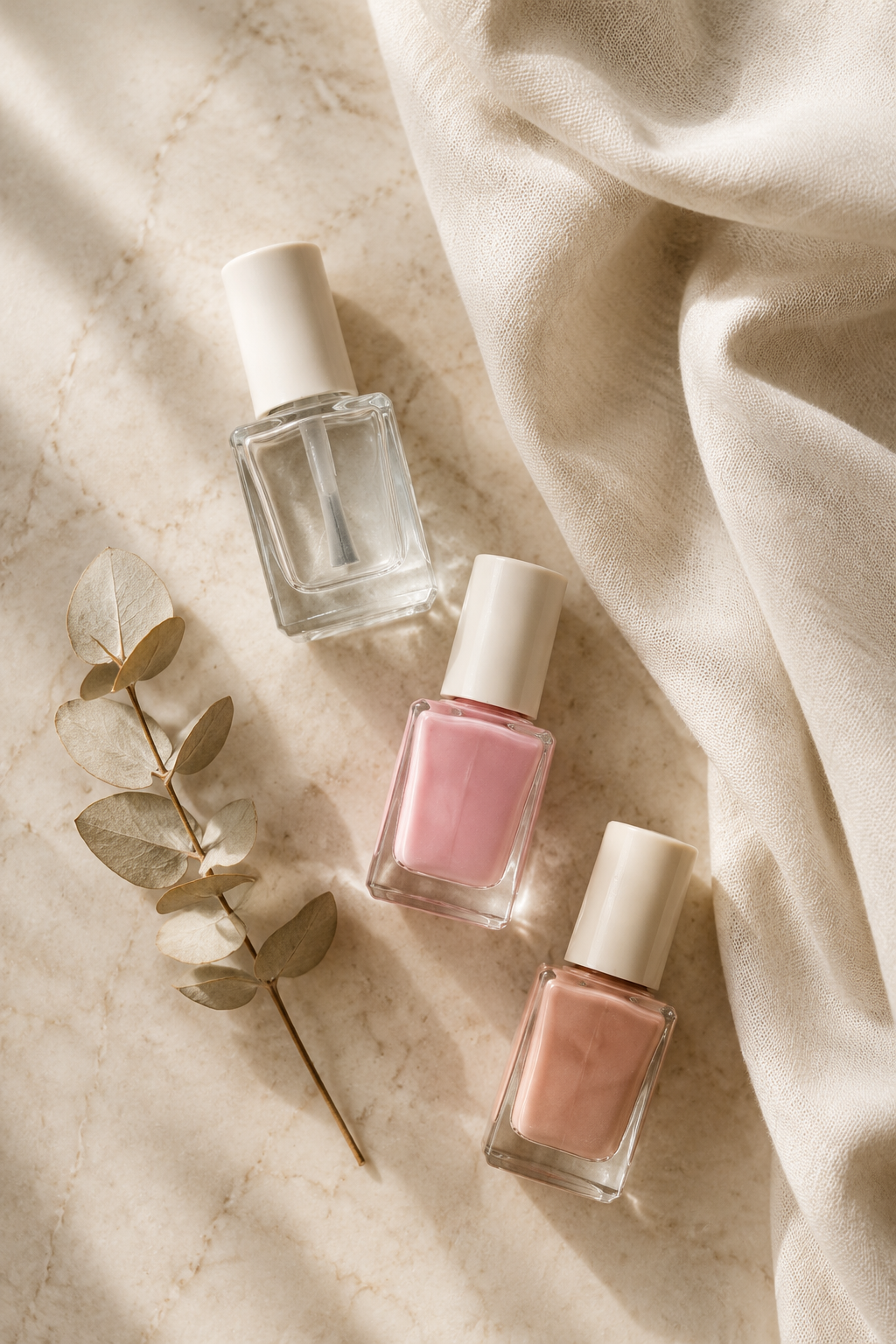
The Best Top Coat Picks: Glossy, Matte, Gel-Effect, and Fast-Dry
Once the base coat has done its work, the top coat is where personality and practicality meet. There are a few distinct finishes worth knowing, since each one suits a different lifestyle and aesthetic.
A glossy top coat is the classic choice, and for good reason. It gives polish a rounded, glass-like shine and tends to offer the longest wear of the group. This is the finish most closely associated with a traditional salon-quality manicure at home.
A matte top coat, on the other hand, softens color into something velvety and understated, which pairs beautifully with the soft feminine aesthetic many of us are drawn to for everyday wear.
A gel-effect top coat sits somewhere in between regular polish and true gel manicures. It builds a slightly domed, high-shine layer without requiring UV curing, which makes it a lovely option for anyone who wants gel-like results without the salon appointment.
Quick-Dry Picks for Busy Mornings
For mornings when there simply isn’t time to wait around with wet nails, a fast-drying top coat is worth keeping on hand. These formulas are formulated to set within a few minutes rather than the usual half hour, which makes them especially practical before work or while getting the kids out the door.
Application Order and Mistakes to Avoid
A salon-quality manicure at home depends as much on technique as it does on product choice. Even the best base coat and top coat can underperform if the order or timing is off.
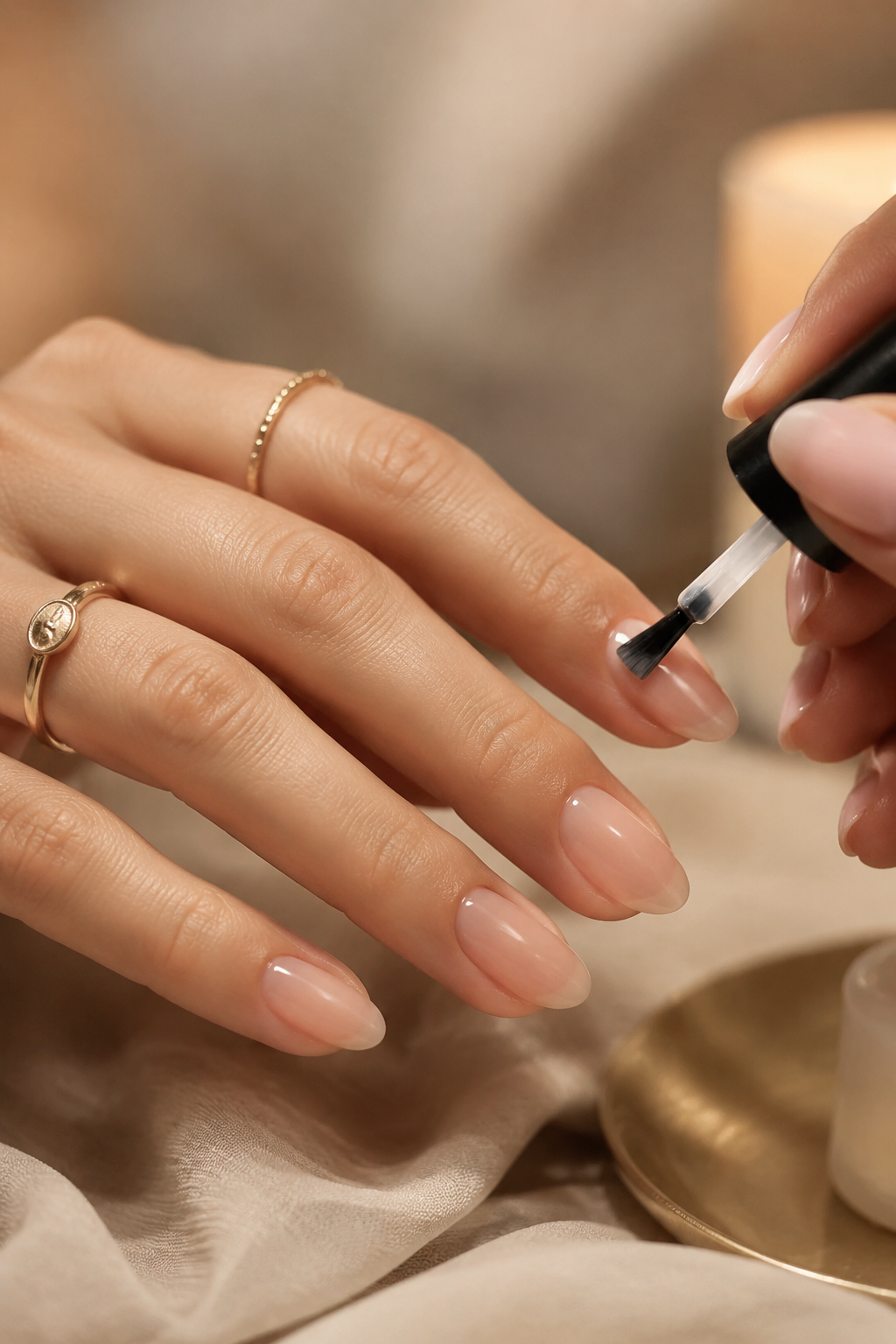
The correct sequence is simple: a thin layer of base coat, two thin layers of color, and one generous layer of top coat that seals the edges of the nail. Sealing the tip of the nail with each layer, including the top coat, helps prevent the lifting that so often starts right at the edge.
A few common mistakes tend to shorten a manicure’s life:
- Applying polish in thick layers instead of thin ones, which slows drying and encourages smudging.
- Skipping the base coat entirely, which leaves nails more prone to staining and peeling.
- Rushing the top coat before the color underneath has fully set.
- Forgetting to cap the free edge, which leaves the most vulnerable part of the nail unprotected.
For a deeper look at daily habits that support longer-lasting polish, this simple ten-minute nail care ritual is worth adding to your routine.
Soft Élan Favorites Across Every Price Point
A rich formula does not need to come with a rich price tag, and some of the loveliest base and top coats sit at very different points on the shelf. Here are a few worth knowing.
For strengthening, a calcium and keratin-infused base coat from CND is especially loved for feeling reinforcing without leaving nails stiff or brittle. For oily nail beds, Sally Hansen’s gripping base coat is a quiet favorite for how well it holds onto tricky, slick nail surfaces.
On the top coat side, Essie’s glossy formula remains a classic for its glass-like finish and easy application, while Seche Vite has built a loyal following for how quickly it sets, making it ideal for busy schedules. For a soft, editorial matte finish, OPI’s matte top coat turns even the simplest nude into something quietly striking.
Soft Élan Note: Keeping one bottle each of a strengthening base coat and a fast-dry top coat in your everyday kit is one of those small habits that makes every at-home manicure feel a little more considered.
If your nails have taken a beating from frequent gel manicures, our guide on rebuilding weak nails after gel pairs well with the base coats mentioned here.
Frequently Asked Questions
Do I need both a base coat and a top coat? Yes, ideally. A base coat protects the nail and helps polish adhere evenly, while a top coat seals color in and adds shine. Skipping either one tends to shorten how long a manicure lasts.
How long should top coat dry before I go about my day? Most top coats need at least twenty to thirty minutes to fully set, even if they feel dry to the touch sooner. Fast-drying formulas can shorten this to five or ten minutes.
Can a top coat fix polish that has already chipped? A fresh layer of top coat can sometimes smooth over very light wear, but it will not repair a true chip. In that case, gently smoothing the chipped area before reapplying a thin layer of top coat tends to give the cleanest result.
The Last Layer
Beautiful nails rarely come down to one perfect product. They come from small, considered layers, chosen with a little more intention than usual.
A good base coat and top coat will not transform a manicure overnight, but they will quietly extend its life, day after day. Over time, that small ritual becomes part of what makes your hands feel put together, even on the days you barely had a moment to think about them.
For more on keeping polish looking fresh between manicures, our guide on keeping nails looking fresh between salon visits is a natural next read — along with our upcoming guide to the best nail strengtheners, arriving soon.