
A Fresh Start for Your Natural Nails
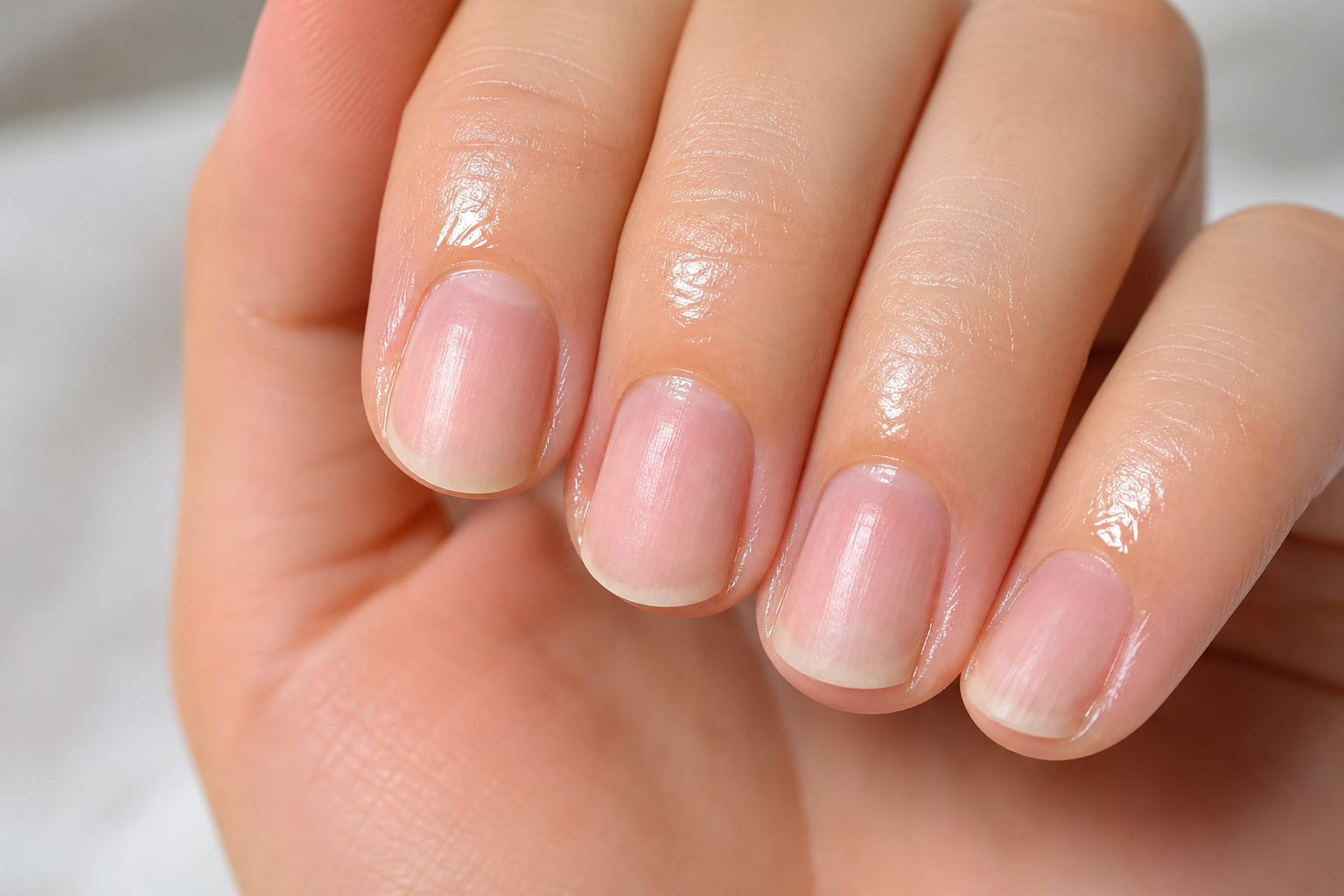
There is a quiet moment that many women recognize.
You sit down to remove your gel manicure — soaking your nails in acetone, gently working each layer free — and when it’s finally done, your nails feel different. Softer. Thinner. A little more fragile than you remembered.
It is not a reason to panic, and it is certainly not a reason to feel discouraged.
Nail strengthening after gel is something many women go through, and recovery is entirely possible. With a few thoughtful habits, the right products, and a little patience, you can rebuild your nails and return them to a healthy, polished state.
This guide walks you through a calm, realistic 30-day plan to restore your natural nails — gently, and without drama.
In this guide: Why Nails Feel Weak · Signs You Need Recovery · The 30-Day Plan · Best Products · Why Short Nails Work · Common Mistakes · FAQ
Soft Élan Note: If your hands are also dealing with a sore hangnail alongside weakened nails, How to Fix a Hangnail Without Making It Worse is worth reading before you start this routine.
Why Nails Feel Weak After Gel Removal
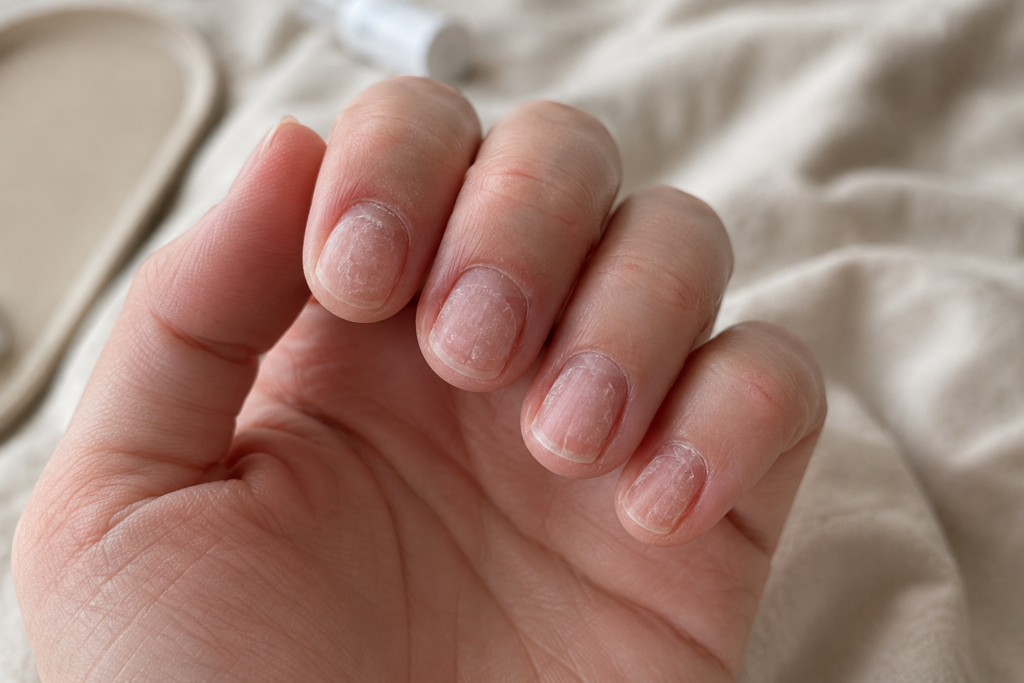
Gel manicures are beautiful. They last well, they look polished, and for many women, they are simply part of a regular self-care rhythm.
But over time — particularly with repeated applications and removals — the nail plate can become dehydrated and fragile. The reasons are worth understanding, not as a warning, but as useful context.
Buffing and filing. Before gel is applied, the nail surface is lightly filed to help the product adhere. Over many cycles, this gradual thinning can affect the nail plate.
Acetone exposure. Acetone dissolves gel polish effectively, but it is also drying. Repeated soaks can strip moisture from the nail and surrounding skin, leaving nails prone to brittleness.
Peeling or picking gel off. This is the most significant source of damage. When gel is lifted rather than properly soaked off, it takes layers of the actual nail plate with it.
Dehydration between appointments. Nails that are continuously coated without any rest or hydration can become depleted over time.
Gel polish itself is not inherently harmful — many women wear it for years without issue. The challenges most often come from improper removal, overly frequent applications, or skipping care between appointments.
According to The American Academy of Dermatology, acetone-based removers can dry both the nail plate and surrounding skin, while repeated trauma from filing or picking may contribute to surface damage over time.
The reassuring news: this type of damage is usually not permanent. With consistent hydration, gentle care, and a little protection, most nails gradually regain their strength as healthy new growth replaces the damaged portion.
The goal is not to undo years of gel in a week. It is to restore moisture, protection, and strength, gradually.
Soft Élan Note: A steady cuticle routine does more for nail strength than most people expect. Cuticle Care 101: The Health-First Hand Routine Quiet Luxury Women Swear By is a lovely companion piece to this guide.
Signs Your Nails May Need a Recovery Period
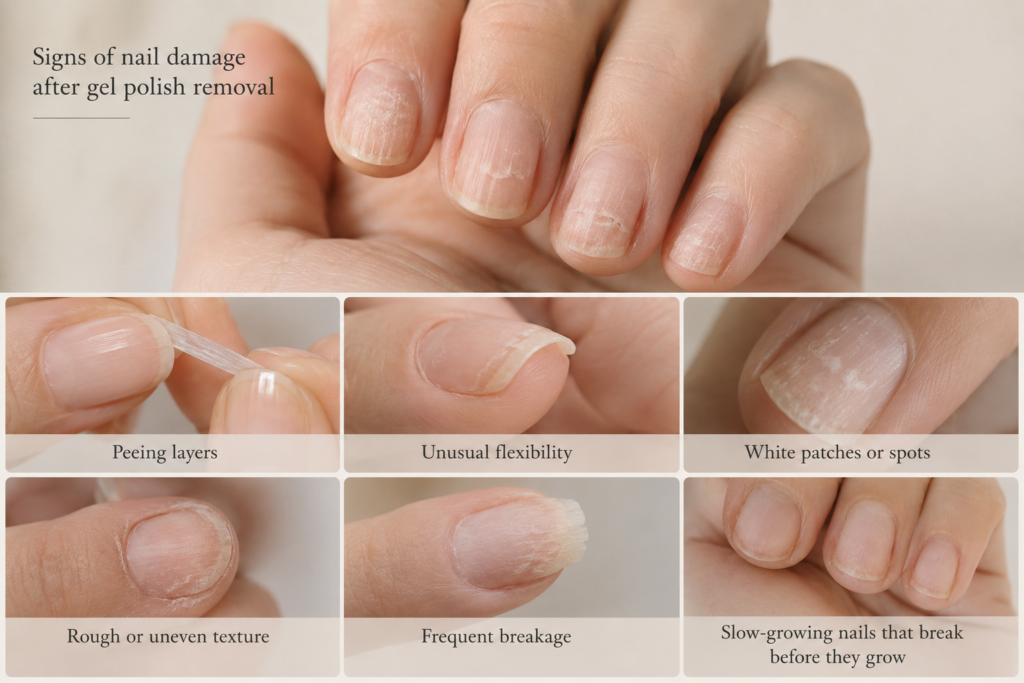
Not every set of nails needs an extended break from gel. But a few signs suggest a rest period, paired with focused care, would genuinely help.
Peeling layers. If nails are separating into thin sheets, the plate has likely been weakened. This is one of the clearest signs of dehydration.
Unusual flexibility. Healthy nails have a slight give, but should still feel firm. Easy bending under light pressure means they need support.
White patches or spots. These can follow acetone exposure or surface damage, though some spots have unrelated causes.
Rough or uneven texture. A healthy surface is smooth. Ridged or chalky texture reflects surface wear.
Frequent breakage. If nails that were once manageable now split at every corner, a recovery routine will help more than another coat of polish.
Slow-growing nails that break before they grow. Sometimes the issue isn’t length — it’s that nails can’t survive long enough to show growth. Strengthening the existing nail builds the foundation for length later.
The 30-Day Nail Recovery Plan
Recovery does not have to feel like a strict regimen. Think of it as a quiet series of small rituals — consistent, gentle, and genuinely enjoyable.
Week 1: Protect and Hydrate
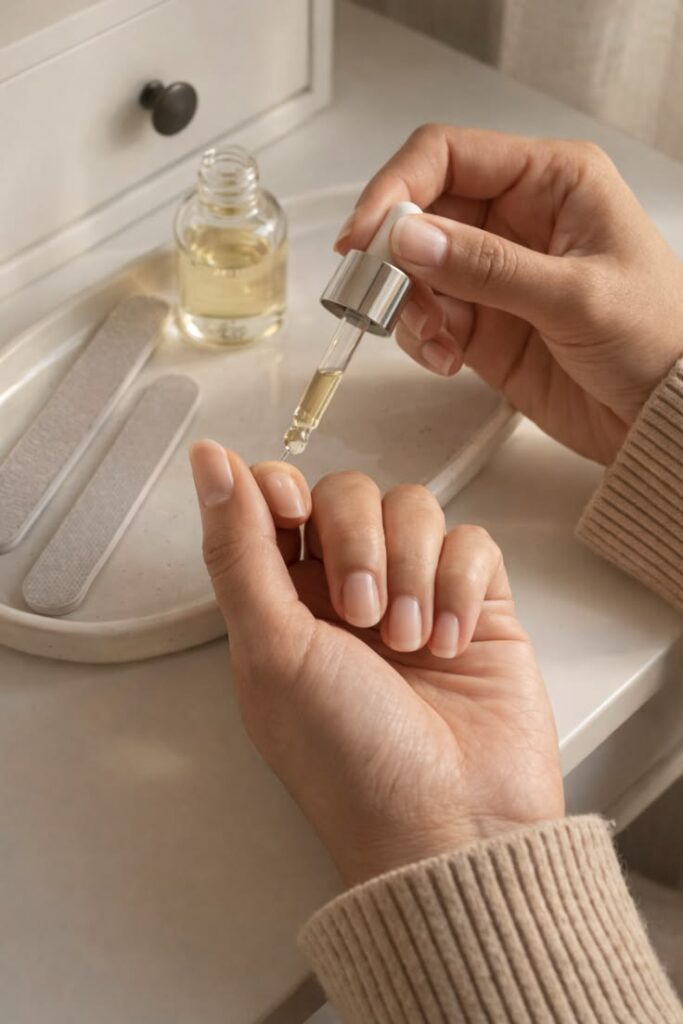
The first week is about stabilizing. Your nails have likely lost moisture and may feel more vulnerable than usual. The priority is protection and deep hydration, not treatment.
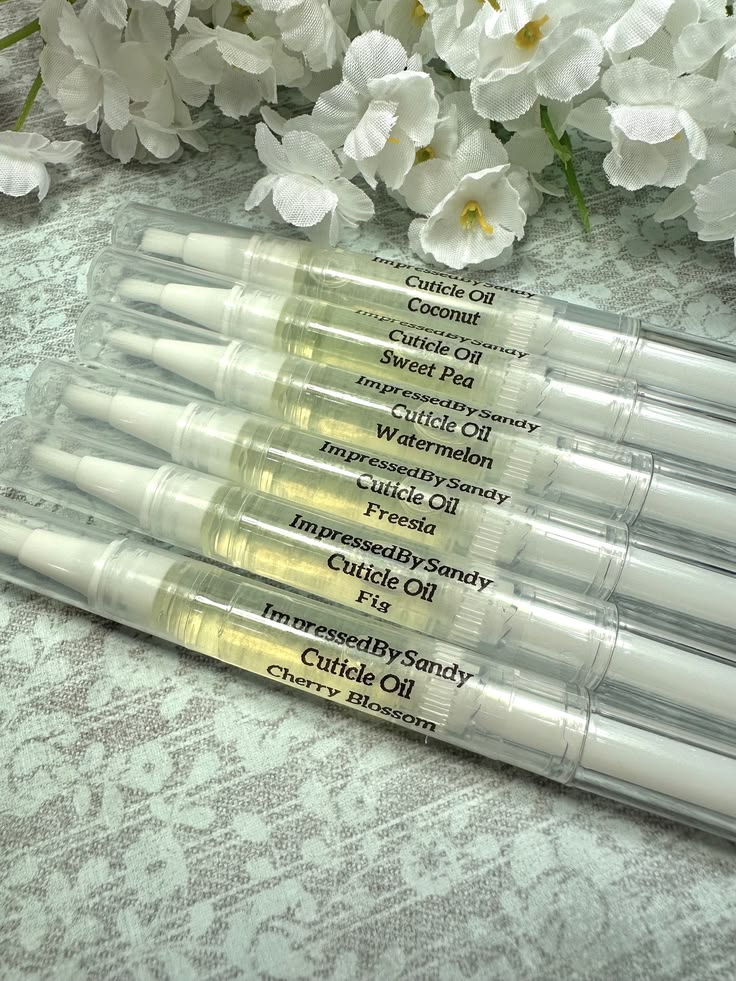
Focus on: Cuticle oil, morning and evening — non-negotiable during recovery. It nourishes the nail matrix, where new growth originates, and restores flexibility to the surrounding skin. A nourishing hand cream, applied two to three times daily, makes a visible difference too. If nails feel too fragile to leave bare, a clear, non-hardening base coat adds a layer of protection without extra stress. The Best Base Coat and Top Coat for a Salon-Quality Manicure at Home walks through gentle, non-hardening formulas worth keeping on hand.
Avoid: Acetone-based removers entirely — use acetone-free alternatives. Wear gloves for dishes or cleaning; prolonged water exposure softens already-weakened nails.
Expected by end of week one: Nails may still feel fragile, but the skin around them looks healthier, and peeling begins to slow.
Soft Élan Note: Cuticle oil is one of the most quietly effective habits in any nail routine. The Best Cuticle Oils for Healthy, Elegant Nails is a refined guide to finding the right formula.
Week 2: Restore Moisture and Flexibility
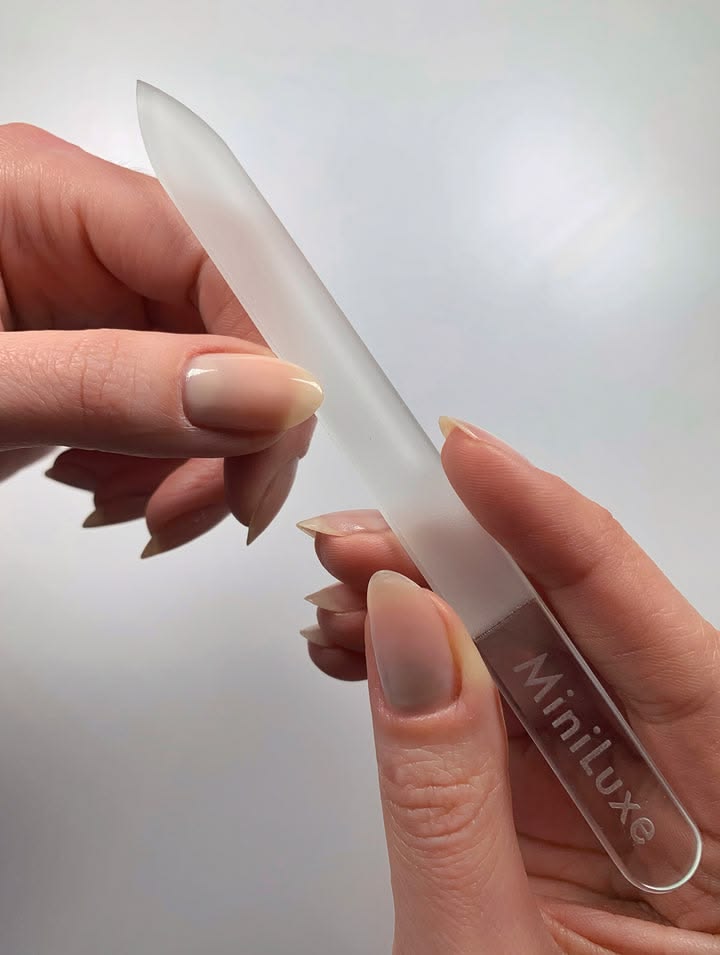
By the second week, focus shifts from protection to active restoration.
Focus on: Continued cuticle oil, morning and night. Consider a dedicated treatment formulated to restore moisture and flexibility rather than simply harden the nail — overly hard nails can become brittle in their own way. Keep nails short and even; a smooth, rounded edge is less likely to snag or split. File in one direction with a gentle glass or crystal file.
Avoid: A new gel or dip manicure. Even well-intentioned reapplication interrupts healing. A bare nail, or a sheer polish, is genuinely elegant during this stretch.
Expected by end of week two: Peeling and splitting reduce. Nails are still short, but texture is smoother.
What to avoid: Resist the temptation to apply a new gel or dip powder manicure during recovery. Even well-intentioned re-application can interrupt the healing process. A clean, bare nail — or a simple layer of sheer polish — is genuinely elegant during this period.
Expected improvement: Peeling and splitting should begin to reduce. Nails will still be shorter than you may prefer, but the surface texture will gradually become smoother.
Week 3: Strengthen Without Over-Hardening
This is the week a targeted strengthener becomes useful — used carefully.
Focus on: A nail strengthening serum, applied every two to three days rather than daily. Overuse of hardening formulas, particularly those with formaldehyde resin, can paradoxically increase breakage. Look for a treatment that balances strength with hydration, and keep up daily cuticle oil even as nails improve.
Avoid: Layering multiple treatments at once, which can cause buildup and uneven texture.
Expected by end of week three: New growth is visible. Nail tips feel firmer, and the flexibility that felt worrying in week one is improving.
Soft Élan Note: Consistency matters more than any single product. Healthy-Looking Minimalist Nails: The Secret Most Women Miss is a gentle reminder of how much a simple, repeated routine can do.
Week 4: Support Healthy Growth
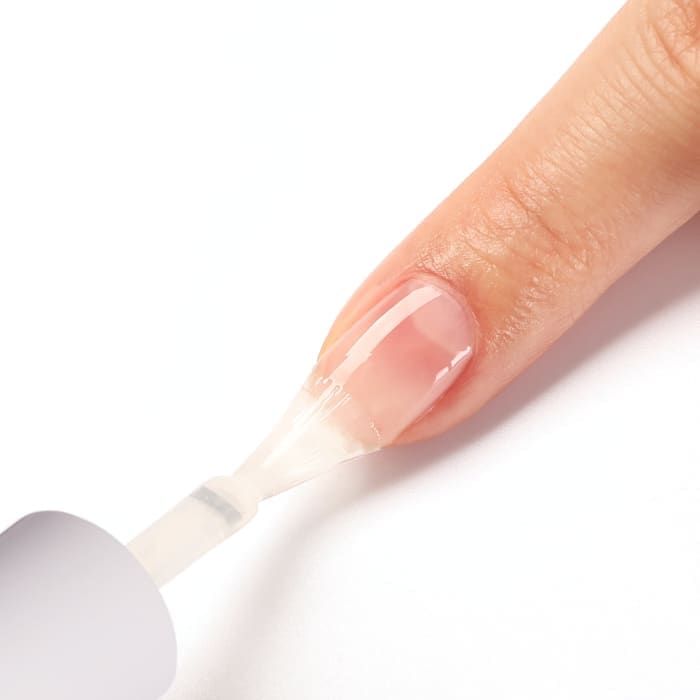
The final week sustains the progress made and sets the foundation going forward.
Focus on: Continued cuticle oil — a habit worth keeping indefinitely. Gently shape nails as new growth comes in, maintaining a short-to-medium length. If returning to gel, space out applications, ask your technician to file more gently, and remove gel only by proper soaking.
Avoid: Rushing. Some nails recover in 30 days; others take longer, depending on growth rate and prior damage. Patience here is an active form of self-care, not a passive one.
Expected by end of week four: Most women notice a real improvement in texture, strength, and appearance. Nails that felt impossibly thin at the start of the month feel far more resilient.
The Best Products for Nail Strengthening After Gel
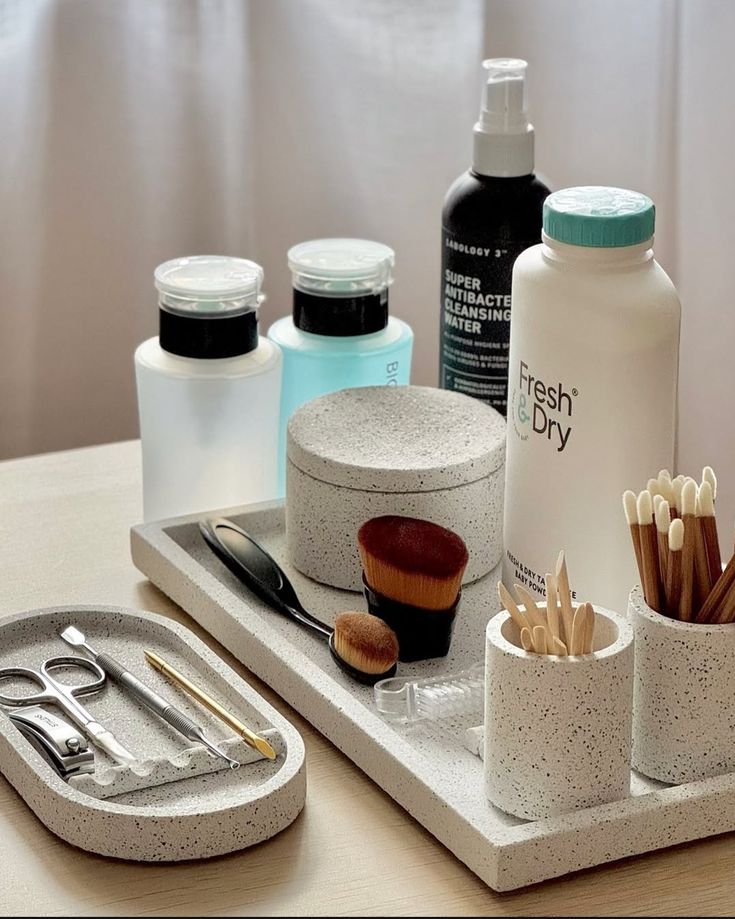
A focused routine needs the right tools. Here’s a quick look before the full breakdown below.
Manucurist Active Smooth
Best for: Peeling, layered nails that need surface repair alongside strengthening.
Manucurist has quietly become one of the more respected names in clean nail care. The Active Smooth formula is designed to smooth the nail surface while delivering a flexible, film-forming treatment that protects without over-hardening. It works particularly well for nails with uneven texture after gel removal.
Who should use it: Anyone dealing with surface peeling or rough nail texture in the early weeks of recovery.
Limitations: It works best as a surface treatment rather than a deep conditioning formula. Pair it with a cuticle oil for more complete results.
OPI Nail Envy
Best for: Thin, flexible nails that need structural support.
OPI Nail Envy has been a trusted name in nail strengthening for decades, and for good reason. The formula helps reinforce the nail plate with a hardening treatment that gradually builds resilience with each application. It is widely available and straightforward to use.
Who should use it: Women with noticeably bendy or paper-thin nails following repeated gel applications.
Limitations: Some formulations contain formaldehyde resin, which can make nails overly rigid if used for too long. A two- to three-week cycle followed by a rest period is generally advisable.
Mavala Scientifique Nail Hardener
Best for: Extremely soft nails that need targeted, concentrated treatment.
Mavala Scientifique is a nail hardener rather than a polish treatment, applied directly to the bare nail. It penetrates the nail plate and works to bond keratin fibers, creating a firmer nail from within. It is a more concentrated approach suited to more significant fragility.
Who should use it: Those whose nails are so soft and flexible that standard polish-based treatments have not provided enough support.
Limitations: Because it is potent, it should be used sparingly — typically twice a week during recovery, then discontinued or used occasionally for maintenance. Overuse can lead to excessive brittleness.
Nails Inc. Kale’d It Nail Serum
Best for: Nails that need hydration and nourishment as much as they need strength.
This is a treatment that leans toward restoration rather than hardening. The Kale’d It serum is enriched with plant-based actives designed to nourish the nail and surrounding skin. It has a more approachable, moisturizing formula — particularly suited to the first two weeks of recovery when the priority is hydration over structure.
Who should use it: Anyone whose nails feel dry and dehydrated rather than simply thin. Also a good option for those who react poorly to formaldehyde-based hardeners.
Limitations: It will not provide the structural reinforcement of a dedicated hardener. Think of it as a nurturing treatment rather than a strengthening one.
Why Short Nails Are Often the Best Choice During Recovery
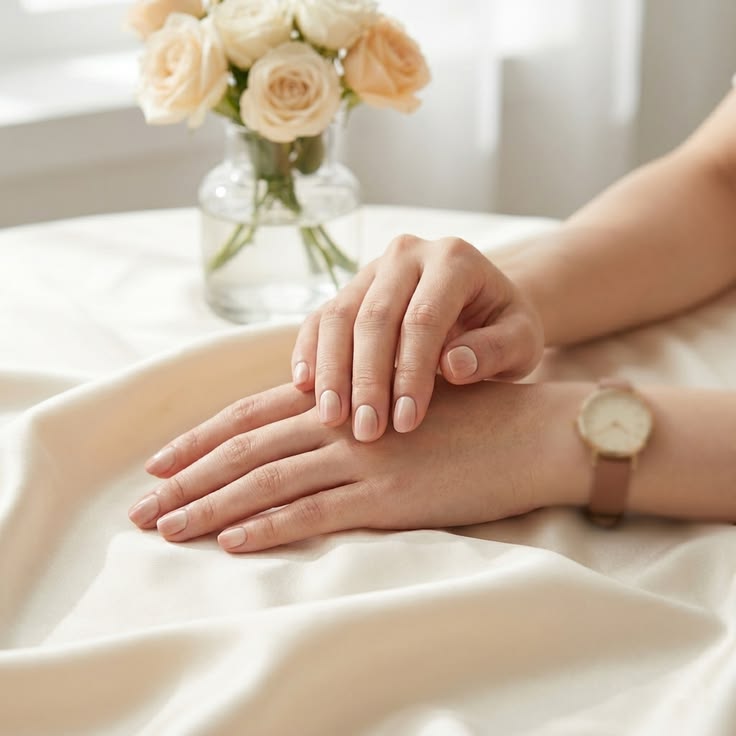
There is a quiet confidence in beautifully maintained short nails. During recovery, keeping nails short isn’t a compromise — it’s often the most elegant choice.
Short nails break less. With less length to catch on fabric or everyday objects, the risk of splitting drops significantly, protecting new growth at the base of the nail.
Short nails also look healthier faster. A short nail that’s smooth and well-filed reads as polished and intentional, while a longer nail that’s peeling draws attention to the damage rather than away from it.
The clean girl aesthetic and quiet luxury nail aesthetic both translate beautifully to shorter lengths. A sheer nude, a soft pink, or a clean bare nail with well-tended cuticles looks just as refined as a longer, more complicated finish — sometimes more so.
If your days call for a more polished, professional look while your nails recover, Old Money Nails for the Office: Professional Manicure Ideas for Fall is full of short-length inspiration that still feels elevated.
For more everyday inspiration, 25 Short Clean Nails Ideas That Look Effortlessly Chic is a beautiful source to bookmark for this stage of your nail journey.
Common Mistakes That Slow Nail Recovery
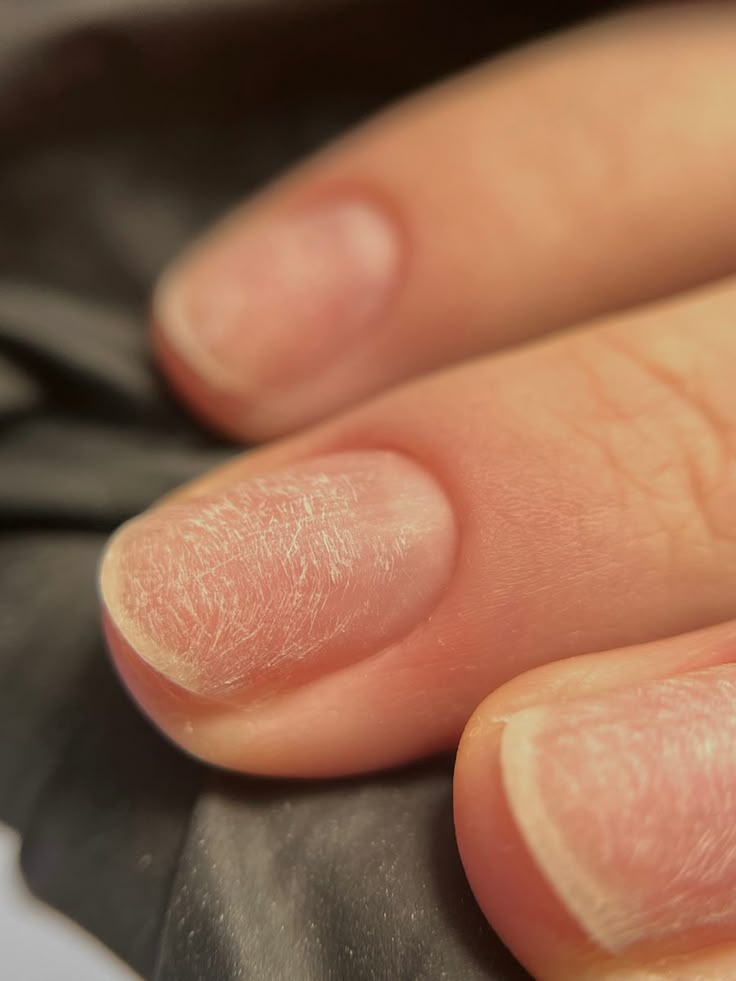
Even with the best intentions, certain habits can interrupt the process.
Peeling or picking at polish. Perhaps the single most damaging habit in nail care. Peeling lifts layers of the nail plate with it. Always remove polish properly, even if it takes a few extra minutes.
Skipping cuticle oil. It may feel like a small step, but it’s consistently one of the most effective tools in nail restoration. Skipping it, even for a few days, interrupts the hydration recovery depends on.
Using nails as tools. Opening packages, scraping labels, typing with the nail tip rather than the finger pad — these small habits add up. Treat your nails gently and deliberately during recovery.
Changing polish too frequently. Constant removal and reapplication keeps acetone in contact with the nail more than necessary. Try to stretch each application to at least a week.
Overusing hardening treatments. More isn’t always better. Over-hardened nails become inflexible and brittle, chipping rather than bending under pressure. Follow usage directions and take breaks as recommended.
Frequently Asked Questions
How long does it take for nails to recover after gel removal? Most women notice meaningful improvement within four to six weeks of consistent nail care. However, complete recovery can take several months because fingernails grow slowly—typically around 3 millimeters per month. According to dermatology experts, healthy new nail growth must gradually replace the weakened portion of the nail plate, which is why patience and consistency are so important during recovery.
Can I wear regular polish during nail recovery? Yes. Regular nail polish does not damage the nail the way repeated gel application can. A breathable or plant-based formula is a gentle option, and keeping nails polished can actually protect them from daily wear. Simply use an acetone-free remover whenever you change the color.
Is it normal for nails to peel after gel removal? Peeling after gel removal is common, particularly if the gel was picked or peeled rather than soaked off. It typically indicates surface-level dehydration and damage. With consistent hydration and a gentle strengthening routine, peeling generally improves within the first two to three weeks.
Should I avoid gel manicures permanently? Not necessarily. Many women return to gel after a recovery period and experience no further issues — particularly when their technician uses a lighter buffing technique and proper removal methods. The goal of recovery is to restore the nail’s baseline health, not to eliminate gel manicures permanently.
What is the best cuticle oil for nail recovery? A cuticle oil rich in jojoba, vitamin E, or sweet almond oil will serve you well during recovery. These ingredients absorb gently, deliver lasting moisture, and support the nail matrix where new growth originates.
Stronger Nails, One Small Ritual at a Time
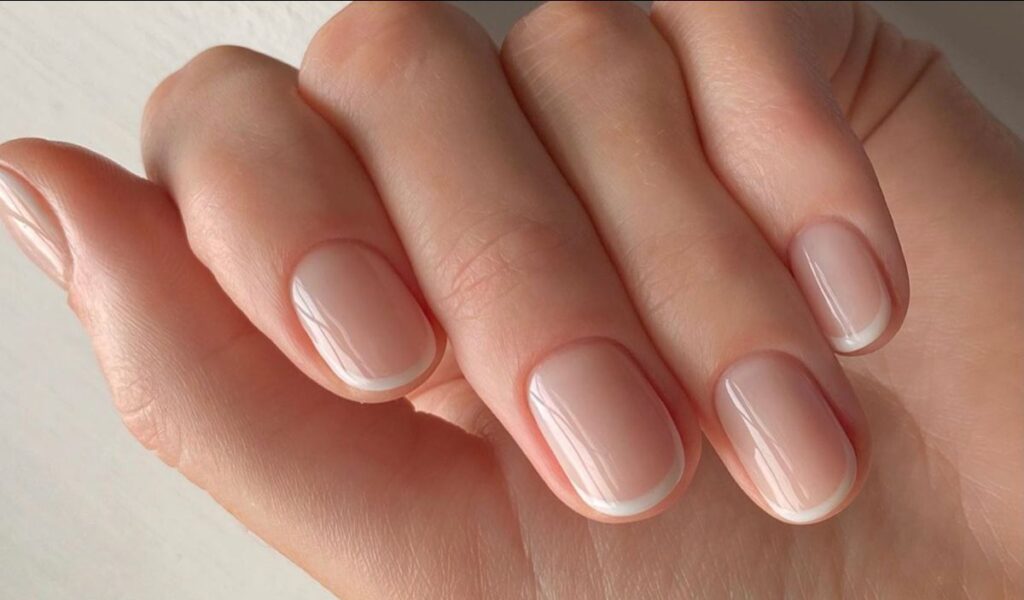
Recovery takes time.
That is not a discouraging thought. It is simply a true one.
Nail strengthening after gel doesn’t respond to urgency. It responds to consistency — gentle rituals repeated daily, and a willingness to care for your hands with the same quiet intention you bring to the rest of your beauty routine.
Short nails can be elegant. Bare nails can be beautiful. And the habits you build now — daily cuticle oil, careful removal, consistent moisture — are the same ones that will keep your nails looking polished for years to come.
Beautiful nails do not come from perfection.
They come from small rituals, practiced with a little care.
If you’re just starting your recovery, revisit the Week 1 checklist above, or bookmark the product guide for quick reference as you move through the month.Recovery takes time.