
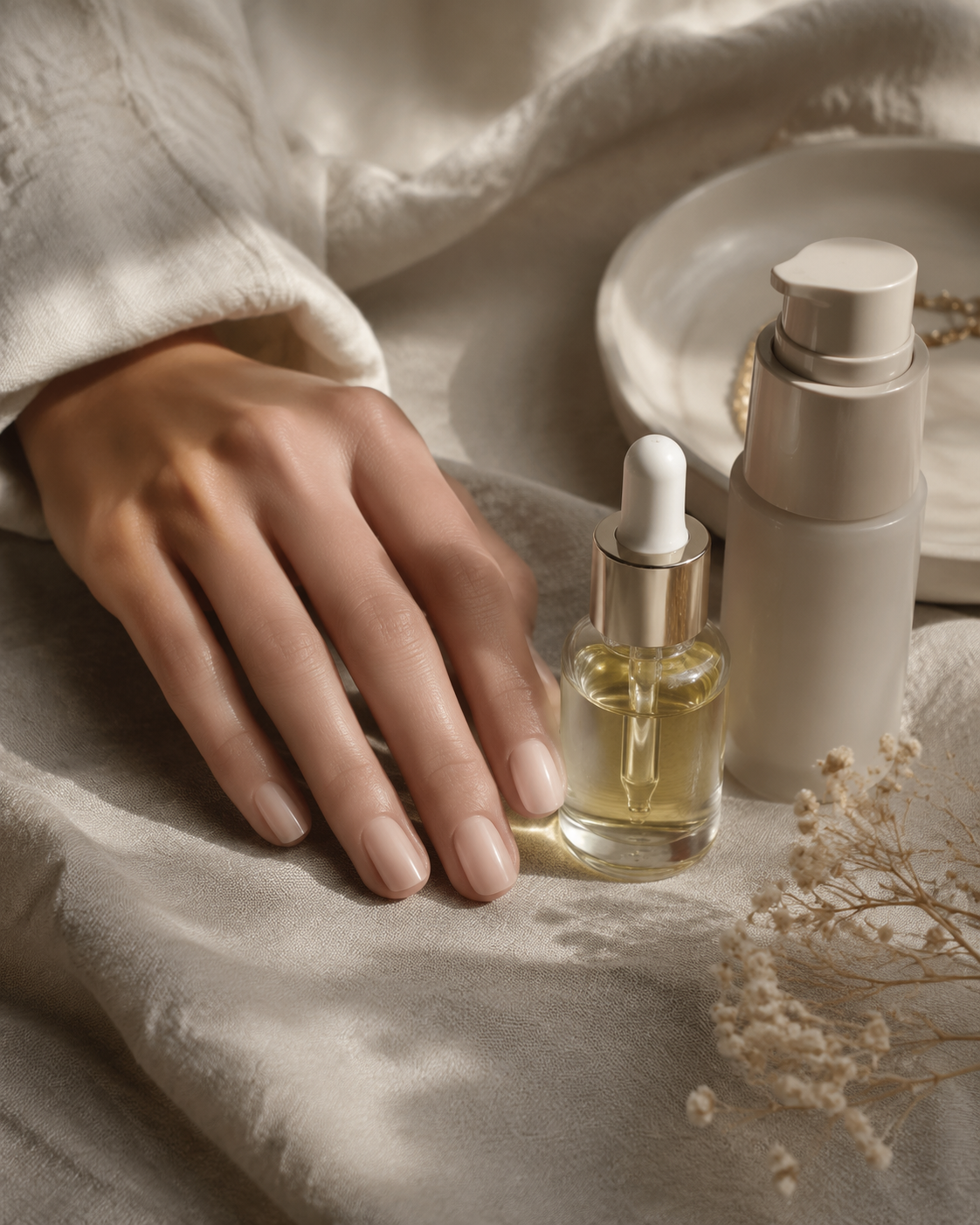
There is a quiet kind of confusion that happens in the beauty aisle these days. You reach for your usual cuticle oil, and right beside it sits a sleek new bottle labeled “nail growth serum.” Same shelf, similar dropper, noticeably different price. The question of cuticle oil vs. cuticle serum has become one of the most common ones among women who already have a nail care ritual they love, but wonder if it’s time to upgrade it.
The truth is simpler than the marketing suggests. Each formula is built to do something different, and understanding that difference is the easiest way to know which one belongs in your routine.
What Cuticle Oil Actually Does
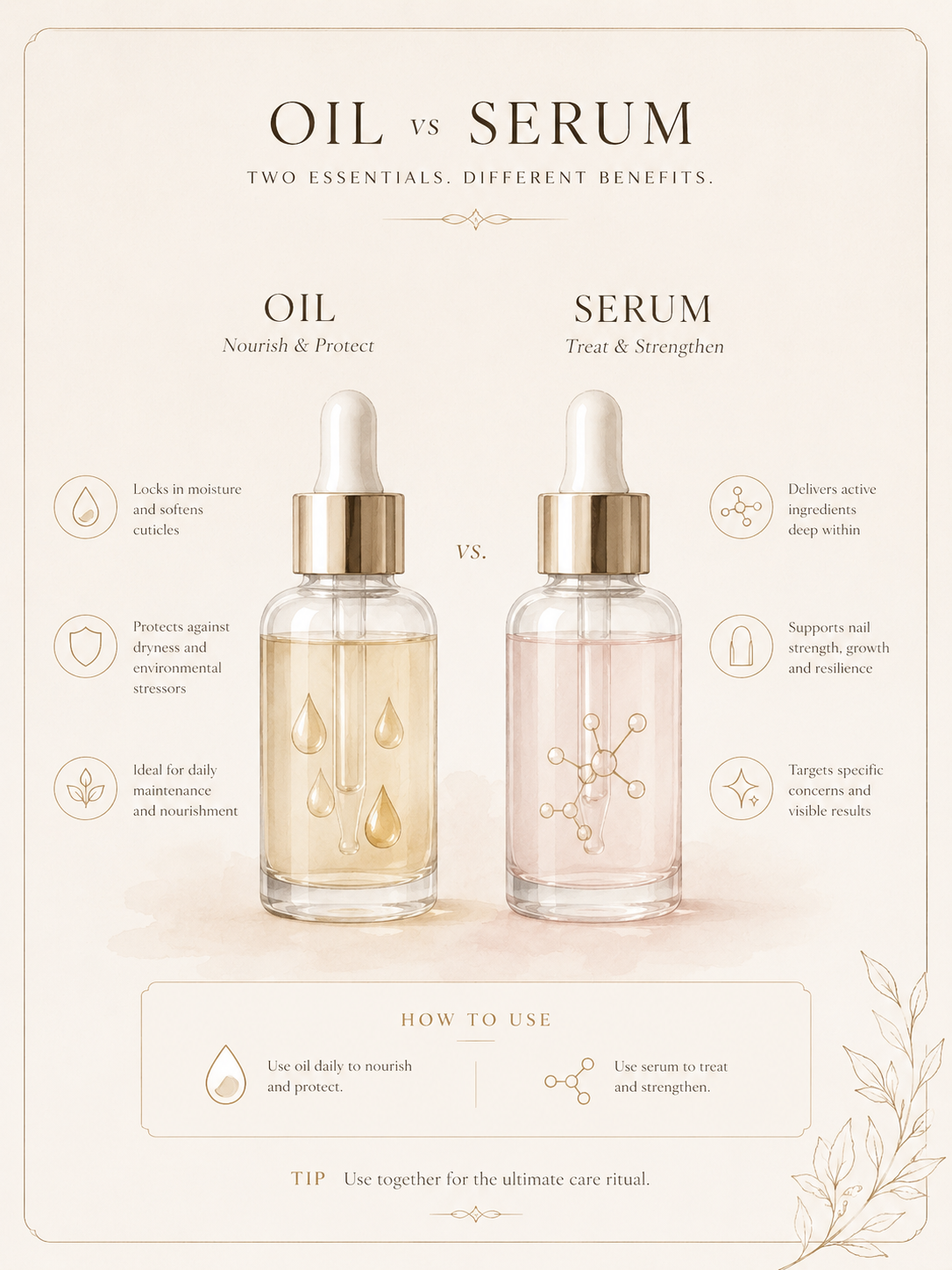
Cuticle oil is, at its core, an occlusive. It sits on the surface of the skin and nail plate, forming a soft barrier that slows moisture loss and softens dry, hardened cuticles. Most formulas rely on a blend of plant oils such as jojoba, sweet almond, or vitamin E, chosen because they mimic the skin’s natural lipids.
This is why cuticle oil feels instantly soothing. It doesn’t need to be absorbed to work; it simply protects. A few drops massaged into the nail bed each evening can soften rough edges, ease the look of dryness, and leave hands with that quiet, healthy-looking polish Soft Élan readers know well.
Soft Élan Note: The best time to apply cuticle oil is right before bed, when your hands can rest undisturbed while the oil does its work.
What Makes a “Nail Serum” Different
A nail serum, on the other hand, is formulated more like a skincare treatment than a beauty balm. Where cuticle oil sits on top of the nail, a serum is designed to absorb, deliver active ingredients, and target a specific concern, whether that’s brittleness, slow growth, or thin, peeling layers.
This is the heart of the cuticle oil vs. cuticle serum conversation. One protects; the other treats. Both have a place, but they are not interchangeable, and a serum’s higher price often reflects the concentration of actives inside it rather than simple marketing.
Common Active Ingredients
Most nail growth serums lean on a familiar set of ingredients, including:
- Biotin, often included in a biotin nail serum to support the look of stronger, more resilient nails over time
- Keratin or hydrolyzed protein, meant to reinforce the nail’s natural structure
- Panthenol, a humectant that draws moisture into the nail plate rather than simply coating it
- Peptides, increasingly common in nail strengthening serum formulas aimed at visibly reducing brittleness
As one cosmetic chemist we consulted explained it, an oil-based formula creates a physical seal, while a serum relies on smaller molecules that can move into the nail’s layers. Neither approach is inherently superior; they simply solve different problems.
Which One Should You Use, and When
If your main concern is dryness, ragged cuticles, or general upkeep between manicures, a good cuticle oil for dry cuticles is likely all you need. It’s gentle, forgiving, and works beautifully as a daily ritual rather than a targeted treatment.
However, if you’re noticing thin, weak, or slow-growing nails, a nail growth serum may offer more visible support over several weeks of consistent use. Because active ingredients need time to work, patience matters here more than it does with oil, which tends to show a softening effect almost immediately.
For readers who already follow a health-first hand routine, layering a serum into an established habit is often the easiest way to introduce one without disrupting the ritual you’ve already built.
Can You Use Both?
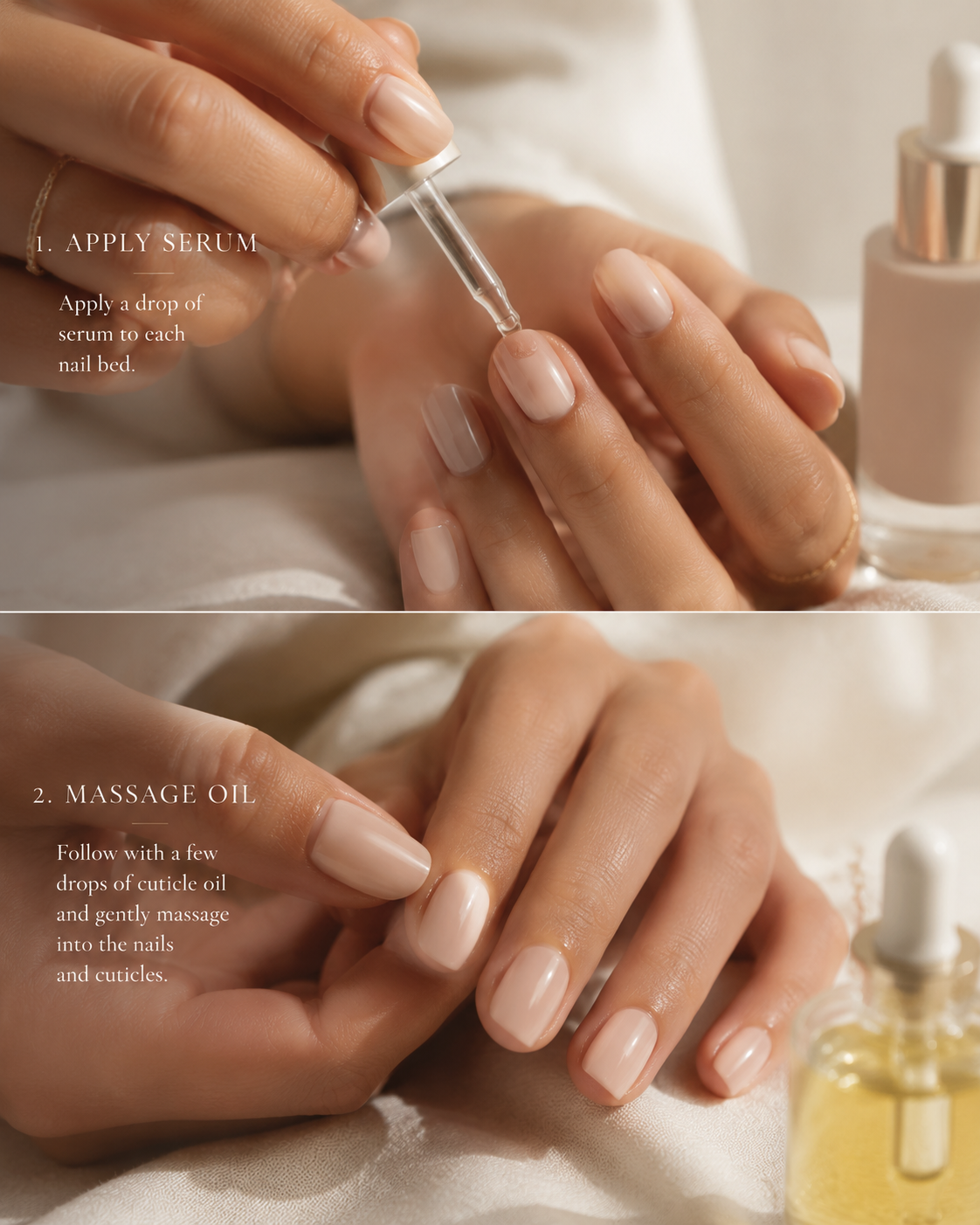
Yes, and many women find this to be the most effective approach. Because cuticle oil and nail serum work through different mechanisms, they complement each other rather than compete. A simple order of application makes this easy:
- Apply the nail serum first, allowing the active ingredients a few minutes to absorb.
- Follow with cuticle oil to seal in moisture and soften the surrounding skin.
This two-step approach mirrors the same layering logic used in facial skincare, treatment first, protection second, and it tends to fit naturally into an evening ritual.
Soft Élan Note: If your nails feel fragile, ease into any new serum slowly. Introducing one active ingredient at a time makes it easier to notice what’s actually helping.
A Gentle Word Before You Choose
Neither formula is inherently better than the other; they simply answer different questions. Cuticle oil is the quiet, dependable ritual that keeps skin soft and hands looking cared for. A nail serum is the more focused treatment, chosen when nails need extra support to grow stronger over time.
Whichever you choose, consistency matters more than the label on the bottle. A few thoughtful minutes each evening, given regularly, will always do more for your nails than any single product on its own.
Frequently Asked Questions
Is cuticle oil the same as nail serum? No. Cuticle oil is an occlusive that softens skin and seals in moisture, while a nail serum is formulated with active ingredients meant to absorb into the nail and target specific concerns like strength or growth.
Do nail growth serums really work? Many contain ingredients such as biotin, keratin, and peptides that can support the appearance of stronger nails with consistent use, though results tend to take several weeks and vary by formula and individual.
How often should I apply each one? Cuticle oil can be used daily, ideally in the evening. Most nail serums are also designed for daily use, but it’s worth following the specific product’s instructions, since concentrations vary.
Looking to build out the rest of your routine? Explore our Cuticle Care 101: The Health-First Hand Routine Quiet Luxury Women Swear By for the full ritual, our Best Nail Strengthener: A Soft Élan Buying Guide for Weak, Brittle Nails for targeted product picks, or our Daily Nail Care Routine: A Simple 10-Minute Ritual for Healthy-Looking Nails for a simple daily framework.
For further reading on nail health, the American Academy of Dermatology offers general guidance on nail care and common concerns.