
There is a particular kind of quiet confidence that comes from bare, healthy nails. But if you have worn gel or acrylic sets back to back for months, your nails may be telling a different story — thin, ridged, or a little discolored beneath the polish. A gel manicure detox is simply a gentle, structured pause that gives your natural nails room to recover before your next set.
This is not about swearing off gel forever. It is about understanding what your nails need, how long real repair actually takes, and how to move through that window with grace rather than guesswork.
Why Nails Need a Break From Gel
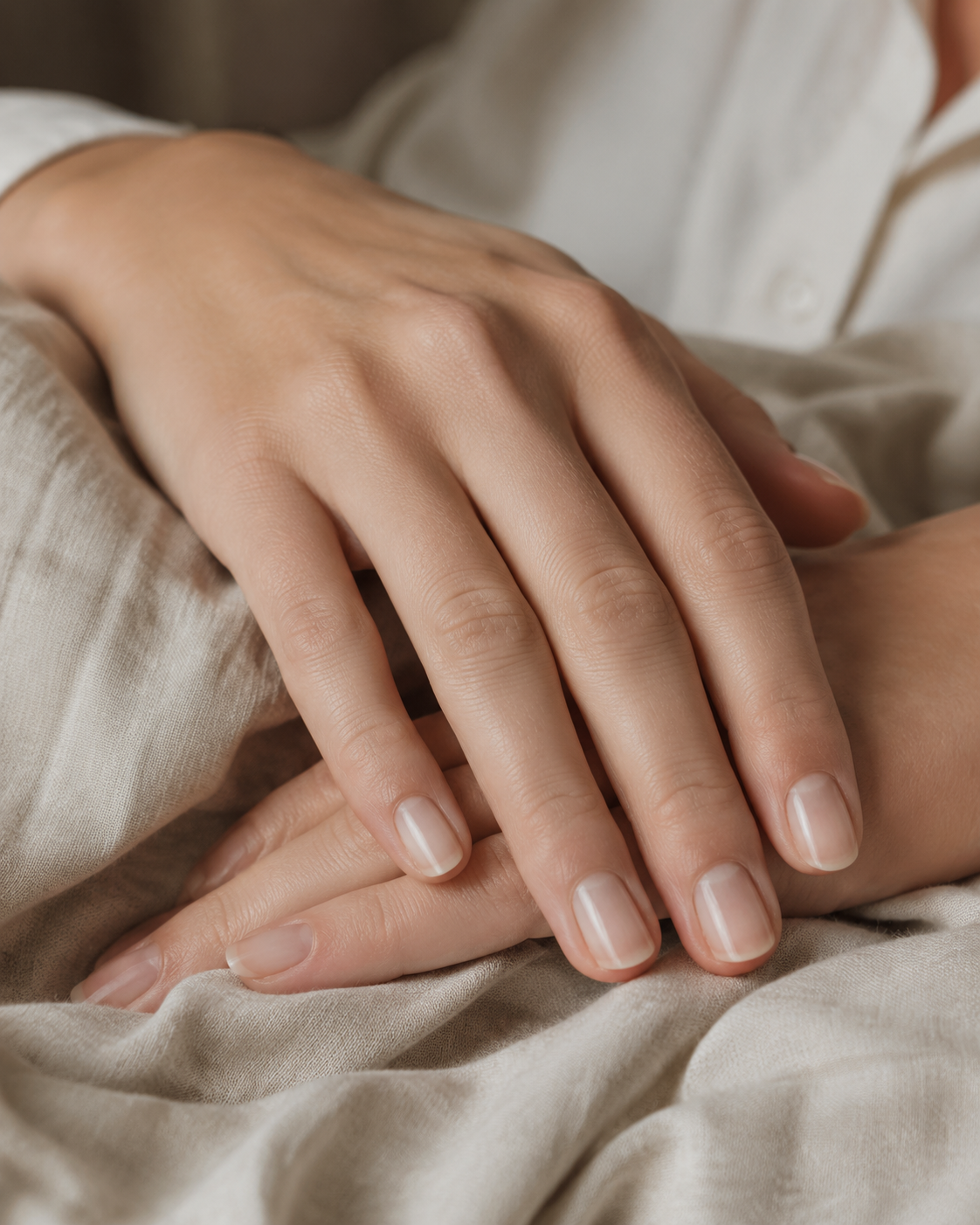
Gel and acrylic systems are bonded to the nail plate with a process that, over time, can thin the layers of keratin beneath. Add in repeated filing, soaking, and UV curing, and it is easy to see why nails start to feel fragile after a long stretch of continuous wear.
Nails do not repair themselves overnight. According to Northwestern Medicine, even when the nail matrix is undamaged, it can take up to six months for a fingernail to fully grow back. A gel manicure detox will not erase every ridge in four weeks, but it does give your nails the calm, uninterrupted conditions they need to begin that slower, natural process.
Soft Élan Note: Recovery is rarely dramatic. It looks like small, consistent choices — a swipe of cuticle oil here, a softer buffer there — repeated quietly over time.
Week 1 — Removal and Assessment
The first week is about starting gently, not rushing to fix everything at once.
Have your gel or acrylic removed professionally, or follow a careful at-home process that avoids aggressive peeling or filing. Once your nails are bare, take a moment to really look at them. Are they thin and flexible? Ridged? A little yellowed? This assessment shapes how you approach the following weeks.
Keep your nails short and rounded during this stage. Shorter nails are less likely to catch, bend, or break while they are at their most vulnerable. If you removed a set recently, our guide on how to remove gel nails at home without damaging your nails walks through the gentlest process, step by step.
Week 2 — Repair and Hydration
By the second week, the goal shifts from assessment to active hydration. Nails weak after gel often lack the moisture they need to stay flexible, which makes them prone to peeling and splitting.
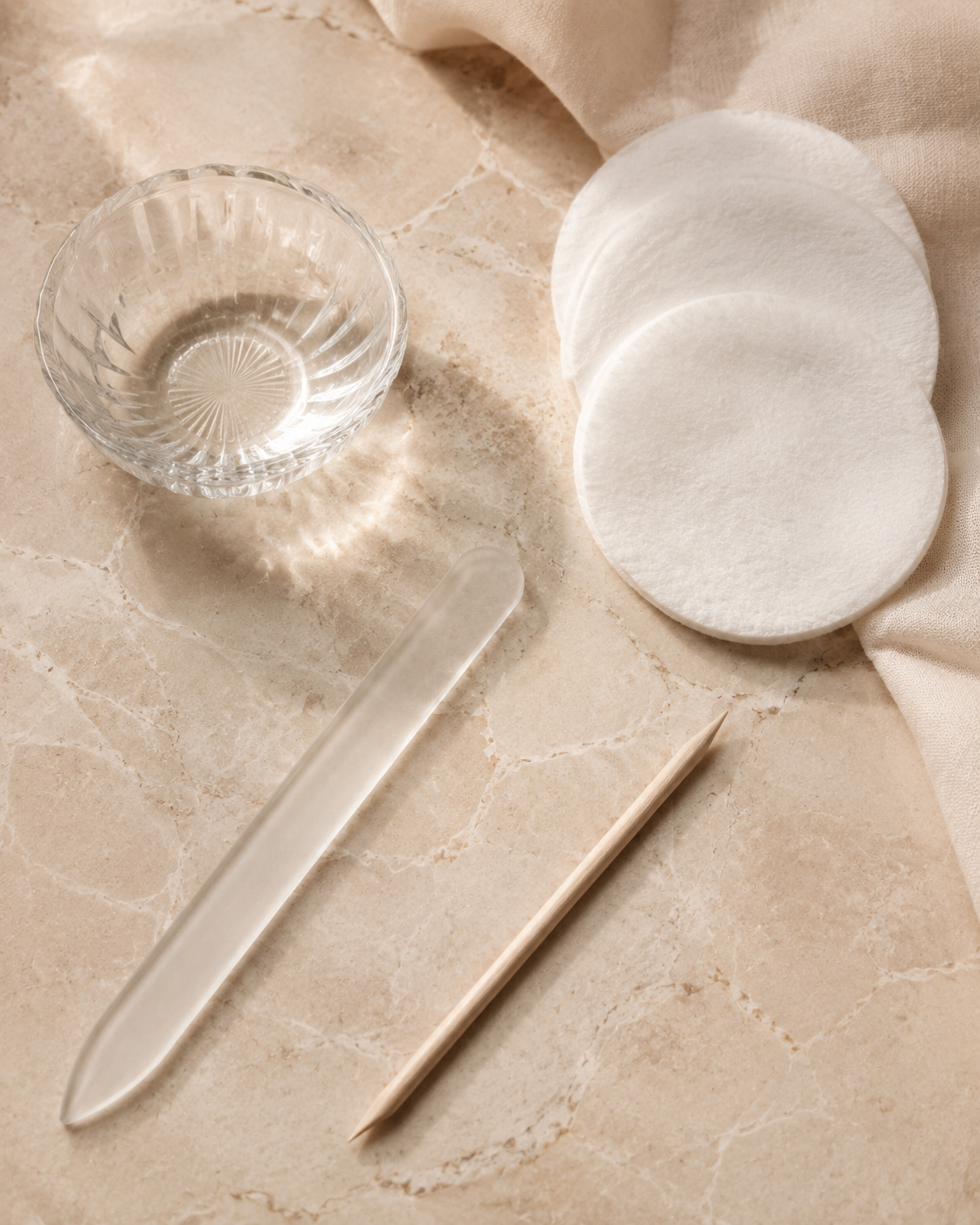
Apply cuticle oil daily, ideally massaging it into the nail bed both morning and night. This small ritual does more than it seems — it softens the surrounding skin and helps the nail plate stay supple as it grows. Pair this with a rich hand cream after washing your hands, since dry hands often mean dry nails.
This is also the moment to slow down on hot water exposure and harsh cleaning products, both of which strip natural oils. If cuticle health feels unfamiliar territory, our guide to cuticle care for a health-first hand routine offers a full, gentle framework.
Week 3 — Strengthening
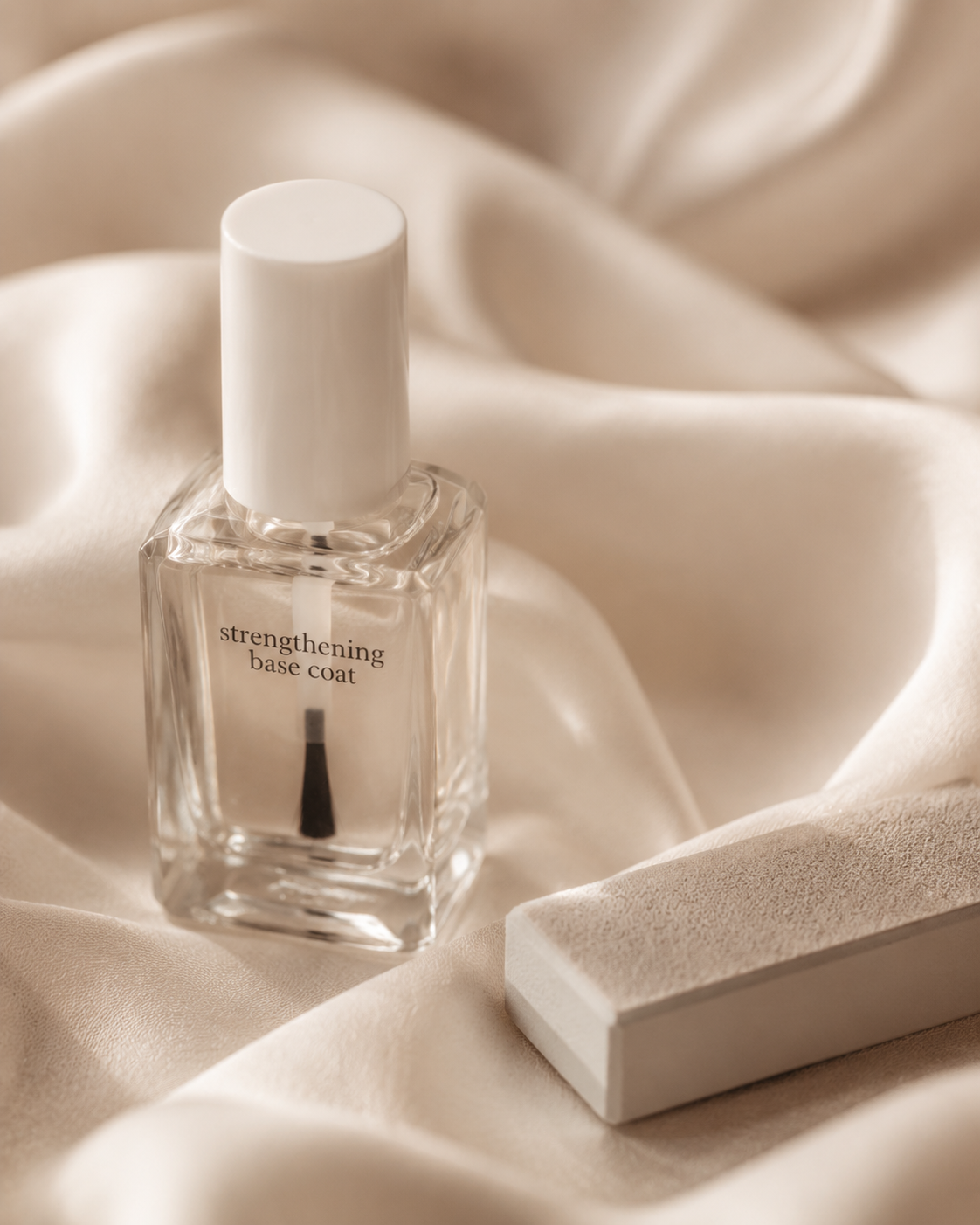
With hydration established, week three is where visible strengthening begins. A nourishing base coat formulated with keratin or calcium can help support the nail as it continues to grow, especially if ridges or thin spots are still present.
Look for a strengthening base coat you can wear alone, without color, so your nails can breathe while still receiving a layer of protection. A nail-safe glass buffer, used sparingly, can also smooth away rough ridges without thinning the nail further.
Soft Élan Note: Buffing should feel like polishing, not sanding. If you can see nail dust building quickly, you are pressing too hard.
For a closer look at which formulas are worth the investment, our nail strengthener buying guide for weak, brittle nails breaks down the options by nail concern.
Week 4 — Reintroducing Polish (If You Want To)
By the fourth week, many nails begin to look and feel steadier — smoother, less flexible, with early signs of ridges softening. This is a natural moment to decide whether to continue the detox, or to reintroduce polish gently.
If you choose to wear color again, opt for a breathable regular polish rather than gel, at least for one more cycle. This lets you enjoy a manicured look while your nails finish rebuilding their strength underneath. A glossy nude or soft pink shade fits beautifully here, keeping the overall effect polished and understated.
If you are not quite ready, that is worth honoring too. Some nails simply need a little longer, and there is elegance in listening to that.
A Gentle Note to Close On
Beautiful nails rarely come from perfection. They come from small rituals repeated consistently, and from giving your hands the patience they occasionally ask for.
A gel manicure detox is not a punishment for wearing polish you loved. It is simply a pause — four quiet weeks that let your nails catch up with themselves, so your next set has something strong and healthy to hold onto.

Frequently Asked Questions
How long should I go without gel? Most nails benefit from at least four weeks between sets, though nails that feel especially thin or brittle may need six to eight weeks to notice a real difference.
Will ridges go away? Shallow ridges often soften with consistent hydration and strengthening over a few months, since full nail regrowth typically takes around six months. Deeper ridges may simply grow out gradually rather than disappear immediately.
Can I still wear regular polish during recovery? Yes. Breathable, non-gel polish is generally gentler on recovering nails than a gel or acrylic system, as long as removal is done with a non-acetone remover and minimal filing.
Continue your recovery routine with our guide to choosing the right nail strengthener, or explore why bare, healthy nails have become quiet luxury’s new status symbol.