
There is a quiet debate that plays out in nearly every at-home manicure: matte or glossy? In the ongoing matte vs. glossy top coat debate, both finishes promise a certain kind of polish, yet they wear very differently once real life gets involved. If you’ve noticed a matte manicure looking dull or chipped sooner than expected, you’re not imagining it. We set personal preference aside and tested both finishes side by side, so you can choose the top coat that suits your lifestyle — not just your mood board.
How Each Finish Is Formulated
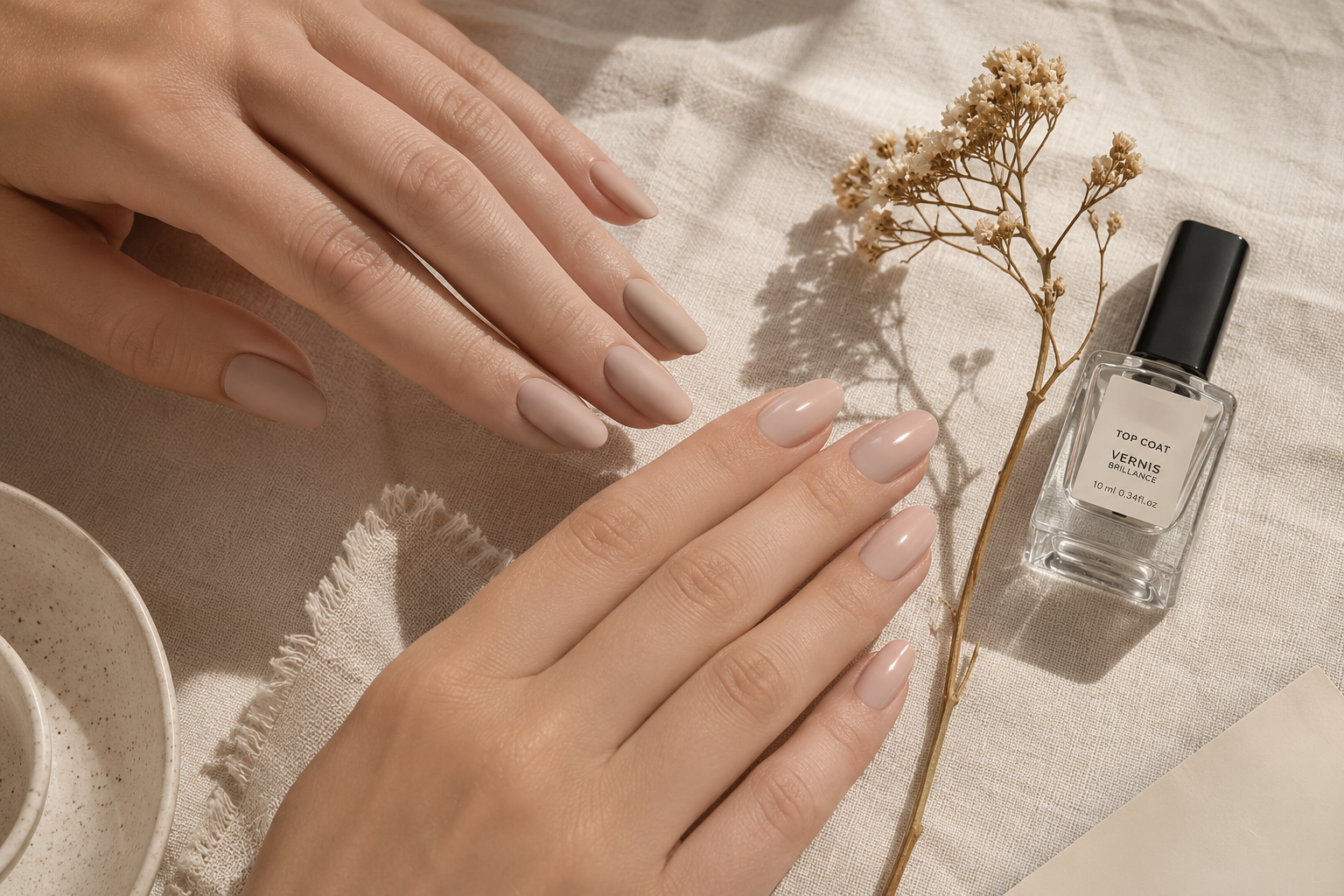
Glossy top coats are built for shine. They typically rely on a smooth, reflective resin layer that sits over your polish and bounces light evenly across the nail. This is what gives a fresh manicure that glassy, just-left-the-salon look.
Matte top coats work differently. Rather than smoothing the surface, they contain finely milled particles or matting agents that scatter light instead of reflecting it. The result is that soft, velvety finish so many of us love — but that same texture is also more exposed to daily friction, which is part of why matte manicures can feel more delicate.
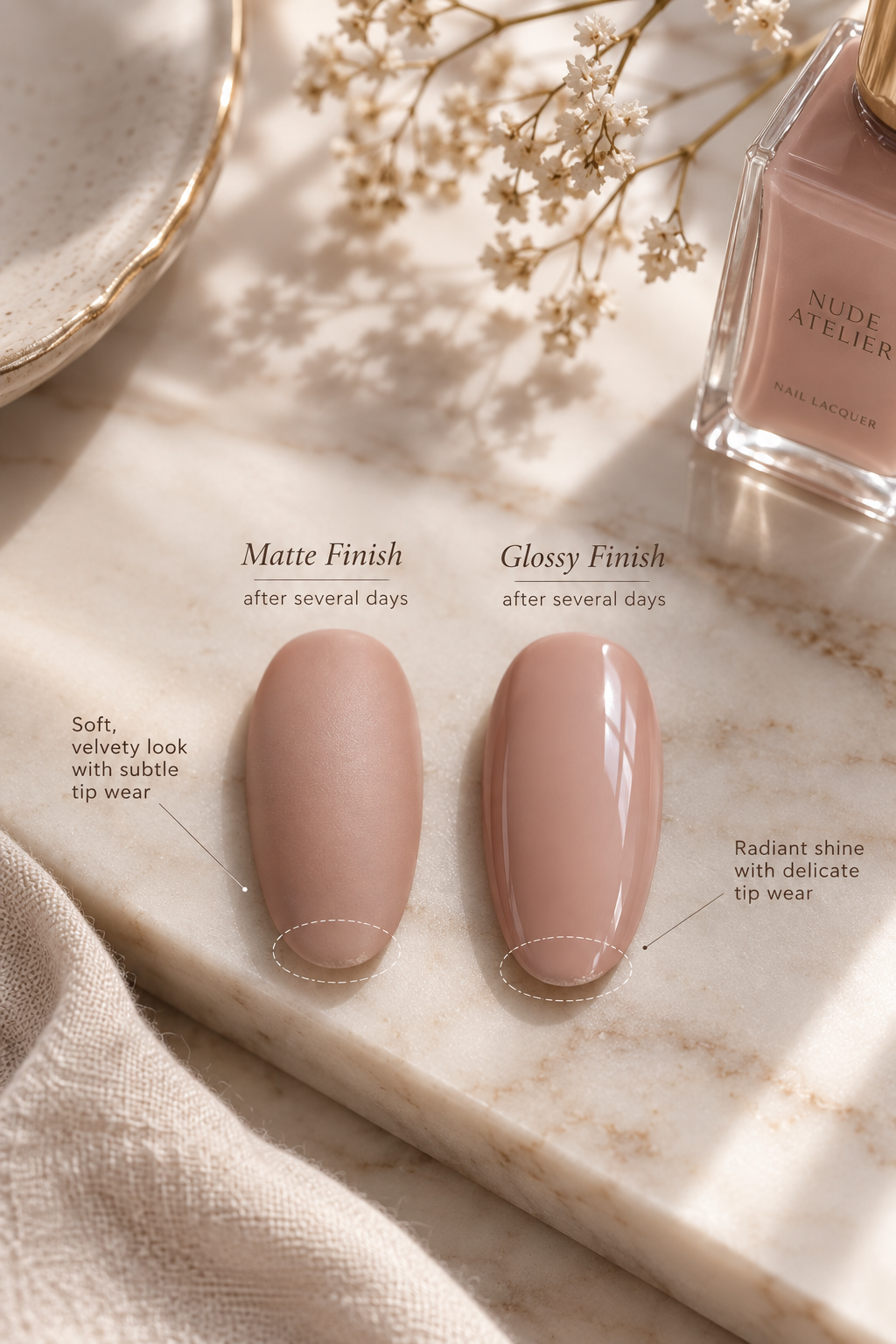
Because the finishes are chemically different, they also age differently. Glossy formulas tend to keep their reflective quality until the polish itself chips, while matte formulas can gradually lose their velvety texture and start to look slightly shiny at the edges, even before any actual damage appears. Since nails are made of layered keratin and naturally vary in texture and porosity, the same top coat can even wear a little differently from one hand to the next.
Matte vs. Glossy Top Coat: At a Glance
| Glossy Top Coat | Matte Top Coat | |
| Finish | High-shine, reflective | Velvety, no-shine |
| When wear becomes visible | Around day 5–6 | Around day 3–4 |
| Most common wear sign | Tip chipping | Softened texture, subtle sheen at edges |
| Best for | Daily handwork, first manicures, humid climates | Special occasions, gentler wear, soft neutral shades |
| Reapply every | 2–3 days to refresh shine | 2 days to maintain the velvet effect |
Wear-Time Comparison: What Our Test Showed
So, does matte top coat last as long as glossy? In our side-by-side wear test, both finishes held up well through day three. After that, small differences became noticeable.
Glossy top coats tended to keep their shine through daily tasks like typing, washing dishes, and getting dressed, with tip wear appearing gradually around day five or six. Matte top coats, meanwhile, often began showing subtle shine along the nail tips by day three or four — not chipping, exactly, but a softening of that signature velvet texture.
In other words, matte manicures don’t necessarily chip faster. However, they do tend to look less fresh sooner, simply because their appeal depends on an even, textured finish that’s easy to disturb. Frequent hand-washing and contact with lotions or oils can accelerate this, since both can smooth over the matting agents on the surface.
Can a Glossy Manicure Be Made Matte?
Yes — and it’s one of the simplest tricks in an at-home manicure kit. Applying a matte top coat over an already-glossy manicure will soften the shine and give it a velvety finish almost instantly. It won’t extend the wear of the glossy layer underneath, but it’s a lovely way to change the mood of a manicure without starting over.
Can You Make a Matte Manicure Glossy Again?
Technically, yes, though the results are less reliable. Painting a glossy top coat over a fully cured matte finish can restore some shine, but the matting agents beneath can still cause slight unevenness or a softer, satin-like sheen rather than true glass gloss. If you want a genuinely glossy finish, it’s usually worth removing the matte top coat and reapplying fresh, rather than layering over it.
Which Lasts Longer: Gel or Regular Polish?
Finish aside, formula matters just as much as matte versus glossy. A gel-based top coat, cured under a UV or LED lamp, will almost always outlast an air-dry lacquer version of the same finish, often by a week or more. That’s because the gel layer itself resists chipping and softens more slowly than traditional polish, regardless of whether it’s matte or glossy on top. If longevity matters more to you than finish, it’s worth comparing wear times the way we did in our gel vs. dip powder breakdown before choosing your base.
Common Mistakes That Shorten Wear
A few small habits are usually behind a top coat that fades faster than it should.
Waiting too long to reapply. A fresh, thin layer every two to three days does more for longevity than one thick coat at the start.
Skipping the base coat. A top coat can only do so much without a proper foundation underneath it — our base coat and top coat guide covers how to build that layer correctly.
Not sealing the free edge. Running your brush over the tip of the nail each time helps prevent the earliest, most common point of chipping.
Applying matte top coat too thickly. A heavy layer looks cloudy rather than velvety and takes longer to cure evenly.
Neglecting cuticle care. Dry skin around the nail makes any finish look less polished and can encourage lifting at the edges.
Application Tips for a Longer-Lasting Finish
A little technique goes a long way with either formula.
For glossy top coats:
- Apply in one smooth, even stroke to avoid streaking.
- Seal the free edge of the nail each time to slow down tip wear.
- Reapply every two to three days to refresh the shine.
For matte top coats:
- Use a thin, even layer — a heavy coat can look cloudy rather than velvety.
- Avoid touching the nail until fully cured, since matte finishes show fingerprints easily.
- Keep hands moisturized, as dry cuticles can make a matte finish look less polished. Board-certified dermatologists recommend moisturizing nails and cuticles regularly, particularly after they’ve been in water.
Soft Élan Note: A cuticle oil applied nightly does more for the longevity of both finishes than most people realize. Soft, hydrated skin around the nail simply makes any top coat look more intentional. Our weekly hand mask ritual is a gentle way to build that habit into your routine.
Which Top Coat Finish Suits Your Lifestyle?
If your days involve a lot of handwork — cooking, typing, caring for little ones — a glossy top coat is generally the more forgiving choice. Its smoother surface tends to hide minor wear more gracefully, and it’s easier to refresh with a single coat.
If your hands see gentler wear, or you simply love the look, a matte finish can feel effortlessly elegant, especially in soft nudes and muted rose tones. For everyday wear, a formula like Sally Hansen’s Insta-Dri Matte Finish Top Coat is well loved for its quick-drying, true velvet effect. On the glossy side, Essie’s Gel Couture Top Coat is a favorite for its glass-like shine and smooth application. And if you’re choosing a finish for a workplace setting, our professional nail ideas guide has more on which finishes read as quietly polished at the office.
The Quiet Takeaway
Neither finish is objectively better — they simply serve different moods and different days. Glossy top coats offer a little more resilience and shine that’s easy to maintain. Matte top coats offer softness and texture, best suited to a slightly gentler pace.
Whichever you choose, consistency matters more than perfection. A nourished nail bed, healthy cuticles, and a top coat reapplied every few days will always outshine any formula on its own. According to the Mayo Clinic, keeping nails clean, dry, and well-moisturized is one of the simplest ways to support their overall health and appearance — which makes a real difference in how any top coat wears over time. For more on building that foundation, our daily nail care routine is a gentle place to start.
Frequently Asked Questions
Does matte top coat chip faster than glossy? Not necessarily. Matte top coats don’t chip more often than glossy ones, but they do tend to lose their velvety texture sooner, which can make a manicure look less fresh even before any actual damage appears.
Can I layer matte top coat over a glossy manicure? Yes. Applying a matte top coat over a glossy manicure instantly softens the shine and gives it a velvet finish. It’s an easy way to refresh a look without starting your manicure over.
Does a gel top coat last longer than a regular matte or glossy top coat? Generally, yes. A gel-based top coat cured under a lamp tends to outlast an air-dry lacquer of the same finish, often by a week or more, because the gel layer itself resists chipping.
Do matte and glossy top coats need different base coats? No — both finishes work with a standard base coat. The difference happens entirely in the top layer, so your base coat routine doesn’t need to change.
How often should I reapply top coat to make my manicure last longer? For most people, reapplying a thin layer every two to three days keeps either finish looking fresh, though matte tends to benefit from slightly more frequent touch-ups than glossy.
Ready for your next read? Explore more nail care rituals and finish guides in the Soft Élan Journal, or download a free routine checklist from the Soft Élan Library.