
This article is for general beauty education and does not replace advice from a dermatologist or physician. If you have specific concerns about your skin, please consult a medical professional.
There is something quietly satisfying about a fresh gel manicure done at home. The lamp hums, the polish sets, and your hands look polished within minutes. But if you have paused mid-cure and wondered whether you actually need UV gloves for a gel manicure, you are not alone. Between alarming headlines and vague product claims, it is hard to know what is genuine caution and what is simply noise.
This guide takes a calm, evidence-based look at what UV nail lamps actually do to your skin, who benefits most from UV gloves, and how to protect your hands either way.
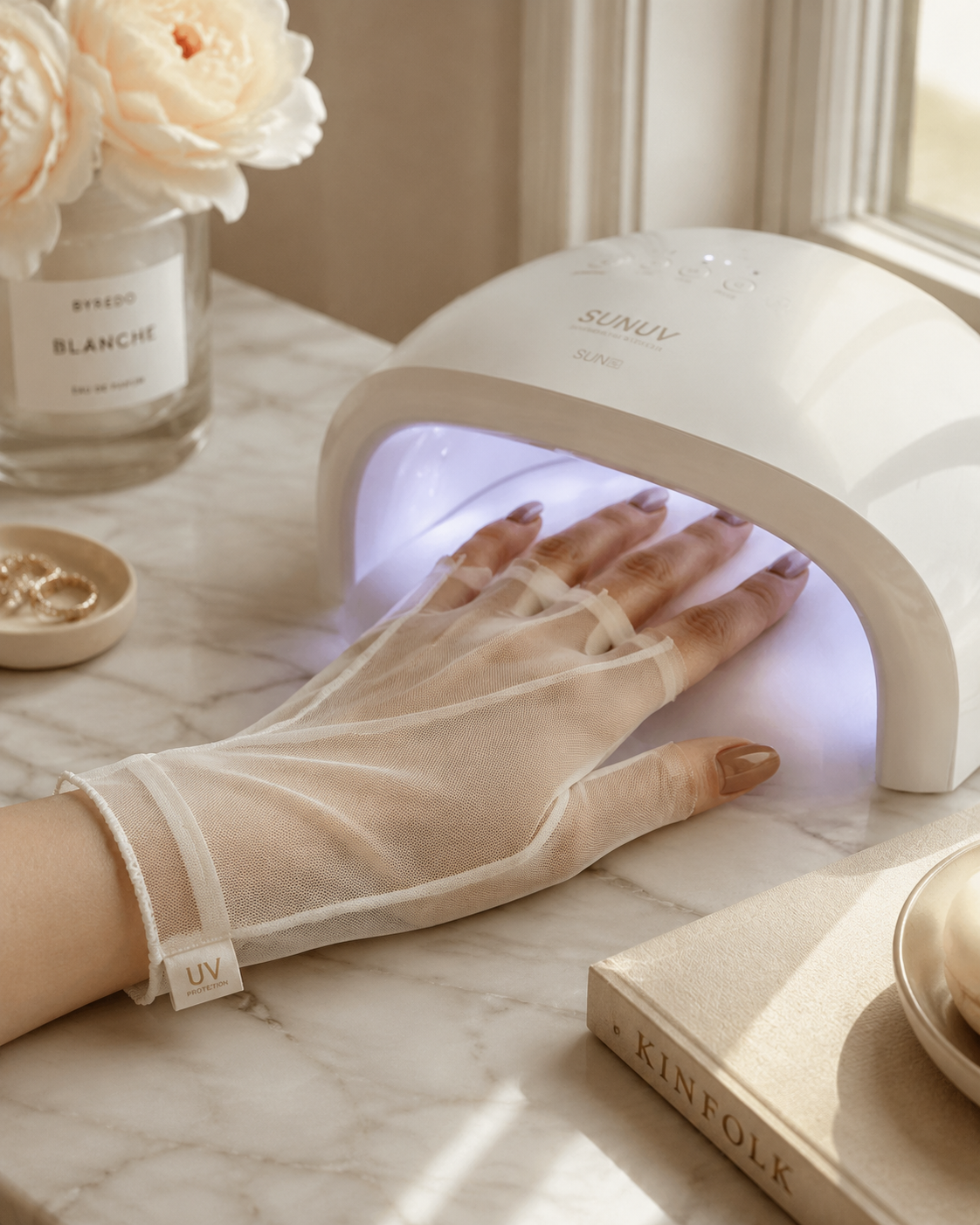
What the Research Actually Says About UV Nail Lamps
UV nail lamps use UVA light to cure gel polish quickly. The light itself is not the concern people often imagine. The concern is cumulative exposure over time.
The International Agency for Research on Cancer classifies broadband UVA as a Group 1 carcinogen, largely because of its established link to skin cancer through tanning bed use. Nail lamps use a much smaller dose per session than a tanning bed. Even so, a 2023 study found that repeated exposure to nail-dryer UV light caused measurable DNA damage and mutations in skin cells, suggesting the effect is not entirely without consequence.
Dermatology case reports add a more specific note of caution. One recent case described a woman who developed a rare nail-unit skin cancer after two years of frequent, unprotected UV lamp use. Cases like this remain uncommon, but they illustrate why habitual, long-term exposure deserves more thought than a single occasional manicure ever would.
In short: an occasional gel manicure is unlikely to pose meaningful risk. Frequent, unprotected sessions over months or years are where dermatologists suggest the caution belongs.
Soft Élan Note: Evidence in this space is still evolving, and no single study tells the whole story. Treat this as a starting point for an informed choice, not a medical verdict.
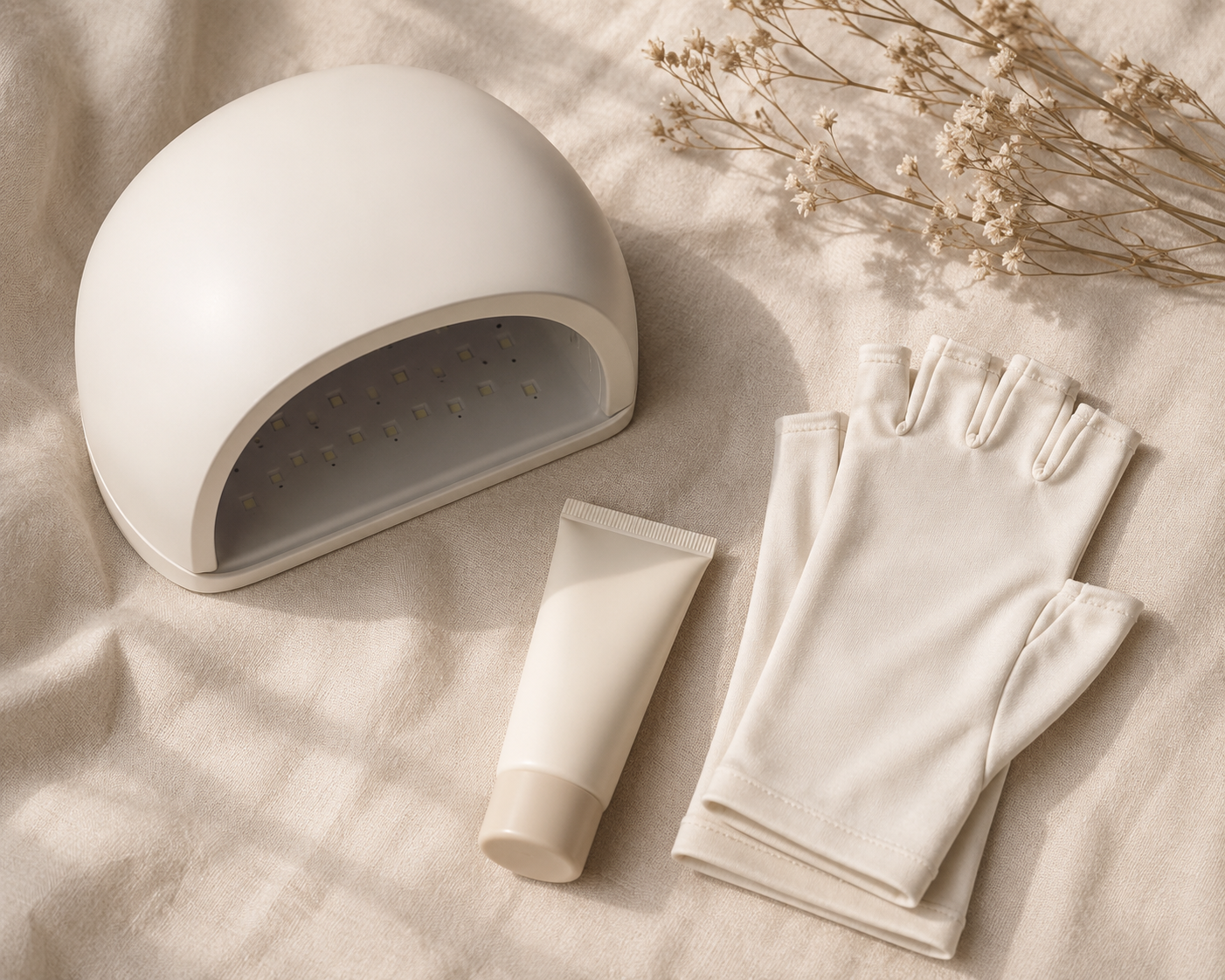
Who Should Consider UV Gloves for Gel Manicures
UV gloves for gel manicures are not essential for everyone, but they make sense for a few specific situations.
You may want to consider them if you:
- Are simply someone who prefers to minimize UV exposure wherever reasonably possible
- Get gel manicures more than twice a month
- Have fair or sun-sensitive skin
- Have a personal or family history of skin cancer
If your gel manicures are occasional, a treat rather than a routine, the added protection is optional rather than necessary. This is less about fear and more about aligning your habits with how often you are actually exposed.
Fingerless vs. Full-Coverage Gloves
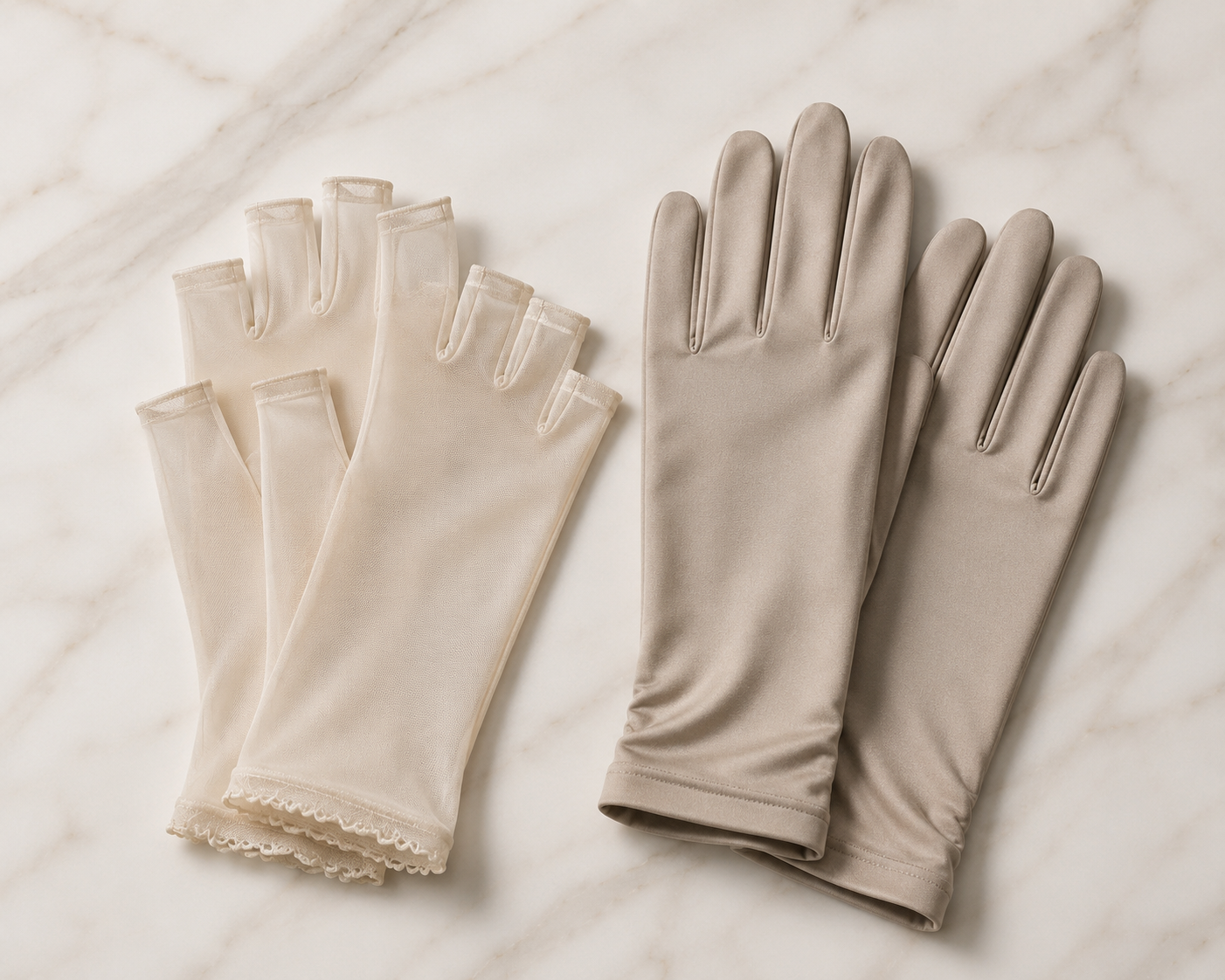
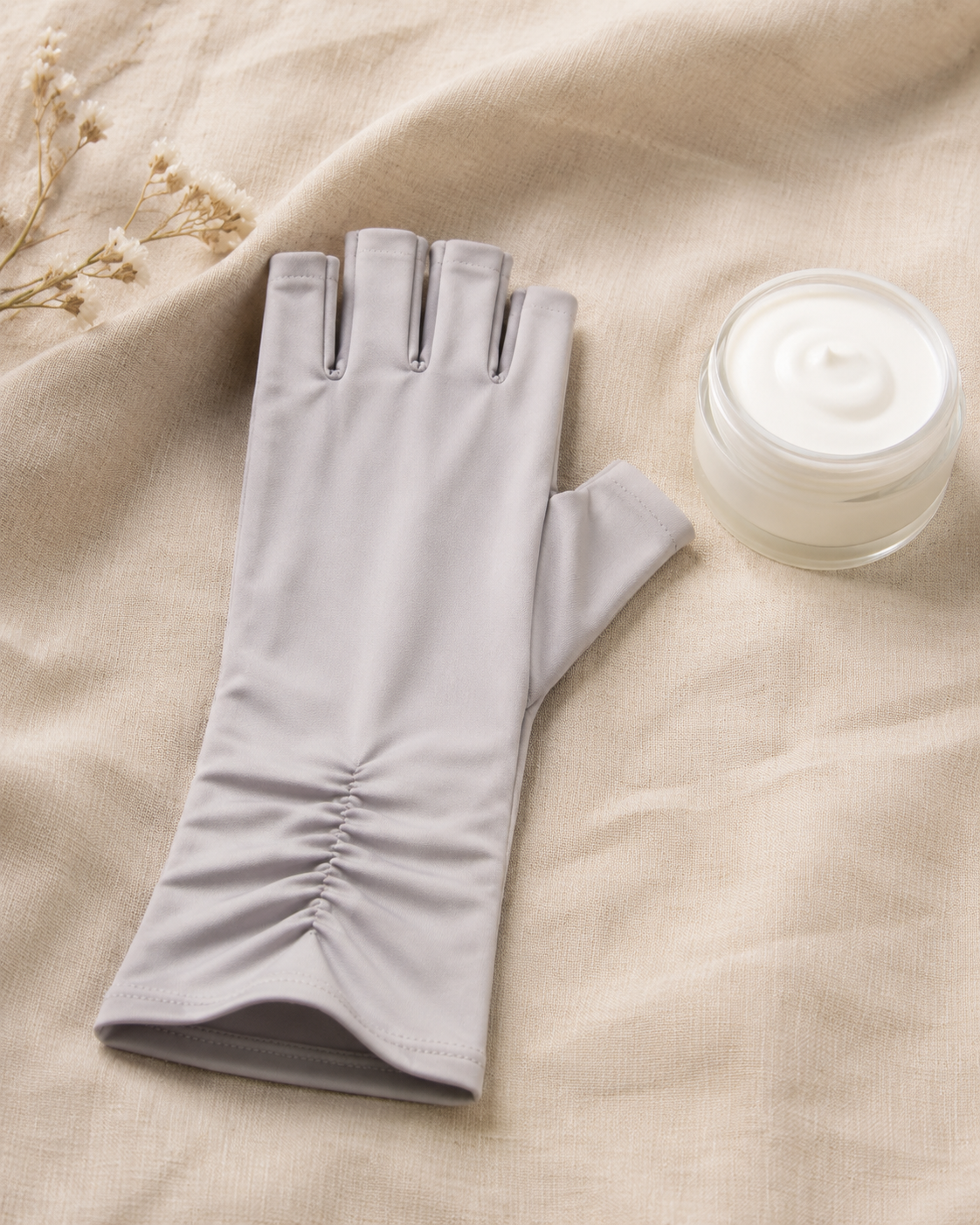
Most UV gloves are fingerless by design, leaving the nails exposed to the lamp while shielding the rest of the hand. This is the practical choice for gel curing, since it protects the skin without interfering with the polish itself.
Full-coverage gloves, which cover the entire hand, are typically used for other UV-based treatments and are less common in at-home manicure routines. For gel manicures specifically, fingerless styles remain the more functional option.
Soft Élan Note: A pair of fingerless UV gloves is a small addition to your kit, but it is the kind of quiet, considered habit that quality-focused women tend to appreciate once they try it.
How to Protect Your Hands Without Gloves
If gloves are not part of your routine, there are still gentle, effective ways to reduce exposure during at-home gel manicures.
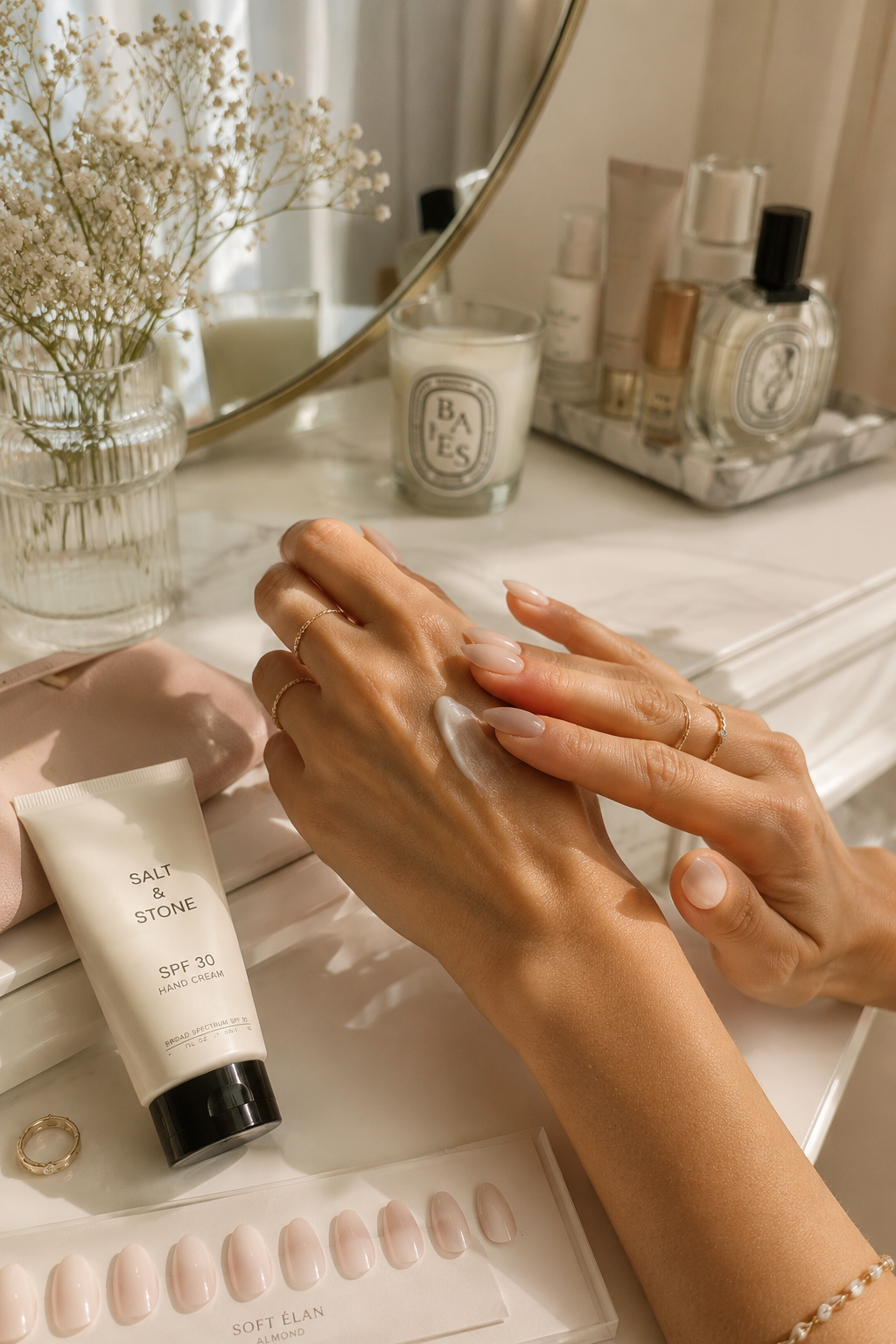
Apply SPF beforehand. A broad-spectrum SPF hand cream, applied before curing, adds a layer of protection to the surrounding skin. This is one of the simplest additions to any manicure ritual, and it pairs naturally with the summer hand care rituals that already protect your hands from sun exposure.
Mind your positioning. Keep your hand relaxed under the lamp rather than pressing skin flat against the light source, and avoid lingering longer than the recommended cure time.
Space out your sessions. Spacing gel manicures a few weeks apart naturally limits cumulative exposure, while also giving your nails room to breathe between applications.
Care for your nails between manicures. Gel wear and removal can leave nails thinner or more brittle over time, so a consistent nail strengthening routine is worth keeping alongside any UV precautions.
Together, these small rituals do more for your hands than any single product could on its own.
A Simple Buying Guide for UV Gloves
If you decide UV gloves suit your routine, a few details make the difference between a thoughtful purchase and one that ends up in a drawer.
Look for gloves that:
- Are labeled UPF 50+ for verified UV protection
- Have a fingerless design suited to gel curing
- Fit snugly at the wrist, without restricting movement
- Feel soft against the skin, since you may wear them often
A well-made pair should feel like an extension of your manicure ritual rather than a clinical add-on. Choosing one made from a soft, breathable fabric keeps the experience feeling refined rather than purely functional.
Pairing UV gloves with a nourishing hand cream for dry hands rounds out a routine that protects your skin while still feeling like self-care. And once your gel set is ready to come off, a gentle approach matters just as much; our gel removal guide walks through how to do that without weakening your natural nails.
A Few Gentle Answers
Are UV nail lamps as bad as tanning beds? Not quite. Nail lamps deliver a far smaller dose of UVA per session than a tanning bed. The concern with nail lamps relates mainly to frequent, long-term use rather than occasional exposure.
How often is too often for gel manicures? There is no universal number, but dermatologists generally suggest that more than two gel manicures a month, sustained over years, is where added protection becomes more worthwhile.
Do UV gloves actually work? Fingerless UV gloves with a UPF rating are designed to block UVA rays from reaching the skin of your hand while leaving your nails exposed to cure normally. They are a reasonable, low-effort way to reduce exposure if you get gel manicures often.
A Small Habit Worth Keeping
Beautifully maintained nails should never come at the cost of peace of mind. For most people, an occasional gel manicure remains a small, enjoyable ritual rather than a real concern.
If you find yourself under the lamp often, a pair of UV gloves and a little SPF are simple ways to protect your hands while still enjoying the polish you love. Either way, consistency and gentle care will always matter more than any single product.