
There’s a particular kind of comfort in a fresh set of gel nails — glossy, polished, effortlessly elegant for weeks on end. But the moment they start lifting at the edges or growing out, that comfort can turn into a small dilemma. If you’ve been searching for how to remove gel nails at home without damaging your nails, you’re already asking the right question. Most nail damage doesn’t come from wearing gel. It comes from removing it the wrong way.
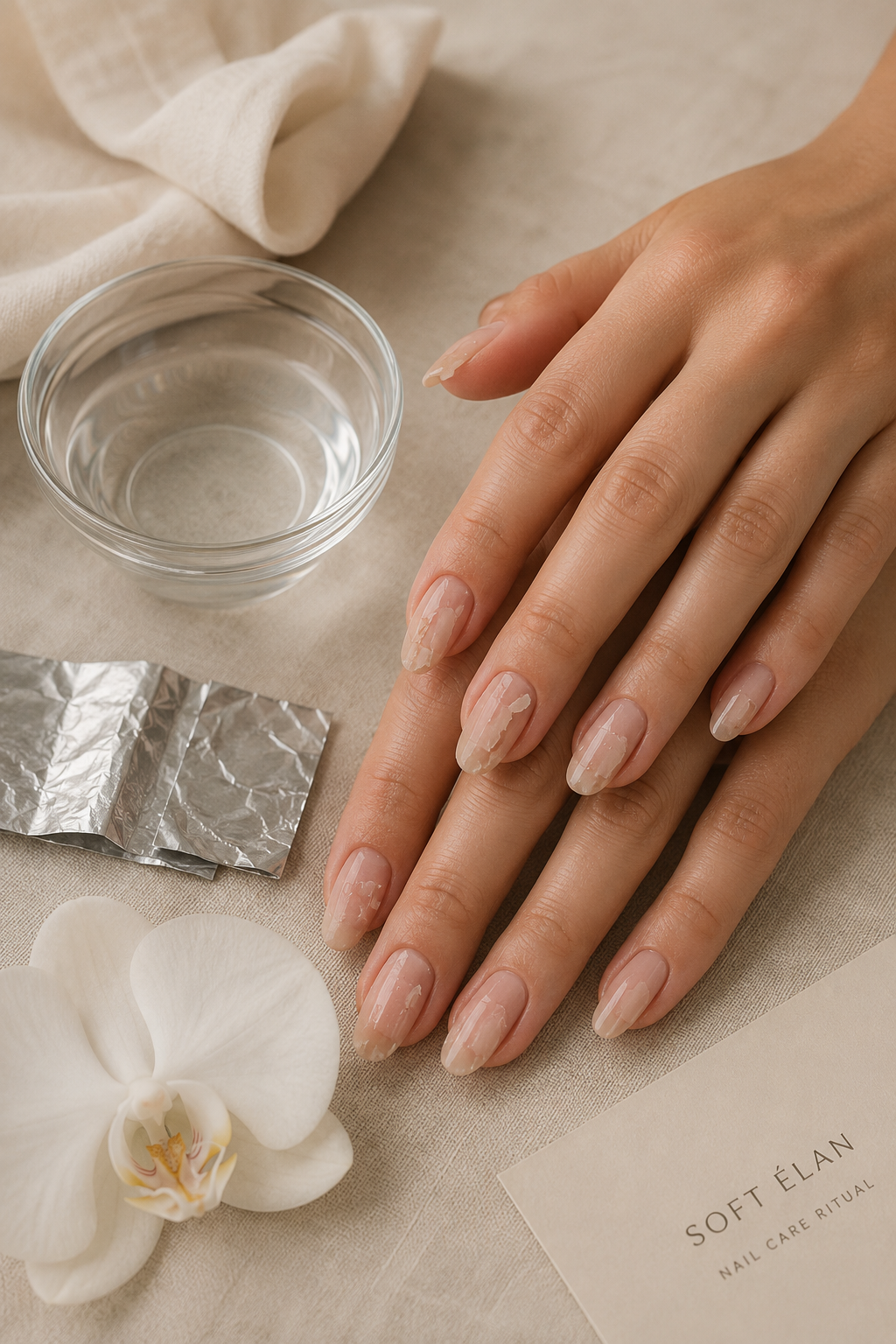
This guide walks through the correct soak-off method, step by step, along with the aftercare that keeps your nails looking healthy in the days after.
Why Picking Gel Off Damages Nails
It’s tempting to peel gel polish away once an edge starts to lift. It feels quick, almost satisfying. But gel bonds tightly to the top layers of the natural nail plate. Peeling it off pulls those layers away with it, leaving nails thin, rough, and prone to breaking.
This is the most common cause of post-gel damage — not the gel itself, but the impatience of removing it. Soft Élan Note: a little patience here is what separates healthy nails from brittle ones a few weeks later.
Soaking, rather than picking, allows the gel to release on its own terms. It takes a bit longer. It also protects the nail underneath.
The Correct Soak-Off Method, Step by Step
Learning how to remove gel nails at home safely starts with the right materials and a bit of unhurried time. Set aside twenty to thirty minutes, ideally in the evening, when you can let the process happen slowly.
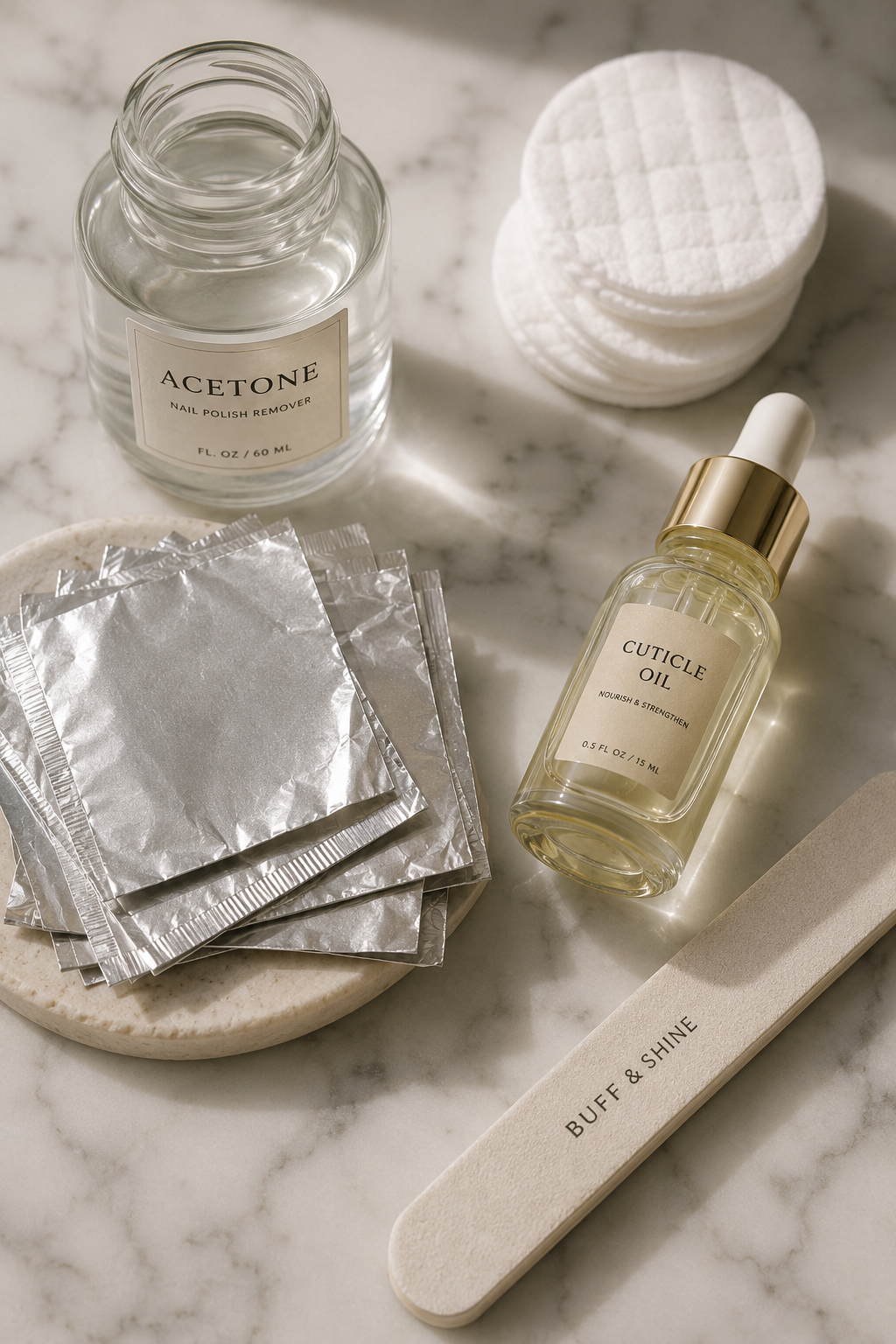
What You Need
- Pure acetone (not a non-acetone remover)
- Cotton pads or balls
- Aluminum foil, cut into small squares
- A gentle nail buffer
- A nourishing cuticle oil for after
Soft Élan Note: Keeping these on hand means gel removal never has to feel like an emergency, or a reason to reach for a metal tool instead.
- Buff the top coat. Gently matte the shiny top layer of the gel with a soft buffer. This isn’t about removing the color, just breaking the seal so acetone can absorb properly.
- Soak a cotton pad. Saturate a small piece of cotton with pure acetone and press it directly onto the nail.
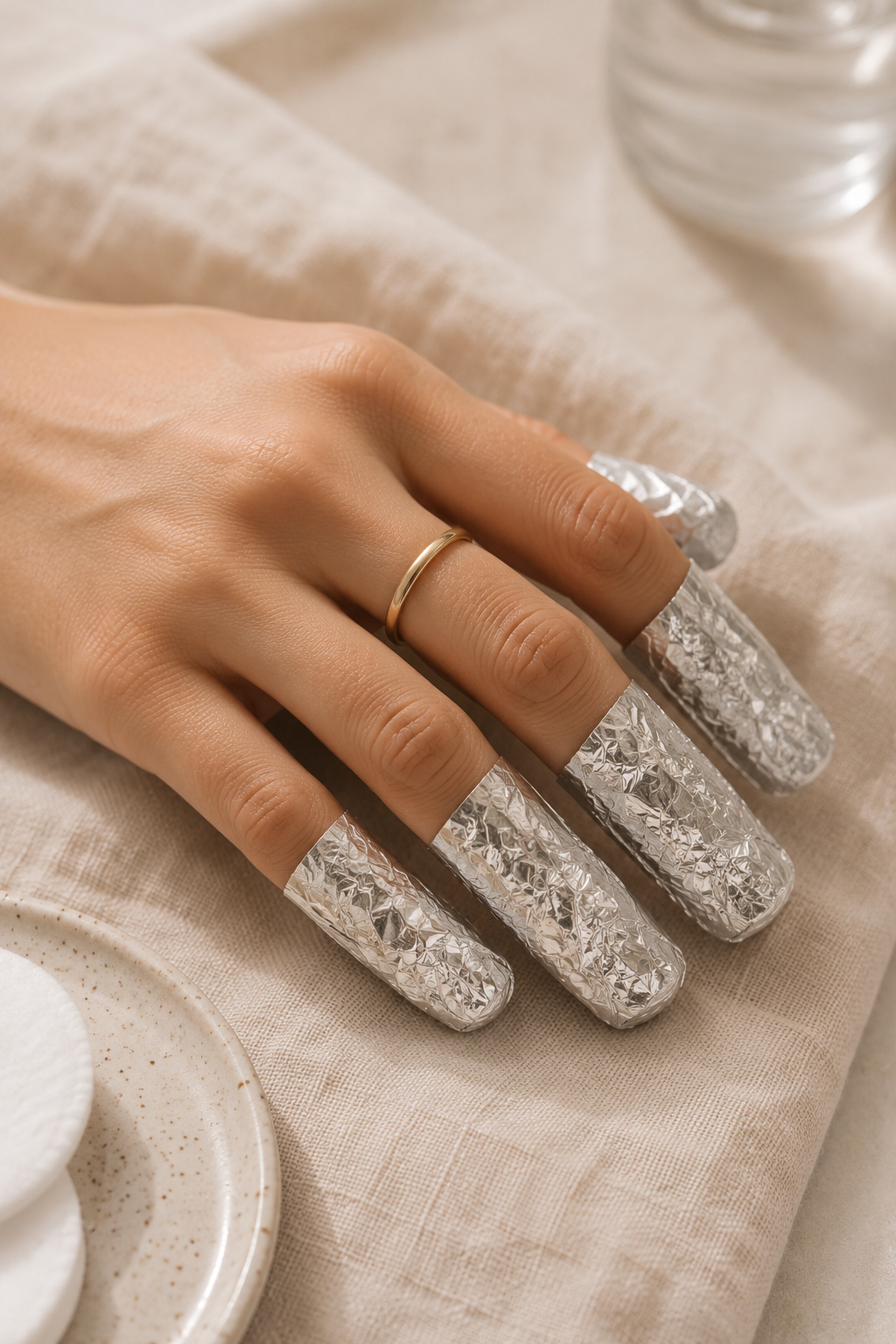
- Wrap in foil. Fold a foil square around the fingertip to hold the cotton in place and trap warmth, which helps the acetone work faster.
- Wait. Leave the wraps on for ten to fifteen minutes, depending on the gel’s thickness.
- Gently push, don’t scrape. Use a wooden cuticle stick to nudge the softened gel away. If it resists, rewrap and wait a few more minutes rather than forcing it.
Timing Per Nail
Thumbs and larger nails often need closer to fifteen minutes, while smaller nails may release in ten. If any gel still clings after two rounds of soaking, it’s a sign to stop and let it soften further rather than picking at the edge.
Once the gel has lifted away, resist the urge to buff the nail bed smooth right away. A light buff to remove any remaining residue is enough. Anything more can thin the nail further.
Aftercare for the First 48 Hours
Nails often look and feel a little vulnerable right after gel removal, even when the process was done gently. This is completely normal, and it passes quickly with the right care.
A rich, nourishing oil applied to the cuticles and nail bed can help restore moisture that acetone naturally strips away. This one from [a trusted nail care brand] is especially loved for its lightweight, fast-absorbing texture and the soft shine it leaves behind.
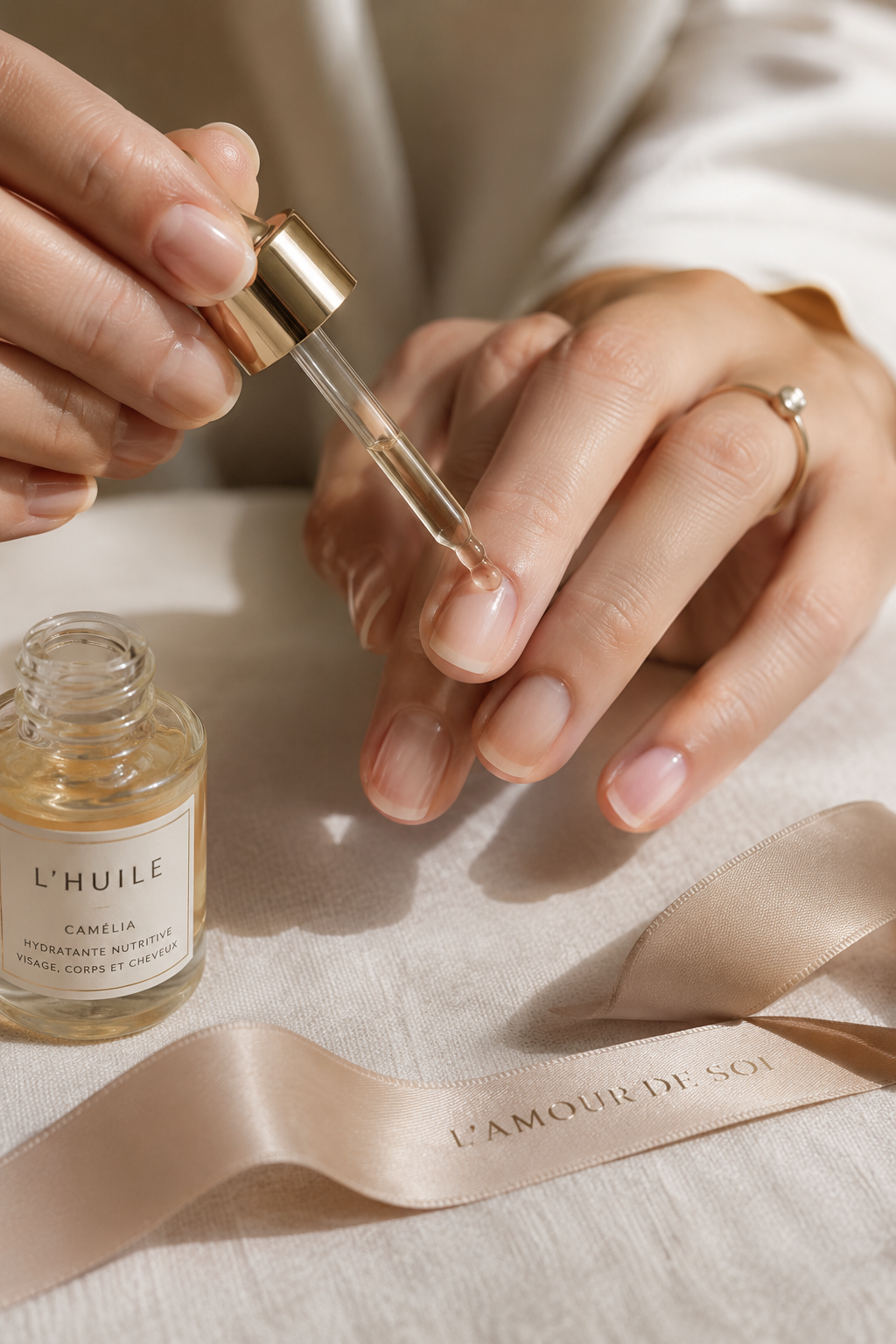
In these first two days, it helps to:
- Apply cuticle oil morning and night
- Keep nails a touch shorter to reduce the risk of snagging
- Avoid another gel application right away, giving the nail bed time to recover
- Wear gloves for dishwashing or cleaning, since water and detergents can be drying
If your nails feel especially thin, a strengthening treatment can offer extra support in the weeks that follow. Our guide on nail strengthening after gel walks through a gentle thirty-day rebuilding routine.
Signs You Should See a Professional Instead
Not every set of gel nails is a good candidate for at-home removal. If gel was applied over extensions, if nails are already visibly cracked or peeling before you begin, or if a previous removal left the nail bed sore, it’s worth booking a salon visit instead.
A technician can remove gel more evenly across a compromised nail, and can spot early signs of infection or fungal changes that are easy to miss at home. The American Academy of Dermatology offers helpful guidance on recognizing when nail changes need professional attention.
If you’d rather avoid this dilemma altogether next time, it’s worth reading about UV gloves for gel manicures and whether they’re a worthwhile addition to your routine.
A Gentle Word Before You Go
Removing gel nails at home doesn’t have to mean risking the health of your natural nails underneath. With a little patience, the right materials, and a soak-off method rather than a quick peel, the process can be just as calm as the manicure itself.
Healthy nails rarely bounce back overnight. They come from small rituals repeated consistently — a proper soak, a nourishing oil, a bit of rest between gel applications. If your nails need a little extra care after this one, our nail strengthening after gel guide is a gentle place to start your recovery plan.
For everyday upkeep in between, our minimalist nail care essentials guide and our curated cuticle oil edit are worth keeping close.
Frequently Asked Questions
How long does it take to soak off gel? Most gel manicures release in ten to fifteen minutes per nail, though thicker or older applications may need a second round of soaking.
Is it bad to remove gel nails yourself? Not at all, as long as the soak-off method is used rather than peeling or scraping. Patience is what makes at-home removal safe.
Why do my nails look thin after gel removal? This is often a sign that gel was picked off in the past, or that acetone exposure temporarily dried the nail bed. Regular cuticle oil and a short recovery period usually restore their strength.
Soft Élan Note: A calm, unhurried gel removal is its own kind of self-care — proof that even the small, practical steps in a beauty routine can feel a little elegant.